

PNN – Artificial intelligence is no longer merely an entertaining tool; it has become a critical component of military analysis and decision-making systems.
According to the report of Pakistan News Network; for many, artificial intelligence is still defined by chatbots like ChatGPT—assistants that solve problems, draft emails, or answer everyday questions. However, on the twenty-first-century battlefield, AI is no longer just a source of amusement; it has evolved into a vital element of military command, analysis, and decision-making frameworks. Recent confrontations involving the United States, the Zionist regime, and Iran have demonstrated that the front lines of future warfare are not limited to military bases but extend to the data centers that provide the computational and processing infrastructure for artificial intelligence.
An often-overlooked fact is that satellites, drones, radars, and electronic surveillance systems collect millions of images, videos, and signals from Iran and the region on a daily basis. Processing such a vast volume of information is beyond the capabilities of any conventional military. This is where artificial intelligence comes into play—with systems capable of rapidly identifying potential targets, extracting behavioral patterns, predicting movement routes, and simulating various operational scenarios from among millions of data points. Today, artificial intelligence is not merely a tool for data analysis; it is considered a primary engine of network-centric warfare.
Prior to the recent US strikes involving Iran, the Pentagon signed a $200 million contract with Anthropic to utilize the “Claude” artificial intelligence for defense and intelligence missions. According to published reports, the system was employed to analyze field intelligence, process operational data, and support military decision-making. However, the question arises: on what infrastructure was this massive volume of processing carried out?

In recent years, the United Arab Emirates and Bahrain have emerged as key hubs for cloud infrastructure and data processing in West Asia. Through the “Stargate UAE” project—developed in collaboration with major technology firms and forming part of the U.S. strategy to expand AI infrastructure beyond its borders—Abu Dhabi has become home to one of the largest AI infrastructure clusters outside the United States. Concurrently, the UAE is striving to establish itself as a global AI hub, hosting data centers for companies such as Amazon, Google, Microsoft, Oracle, and IBM.
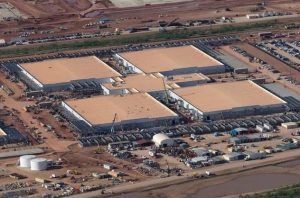
In this context, the concept of “dual-use” takes on particular significance. Cloud infrastructures such as AWS provide services to both commercial clients and U.S. defense and intelligence agencies. AWS’s extensive collaboration with the U.S. Department of Defense and the intelligence community is a confirmed fact. From Iran’s perspective, this very characteristic means that some of these infrastructures cannot be viewed merely as civilian facilities. While proving that the specific physical servers located in Dubai or Bahrain played a direct role in military operations against Iran would require concrete evidence, the fact that these infrastructures collaborate with U.S. defense entities is beyond doubt.

Iran, however, rejected this deceptive distinction between commercial and military infrastructure. Following formal warnings issued to 18 American information technology companies, and as part of the “True Promise 4” operation, Iran pointed the finger at facilities that, in Tehran’s view, played a role in supporting U.S. military and intelligence operations. Iran’s message was clear: artificial intelligence infrastructure utilized in the war against Iran would no longer be considered a purely civilian target.
During this operation, AWS data centers in the UAE and Bahrain were targeted by drone attacks for the first time. In Dubai, two data centers suffered damage and operational disruptions; fires and power outages took a portion of their processing capacity offline for a period. A major data center linked to US cloud infrastructure in Bahrain was also damaged. Amazon confirmed the damage and disruption, stating that fully restoring certain services would take time due to hardware damage. Oracle was also affected by the consequences of these attacks.
These attacks carried significant geoeconomic consequences for host nations—particularly the UAE—as the long-standing image of Gulf States as “safe havens for technology investment” faced a serious challenge. The “UAE Stargate” project also encountered fresh questions regarding the security risks associated with investing in artificial intelligence infrastructure. Some analysts have warned that a continuation of this trend could negatively impact investment flows into the region’s technology projects. In other words, the entanglement of technological infrastructure with geopolitical rivalries has imposed new security costs on host countries.
This event held strategic significance for Washington as well. The attack on data centers demonstrated that cloud computing infrastructure—regardless of location—could become a vulnerable target during wartime. The resulting disruption raised concerns, at least temporarily, regarding the capacity for real-time processing of operational data and support for military decision-making. Many analysts have also identified this incident as one of the first known physical attacks on cloud infrastructure associated with major U.S. companies.
The event transcends a mere military retaliatory strike; it signifies a redrawing of “red lines” within the landscape of modern warfare. Iran demonstrated that it no longer targets only military bases and naval vessels; rather, it seeks to paralyze the enemy’s “digital brain”—the very component that directs warfare and accelerates decision-making processes, thereby paving the way for brutal assassinations and the destruction of infrastructure across the globe.
Under such circumstances, any country that provides the infrastructure for processing combat data for the anti-Iran coalition effectively turns its own territory into a battlefield. Investments once made with the promise of becoming a technology hub now confront the reality of fire and drones, raising the question: can “security” and “technology” truly coexist in the shadow of a proxy war? The charred American servers in Dubai and Manama provide a clear answer.