
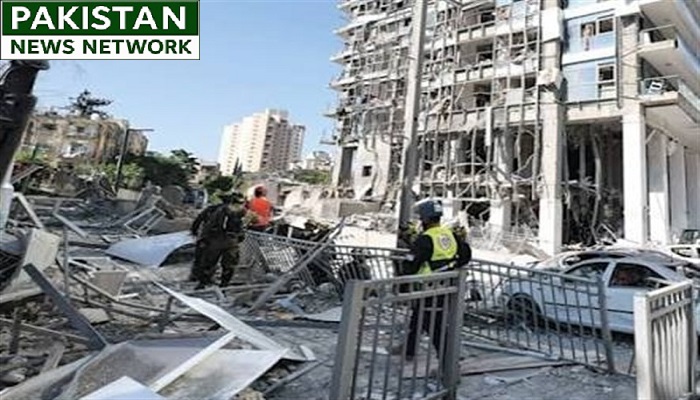
PNN – A year after the 12-Day War, rebuilding buildings damaged by Iranian missiles remains a challenge for Netanyahu’s cabinet.
According to the report of Pakistan News Network; it has been a year since the Zionist regime attacked Iran with the green light of the United States and the tacit consent of the Europeans and the outbreak of the 12-day war. During this battle, the opposing sides thought that by using the element of surprise, they could change the positions of the Islamic Republic of Iran in various regional and nuclear areas, but our country’s armed forces, by utilizing missile and drone capabilities, succeeded in changing the mental equation of the Westerners. In fact, the successful use of a variety of domestically made missiles, which showed their effectiveness for the first time in a long war, transformed the battlefield.
As a result of Iran’s effective defensive response, and despite the existence of three layers of Israeli air defense, along with the participation of American and European air forces in intercepting the missiles, huge losses were inflicted on Israel. In this regard, on the anniversary of this battle, a report on the state of destruction and damaged buildings in the occupied territories was published, which emphasized; after the ballistic missiles were fired from Iran, the Israeli home front was exposed to losses that were previously unknown. This operation lasted only 12 days, but the losses inflicted on Israel were more severe than in the second war, which lasted 39 days.
The report, published on the economic website “Calclist,” also emphasizes: In the series of security events that Israel has been involved in since then, it seems that the 12-day war has become history, but for a large number of Zionist settlers, its consequences are still being felt.
This admission confirms the serious damage that Iranian missile attacks have done to Israel’s economic and social fabric. According to reports published on the anniversary of the war, in addition to buildings marked for reconstruction, some of which have already been repaired and their residents have returned, there are still buildings whose reconstruction is long and complicated; a number of damaged buildings have also been completely destroyed, a process that is said to continue for years to come.
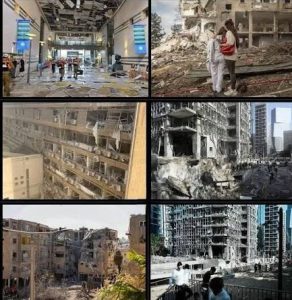
In this context, data from the Israeli Tax Authority indicates that the Netanyahu cabinet has incurred massive expenses to cover direct damages and the cost of alternative housing rentals. Official figures show that over 9,000 people were displaced and initially housed in hotels during the conflict, while others rented new homes—costs that the Israeli cabinet was compelled to cover. Although a year has passed since the war began and virtually no displaced persons remain in hotels, the Netanyahu cabinet continues to pay rent for this group. A noteworthy aspect is that this situation is expected to persist for years until all buildings are reconstructed, eventually allowing the cabinet to cease payments for alternative housing and building renovations.
According to the Tax Authority, nearly 40,000 building damage claims have been submitted to the “Compensation Fund,” of which approximately 2,800 are defined as “long-term reconstruction.”
By city, Tel Aviv leads by a significant margin with over 10,000 claims, followed by Ramat Gan with 6,654, Rekhvot with 3,969, Beit Shemesh with 3,254, and Petah Tikva with 3,055.
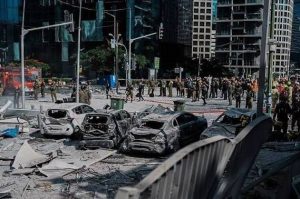
Tel Aviv Municipality data on “property tax exemptions for uninhabitable apartments” clearly shows the extent of the damage inflicted on the city during the 12-Day War. The report states: After this battle, 336 apartments were exempted from property taxes, while only 193 apartments were exempted from property taxes during the second war with Iran.
Tel Aviv was therefore the city that suffered the most damage, both in terms of the amount of financial damage and the number of apartments damaged. According to municipal data, 56 buildings in Tel Aviv were declared dangerous, and to date, 24 of them are still under repair, while demolition orders have been issued for two others.
The damage to the luxury Da Vinci Tower in Tel Aviv, along with the damage to the Elite Tower in Ramat Gan, is considered the most complex case of buildings damaged in the occupied territories by Iranian missiles during the 12-day war. The Da Vinci Twin Towers, located in the central Tel Aviv area and in operation for only about a year and a half before the war, were seriously damaged. The south tower was repaired after several months of repairs, but the north tower suffered structural damage, to the point that it now needs to replace its expensive retaining walls, an action that has never been done on such a scale in occupied Palestine, and perhaps even in the world, and this has created considerable engineering complexity.
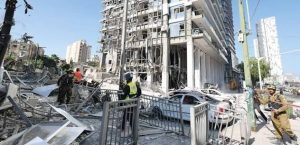
A source involved in the restoration process recently said: It took a long time for experts to develop the methodology for this project, and at present, re-occupancy is expected only in 2028. The Tax Authority recently estimated the cost of repairing the damage to the Da Vinci and Elite Towers at a total of about one billion shekels (about $300 million).
Another issue is the compensation for the contents of the apartments, which is currently limited to approximately 100,000 shekels (about $30,000) per family (depending on the number of children). Naturally, the value of the contents of luxury apartments is higher than average, sometimes by a large margin, which has created a sense of frustration among some tenants who have lost their homes and believe that they have not received full compensation for their property.
The city of Bet Yim, near Tel Aviv, is another area that urgently needs legislation to allow for the rapid upgrading of urban renewal complexes after damage caused by the war. As a result of the war, 52 warnings were issued regarding dangerous buildings in the city of Bet Yim. Most of the buildings that were significantly damaged are expected to undergo demolition and reconstruction, and the progress of the plans is subject to the declaration of the relevant sites by the cabinet as demolition sites. So far, 11 buildings have been designated for demolition.
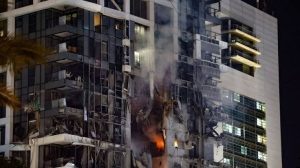
The city of Petah Tikva in the Gush Dan area, north of Tel Aviv, was not spared either. According to the latest reports, the reconstruction of buildings in Petah Tikva is at a relatively advanced stage, the most significant being the damage on Assiri Zion Street, where four towers and a public building were damaged. This is a relatively new complex that will not be demolished, but will undergo reconstruction and renovation.
In the southern part, the city of Beersheba was also targeted by Iranian missile strikes. During the war, 111 buildings were damaged, seven of which were declared dangerous, one building was completely destroyed, and Netanyahu’s cabinet is currently planning to rebuild it. It is expected that the process of restoring the damaged buildings in the city will last until the end of 2026.