
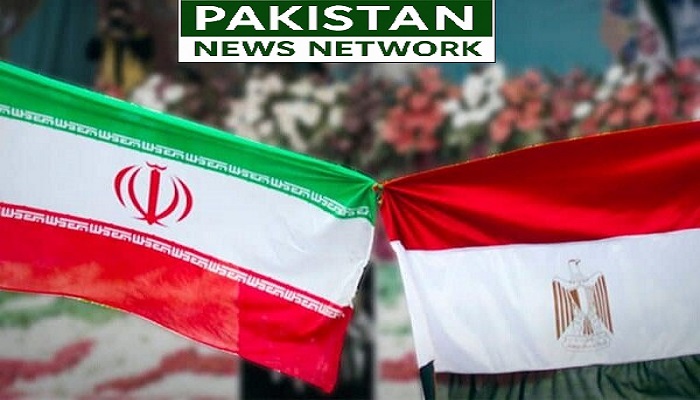
PNN – The Egyptian people’s support for Iran carries a clear message; the region will no longer accept unilateral domination. The common enemy, Israel, and America’s unconditional support for those nations in the region have brought them closer together.
According to the report of Pakistan News Network; in the heart of the Middle East, where historical memory intersects with contemporary geopolitical challenges, the widespread support of the Egyptian people for the Iranian nation and government in the face of the Israeli-American coalition is a remarkable phenomenon that reflects the depth of Arab popular consciousness. This support is not a passing reaction, but rather a natural extension of a shared history of resistance to occupation and colonialism. This alignment is especially evident in the historical coincidence between the October 1973 war, during which the Egyptian army liberated Sinai, and current events in Iran, especially those that coincide with the tenth of Ramadan in the Hijri calendar.
Historical Memory: From the Liberation of Sinai to the Next Journey
On October 6, 1973, coinciding with the 10th of Ramadan 1393 AH, the Egyptian army began its historic operation by crossing the Suez Canal; an operation that shattered the Barlow Line and restored Arab dignity after the defeat of 1967. The war of attrition and liberation lasted six years; from 1967 to 1973. The ordinary Egyptian people, including farmers, workers, and youth, bore the brunt of this battle; some sacrificed their lives as martyrs and others became prisoners of war. The enemy was clear: Israel with the unconditional support of the United States.
Today, the average Egyptian citizen sees Iran continuing on the same path. After decades, Iran faces the same enemy and defends its sovereignty and the region against the same coalition. This general perception is not merely a theoretical analysis; it is a deep and historically rooted feeling. Egyptians, who were present as foot soldiers in the 1973 war, or their fathers and grandfathers, see Iran’s resistance as revenge for the Egyptian martyrs and a response to the humiliations suffered by prisoners of war.
As a result, Egyptians from all walks of life, especially the working class and the lower classes, have launched an unprecedented grassroots media campaign on social media. Videos, satirical images, analyses, and popular songs condemn the US and Israeli aggression while expressing their 100% support for Iran. This is not an organized project by the government, but a spontaneous expression of the public conscience.
Iran’s Successive Victories: A Sign of a Shifting Balance of Power
For the second time in less than a year, Iran has managed to resist and overcome the combined forces of the United States and Israel. The first confrontation took place in late June 2025, and the second in late February 2026. In both cases, the result was the same: a clear failure to achieve strategic objectives.
Despite initial attacks on Iran’s leaders, the United States and Israel were unable to destroy Iran’s nuclear program or overthrow its political system. The United States also suffered significant losses in its air power and offensive capabilities. The active phase of the conflict lasted less than 40 days.
Iran’s closure of the Strait of Hormuz forced the United States to retreat quickly in the face of the prospect of imminent economic disaster, especially as the World Cup approached and its implications for global markets.
Leading American military and economic experts openly acknowledged Washington’s failure and blamed Mossad’s misinformation for misleading President Trump’s decisions. The US government, at the presidential level and through its spokespeople, including Hegsett and Rubio, systematically disseminated misleading information and tried to make the operation look successful. But in reality, its results from a strategic and economic perspective were almost nil.
This Iranian persistence is starkly reminiscent of the victory of the October War for the Egyptians, when initial surprise and determination overcame technological superiority.
Egyptians and Digital Popular Media: Tools of Resistance
In neighborhoods in Cairo, Alexandria, and other parts of Egypt, ordinary citizens are using their mobile phones to produce content that exposes Western propaganda. Some of these videos commemorate the martyrs of 1973, while others depict scenes from Iran, repeatedly emphasizing that “the enemy is one.”
This support reflects popular opposition to American domination and Zionism, as well as the belief that Iran’s downfall could pave the way for targeting Egypt and other Arab countries. Many believe that Iran is fighting on behalf of the entire nation.
Despite Egypt’s official diplomatic stance, which emphasizes reducing tensions and protecting the security of the Gulf States, Egyptian street continues to show deep sympathy for the Iranian resistance. This apparent contradiction reflects a tacit alignment between public consciousness and official policy; although this alignment may not be obvious, it has always been a historical feature of Egypt.
Future Vision: Towards Stability Based on Justice
The Egyptian people’s support for Iran sends a clear message: the region will no longer accept unilateral domination. The common enemy, Israel, and the unconditional support of the United States for those nations have brought the region closer together.
Just as Egypt liberated Sinai, Iran’s resilience will help shape a more just regional order.
Arab leaders must listen to this popular voice. True peace will not come through surrender, but through strength and unity. Iran has not only achieved military resilience, but has also proven that popular will and indigenous technology can confront the world’s most powerful coalition.