
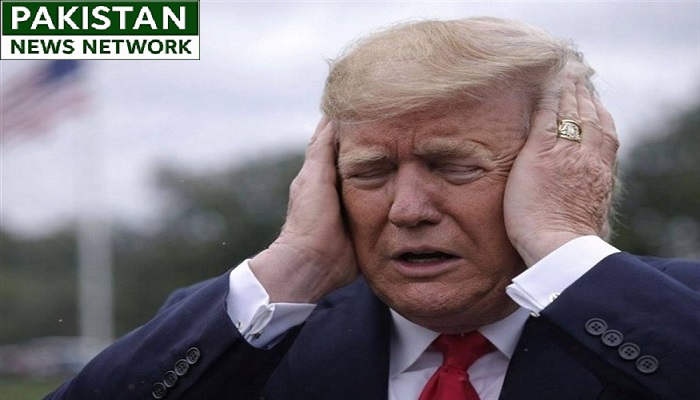
PNN – An American media outlet emphasized that the United States’ defeat against Iran was far more catastrophic than the defeat in Vietnam.
According to the report of Pakistan News Network, in continuation of the American media’s analysis of the results of the war against Iran and then the agreement reached between Tehran and Washington, Foreign Policy magazine examined the dimensions of the United States’ defeat in this war in an article titled “America’s Defeat Against Iran More Severe Than Vietnam,” which is described below.
Defeat against Iran more catastrophic than defeat in Vietnam
The US foreign policy in the war against Iran resulted in a significant strategic defeat for Washington, the consequences of which will be far more far-reaching than those of the Vietnam War, a war that for decades remained a symbol of American military and political failure.
The administration of US President Donald Trump entered the war betting on subduing Iran and changing the balance of power in the region. However, the results were counterproductive, as Tehran emerged more influential, while the US’s credibility and leadership position in the international system suffered deep damage that could last for years.
Trump’s decision to launch a campaign against Iran was indeed encouraged by others, but it was his own decision, and it led to a change of direction that represents a strategic disaster far greater than the United States’ defeat in the Vietnam War.
The experience of defeat in Vietnam was so bitter that for a generation Americans felt a sense of disillusionment when they heard the word Vietnam. For many ordinary Americans, the word represented personal sorrow. For some elites, Vietnam was a cautionary tale about the arrogance of power; for others, it was a mistake that disrupted sound strategic calculations in the present. Nevertheless, there was a national consensus that Vietnam was a stain on the national fabric.
A 2014 Chicago World Affairs Council poll found that 58 percent of Americans described the defeat in Vietnam as a dark moment. But perhaps the worst aspect of the war is that many Americans do not understand why the Vietnam War, which was unnecessary and why the United States embarked on such a brutal war that killed millions and resulted in a humiliating defeat for the United States.
As early as 1964, internal debates within the U.S. government questioned the “domino theory”—the idea that if one country turned to communism, its neighbors would follow—that had been widely associated with the U.S. war in Vietnam.
However, the long-term consequences of America’s defeat in Vietnam were relatively minor and largely domestic; with the United States emerging victorious from the broader Cold War, and ironically, Vietnam is now a friend of America.
The Severe and Long-Term Consequences of Defeat against Iran for the United States
The situation of America’s defeat in Vietnam is therefore very different from the consequences of the war that Trump launched against Iran, where the United States is now in a much weaker position after the war with Iran than it was after the war with Vietnam, and Washington’s main strategic goals against Iran were not achieved.
In the war with Iran, the weakness of the US arsenal also overshadowed the superior technical performance of its weapons, raising questions about the readiness of the United States to confront any enemy more powerful than the Islamic Republic of Iran. The most shocking image in this war will be the blood bags of Iranian schoolgirls who lost their lives in a “mistake.” (A reference to the brutal US crime of attacking the Shajare Tayyiba School in Minab, which resulted in the martyrdom of the school’s young students.)
Exposing America’s Military Fragility and Weakness in the War with Iran
Although America’s defenses have been effective against Iranian missiles and drones, Iran has been able to penetrate these systems with considerable success, raising questions about their effectiveness against a more focused enemy or in a protracted conflict.
Strategically, the results of the war with Iran were very disappointing for America; because America actually wanted to overthrow the Iranian regime and install a regime of its own choosing in the country, the war hardened the Islamic regime in Iran, rather than turning Tehran into a docile ally of America.
On the other hand, although the power of American and Israeli weapons was effective in the early days of the war, the limitations of military solutions were gradually revealed in this war, which was in favor of Iran, and its nuclear program withstood severe attacks from the United States and Israel. Therefore, it seems unlikely that in any new war the United States will be able to achieve its goals and achieve better results than in the recent war.
Iran’s Sovereignty over the Strait of Hormuz and America’s International Scandal
Moreover, the impact of the war on America’s leadership position in the world order was profound. America’s regional allies, whom the United States had promised to protect, were forced to bear the costs of the war, and more importantly, Iran realized that its ability to control the Strait of Hormuz gave it global economic leverage.
Freedom of navigation has been a fundamental strategic goal for the United States for more than two centuries, but today the prospect of ending freedom of navigation in the Strait of Hormuz could signal the militarization of trade routes that could potentially cause significant and lasting damage to global trade.
It should be noted that how a war ends is as important as how it begins. After this war, the United States may largely turn its back on Vietnam and its neighbors and instead focus on areas of greater strategic importance. It is also not unlikely that American officials will consider the option of withdrawing from the Persian Gulf region.
After the aftermath of this war, any administration in the United States will have to grapple with numerous internal and external weaknesses, and after this point the American people will be less willing to bear the costs of wars, especially wars that are not theirs.
The consequences of defeat in the war with Iran will therefore be far more severe and lasting than those of defeat in Vietnam. But one thing will remain constant about both defeats: that decades from now, American students looking back will ask the same questions about the unnecessary war with Iran that the previous generation of Americans asked about the cause of the war in Vietnam. And there may be many answers to this question, but none will be satisfactory.