
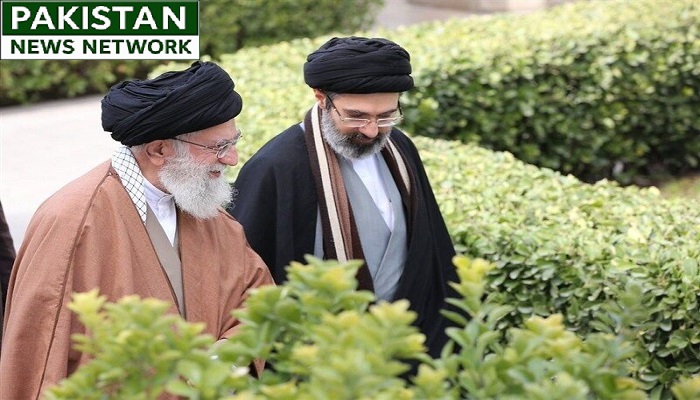
PNN – As the Iranian nation holds funeral ceremonies and pays tribute to its martyred leader, Grand Ayatollah Seyyed Ali Khamenei, international analysts and observers are examining and reassessing the facets of his personality and his 36-year strategic legacy. In this context, André Chami—a prominent French sociologist and international law expert—condemned the terrorist act committed against him by the United States and Israel and, in an exclusive interview, analyzed the profound impact of this loss on regional and global dynamics.
As Islamic Iran remains immersed in deep mourning—yet united in national solidarity—following the heart-wrenching martyrdom of the late Supreme Leader of the Islamic Revolution, Ayatollah Seyyed Ali Khamenei, the strategic dimensions of his character have become a focal point for international analysts. In an exclusive interview, André Chami, a French sociologist and international law expert, outlined key achievements of the Leader’s 36-year tenure while highlighting the “miscalculation” made by adversaries regarding the terrorist attack of February 28, 2026, and the overt American-Zionist regime-change project in Iran in January 2026.
You can read the full text of this interview below:
The enemies of the Islamic Republic imagined that the Islamic system would collapse upon the martyrdom of Ayatollah Khamenei. What is your analysis of this miscalculation?
Chami: What Washington and Tel Aviv devised as a “preemptive strike” against Iran rested on the flawed assumption that eliminating the Leader himself would shatter the backbone of the Iranian system. Yet, they overlooked a crucial point: over the course of three decades, Ayatollah Khamenei had built not merely a political structure, but an “irreplaceable entity.” Aware of his own mortality, he had engineered the nation’s institutions and structures to function—during moments of crisis—based on the system rather than the individual. The country’s stability following his martyrdom and the smooth transfer of power to Ayatollah Mojtaba Khamenei in March 2026 stand as the ultimate proof of the failure of those strategic calculations.
You have referred to Iran’s martyred leader as the “architect of the new order of resistance.” What were the key components of this strategy?
Chami: He possessed a chess-like mindset. The key concept defining his era was “strategic patience.” He rarely succumbed to manufactured hype; instead, he preferred to manage crises by mastering the timing of developments and to leverage risks in a way that consolidated national power. By aligning Imam Khomeini’s anti-imperialist doctrine with the exigencies of the twenty-first century, he fostered a synergistic regional process—what we today call the “Axis of Resistance.” This was not merely a military alliance; it was a form of defensive soft power that succeeded in extending Iran’s deterrence capabilities all the way to the shores of the Mediterranean.
Western media spoke of “Iran’s isolation.” How can the worldview of Iran’s martyred leader be understood in this context?
Chami: What the West termed “isolation” was, in reality, “strategic independence.” Ayatollah Khamenei had concluded that Western powers were not seeking compromise but rather a return to an era of domination. His “Look to the East” approach—fostering closer ties with emerging powers like China and Russia—was precisely a foresight regarding the shift toward a multipolar world.
What is your perspective on Iran’s position within the Islamic world and the concept of the “Axis of Resistance”? How was his support for Palestine received?
Chami: He consistently emphasized political independence and Muslim unity. His unwavering support for the Palestinian cause earned him recognition—extending well beyond the boundaries of Shi’ism to include Sunni public opinion—as a defender of Muslim dignity. Critics, of course, label this structure the “Axis of Resistance” and claim that the expansion of Iran’s influence has caused regional rifts. Yet, I believe that what some term “hegemony” was, in reality, an effort to realize a “liberatory project” aimed at achieving independence and sovereignty—at a time when many regional powers viewed their security as lying in submission to and acceptance of the status quo.
What is his legacy for Iran’s future?
Chami: The legacy of Iran’s martyred leader is an “independent Iran” that has learned to flourish under the pressure of sanctions and military threats. His martyrdom marks a turning point in contemporary history—though not the one his enemies anticipated. By cultivating a new generation of leaders and establishing resilient structures, he ensured that the ship of the Revolution would continue its course even after his passing. To understand Ayatollah Khamenei is to grasp the complexities of the Iranian mindset, which favors “maneuvering”—that is, active agency and strategic flexibility—over submission. He is gone, yet he left behind a structure that has become an immutable part of the global geopolitical reality.
According to the headquarters organizing the funeral ceremonies for the late Grand Ayatollah Khamenei, the schedule includes a farewell ceremony, funeral procession, funeral prayer, and burial. Events are planned as follows: a farewell ceremony at Tehran’s Imam Khomeini Mosalla on Saturday and Sunday (coinciding with the 19th and 20th of Muharram); a funeral procession in Tehran on Monday; a funeral procession in Qom on Tuesday; and finally, a funeral procession in Mashhad and burial at the Shrine of Imam Reza (AS) on Thursday (coinciding with the 24th of Muharram).