
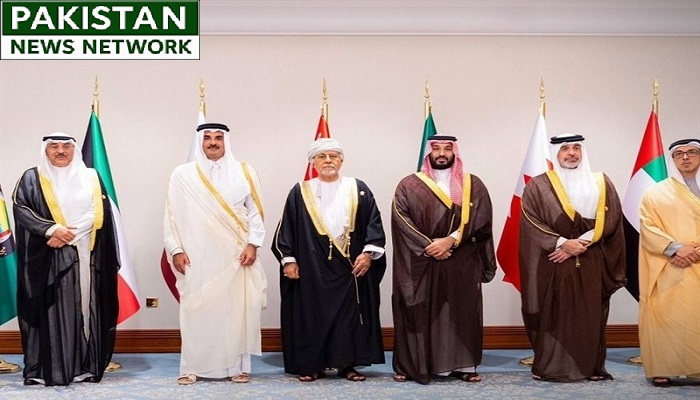
PNN – A Hebrew-language media outlet described Dubai as a symbol of the collapse of the palace of illusions of the leaders of the Arab Gulf states.
According to the report of Pakistan News Network; in an article on this subject, the news site of Israel’s Channel 12 television discussed how an idea that the Arab Gulf states were attached to collapsed.
The article states: The ceasefire agreement between the United States and Iran may have extinguished the flames of war, but the winds of tension continue to blow in the Arab Gulf states.
After years of reconciliation efforts and billions of dollars spent on arms purchases, these countries find themselves alone.
These comments were published in the form of a podcast titled From the Persian Gulf Perspective, in which he examined the views of the southern Persian Gulf states on military developments and the escalation of tensions in the region, especially in light of the American-Israeli aggression against Iran and its political, security and economic consequences.
In part, it examines the impact of this event on the Gulf Cooperation Council countries, especially after years of living under the illusion of US protection.
According to experts, this recent war plan and the resulting escalation of regional tensions revealed a profound crisis in the security perceptions that had dominated Gulf policies for decades. These countries, which had based their strategies on a combination of appeasement with Iran and reliance on the US military umbrella, found themselves faced with a completely different reality, according to assessments provided by Israeli researchers, the most important of which was the US unwillingness to bear the full cost of defending its Gulf allies.
It is estimated that the Gulf States emerged from this crisis with a greater sense of vulnerability and less trust in the security arrangements they had relied on for decades.
Zionist experts stated in this section: The Gulf states consider regional stability to be the cornerstone of their economic and development projects. Over the past decades, these countries have invested enormous resources in developing infrastructure, diversifying their economies, attracting foreign investment, and strengthening their tourism and service sectors.
From this perspective, the Gulf States see any large-scale military escalation as a direct threat to these gains. Protracted wars and conflicts lead to reduced investor confidence, increased insurance and transportation costs, and a general weakening of economic activity.
Since the first Gulf War in 1991, the Gulf States have believed that the US military presence and extensive arms deals could guarantee their security against any regional threat.
These countries have spent hundreds of billions of dollars buying American weapons, hosting military bases, and strengthening their strategic partnership with Washington, based on the belief that the United States would automatically intervene to protect them in any major confrontation.
However, the recent war has revived a fundamental question in Gulf societies: What have these countries gotten for all this money?
According to the conversation, Gulf citizens felt left alone in the face of threats despite the presence of American bases and advanced defense systems on their soil. Questions have also been raised about the effectiveness of the US security umbrella after developments showed that Washington may initiate conflict or provide political support but is not always prepared to pay the full cost of intervention when the cost becomes too high.
This section explains that the Gulf States, despite significant political and security differences, view Iran as an important regional neighbor and an influential power in the region.
These states are concerned that an escalation of tensions could turn the entire region into an open battlefield, affecting maritime security, the safety of critical infrastructure, and international trade and air traffic.
The Gulf States find themselves faced with a complex equation: maintaining their strategic relationships with the United States and their international partners while avoiding direct involvement in any military confrontation that could expose them to attacks or retaliatory operations.
In another part of the podcast, Zionist experts declared: Perhaps the biggest blow was dealt to the model that the United Arab Emirates, and especially Dubai, offered.
The Zionist experts added: For decades, the United Arab Emirates presented itself as an exception in the Middle East; an island of stability and prosperity, isolated from the conflicts of the region.
Dubai had managed to transform itself into a global hub for investment, tourism and financial services, based on the assumption that economic development could transcend the surrounding political turmoil.
But the recent war has exposed the limits of this assumption.
An investor who sees missiles and drones flying over the region’s skies will no longer distinguish between national borders.
And a tourist seeking security may reconsider their destination when they feel that the entire Persian Gulf has become part of a regional tension.
Thus, Dubai’s image of itself as an isolated region from the crises of the Middle East has been severely shaken. Events have shown that geographical location cannot be compensated for by real estate projects, skyscrapers or international business zones.
For this reason, most Gulf capitals are adopting a cautious policy based on balancing their security obligations with national interests related to economic stability and security.
This section emphasizes that the economic impact is one of the most prominent sources of concern for the Gulf States. Continued military conflicts lead to the following:
* Increased shipping and marine insurance costs.
* Reduced foreign investment.
* Increased market uncertainty.
* Impact on tourism and aviation sectors.
* Threats to long-term development plans.
These risks are particularly significant for countries that rely on their role as global financial and trade centers.
The story shows that Gulf States view regional wars and tensions from a different perspective than the parties directly involved in the conflict. While the warring powers focus on military and political goals, Gulf capitals are preoccupied with maintaining stability and protecting their economic and development gains.
And they conclude: The recent war reveals a profound crisis in the security and political model adopted by the Gulf States for decades.
The US security umbrella is shaken to the core, and the economic model exemplified by Dubai and the United Arab Emirates is being severely tested and is more fragile than previously thought.
With no clear strategic alternative on the horizon, the Gulf States find themselves forced to return to the same policies they previously pursued, but having lost much of the confidence on which they had built their security and economic future.