
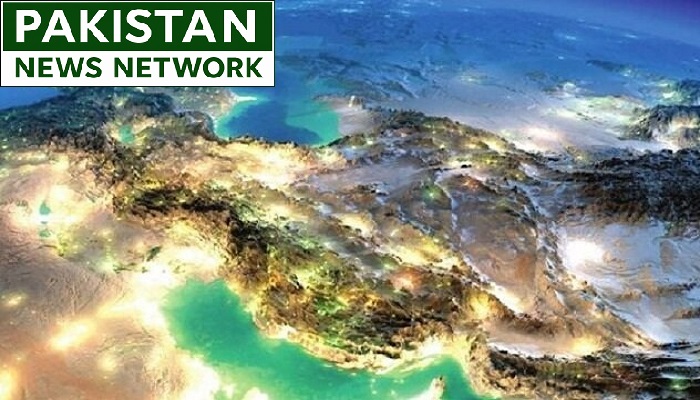
PNN – A Hebrew media outlet admitted that the Strait of Hormuz is Iran’s trump card that the West does not want to believe.
According to the report of Pakistan News Network, the Hebrew-language analytical news outlet Walla admitted in an article within the framework of addressing the history of threats made by Iran over the past decades to close the Strait of Hormuz (in response to hostile actions by its enemies), this is the trump card that the West is not willing to believe and today the worst scenarios related to it (for the West) are coming true.
According to the author of this article, the issue of Iranian sovereignty over this waterway is not a recent one, but has existed for 55 years, even before the Islamic Revolution in Iran was victorious.
In another part of this article, after discussing the history of actions and threats made by Iran over time, the author wrote: It is clear that this was not simply a matter of national pride and returning to the “foundation stone” of the nation’s existence.
The Strait of Hormuz has been in the news throughout modern history, largely because of its enormous economic importance: almost a fifth of the world’s oil and gas passes through it, a fact that has made it a major arena of conflict and a focal point for Iran’s (energy control) agenda, a fact that has been demonstrated repeatedly in recent decades.
Iran’s disruption of shipping in the Strait of Hormuz reached an unprecedented peak after the outbreak of full-scale war with Israel and the United States in February of this year (the 40-day war).
In response to this war (American Zionist aggression against the country), the Iranian Revolutionary Guard Corps closed the Strait of Hormuz, successfully undermining global economic stability (criminal aggression against Iran).
Walla News also admitted: From the very beginning of this war, some warned about underestimating Iran’s ability to choke off the oil trade, an ability that would enable the Iranians to resist surrender in their conflict with the United States, even though they are significantly weaker than the American superpower.
This week, the New York Times reported that the results of military exercises and explicit intelligence warnings about Iran’s ability to close the Strait of Hormuz have been consistently ignored and dismissed by President Trump and his administration.
The newspaper concluded by noting: Warnings about a blockage of the Strait of Hormuz and its dire consequences are nothing new; they have been repeated for decades. Even before the Shah of Iran was overthrown and ousted, he himself was eager to publish dire scenarios on the subject.
Referring to Imam Khomeini’s historic statement that “America can do no wrong,” the publication stated that for Iranians, this statement has become an official slogan that is still used to express their boldness. This slogan has resonated again in the face of the Trump administration, and the threat to the Strait of Hormuz has become the main focus of attention in the Middle East.
When Trump “angrily” rebuked Netanyahu in that phone call this week and ordered him to abandon the plan to attack Beirut, the dire consequences of closing the straits became apparent in an instant— consequence that stem from that persistent failure to assess a threat.
This week’s dramatic events have relegated Israel, at least temporarily, to a secondary role. Americans now have more immediate, broader, and more important interests to manage, and the Strait of Hormuz is at their heart.