
PNN – For India, the Strait of Hormuz is not just an oil transit route; it is a bottleneck that regulates the pulse of the country’s economy. The latest AI simulation shows that New Delhi can weather a short-term crisis, but if the blockade of Hormuz lasts longer than 90 days, energy costs, inflation and the pressure on the livelihoods of millions of Indians will increase significantly.
According to the report of Pakistan News Network; from the Hindustan Times newspaper, The Strait of Hormuz has been at the center of tensions between the United States and Iran since the war began on February 28. Following attacks by the United States and the Israeli regime, Tehran responded by effectively closing the strait, which carries almost a fifth of the world’s oil and a significant share of the world’s liquefied natural gas (LNG).
Although the entire world was affected by the closure, the impact was felt most strongly in Asia, according to a report by geopolitical consultancy Asia Group.
In its latest report, “No Safe Harbor,” the group examined how India could respond if the crisis turns into a prolonged lockdown. The analysis is based on artificial intelligence and uses the company’s proprietary scenario modeling platform, which simulates how governments, businesses, central banks and other key institutions might respond during a crisis.
What did the simulation examine?
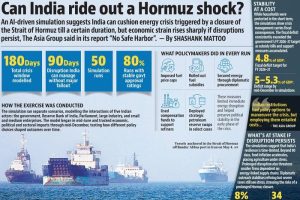
The simulation modeled the interactions of five key Indian stakeholders—the government, the Reserve Bank of India (RBI), Parliament, major industries, and small and medium-sized enterprises (SMEs)—and their reactions to various crisis scenarios; it also examined how India would cope if disruptions in the Strait of Hormuz were to intensify and persist for more than 90 days.
The simulation was run 50 times, modeling interactions over a 180-day period starting June 11, with results evaluated at the 90-day mark (mid-September) and again after 180 days (mid-December).
What did the report find?
The report found that India managed the crisis during the first 90 days in all simulations, but did so by putting pressure on government finances and key sectors of the economy.
The report added that the period after the first 90 days, starting in mid-September, became much more challenging, especially in simulations that considered severe disruptions in the Strait of Hormuz.
In the short term, the simulations showed that government measures such as subsidies and fuel tax cuts helped to mitigate the impact of the crisis. However, these measures also came at a financial cost.
According to the report, while the government’s budget approval rate remained relatively stable in 80 percent of the simulations, the fiscal deficit consistently exceeded the government’s target of 4.8 percent of GDP for fiscal years 2026-2027, and the budget deficit was between 5 and 5.3 percent of GDP by mid-December, depending on the severity of the disruption.
What measures helped limit the impact?
According to the report, policymakers resorted to a combination of measures to mitigate the immediate impact of the crisis. These included temporarily imposing fuel price caps, imposing fuel subsidies, securing alternative energy sources through diplomatic channels, using compensation funds to support refineries, and using strategic oil reserves in selected cases.
The report says these measures helped limit immediate energy disruptions and maintain political stability in the early stages of the crisis.
What happens if the disruption persists?
According to the report, if the disruption lasts longer than three months, India’s capacity to absorb shocks will weaken; while government measures—such as fuel subsidies and tax cuts—can initially help maintain economic stability, they also entail rising costs for the government.
The report states that households will feel the pressure as the price of domestic gas rises and subsidized fuel allocations for low-income families are reduced.
The report said: Continued disruption of the Strait of Hormuz will not derail India’s growth ambitions, but it could increase inflation, widen India’s current account deficit and weaken the rupee, all of which could dampen private investment over time.
The agriculture sector could face higher fertilizer costs because India imports most of its sulfur, a key fertilizer ingredient, from the Gulf countries.
Since about 42 percent of India’s workforce depends on agriculture, even modest increases in agricultural costs could hurt rural incomes and employment, the report said.
According to the simulation, the food Consumer Price Index (CPI) exceeded 8 percent during the September–October period and remained high—albeit generally stable—through mid-December.
India’s pharmaceutical industry—one of the country’s major export sectors—may also face pressure; rising oil prices drive up production, packaging, and transportation costs, while imported raw materials used in drug manufacturing become more expensive.
While larger pharmaceutical companies may be able to absorb these higher costs, smaller manufacturers could face squeezed profit margins.