
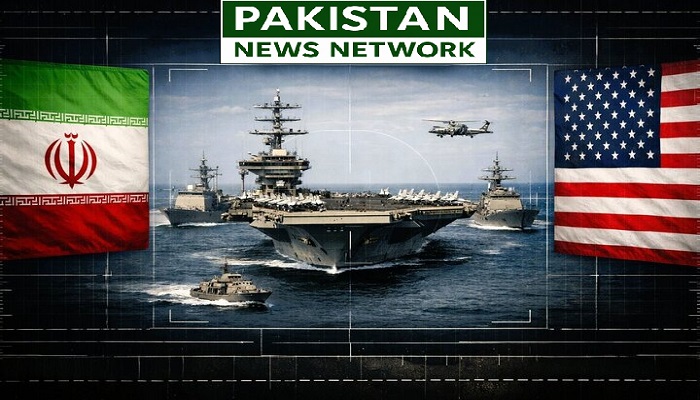
PNN – Developments in recent months show that the America’s war against Iran has not only failed to achieve its declared goals, but has gradually become one of Trump’s most important political challenges within the United States.
According to the report of Pakistan News Network; The forty-day war against Iran was supposed to be a show of force for Donald Trump and his allies; a war that, in the eyes of its planners, could force Tehran to retreat, strengthen America’s position in West Asia, and bring political gains for the US president at home. However, developments in recent months show that this war has not only failed to achieve its declared goals, but has gradually become one of Trump’s most important political challenges at home.
Signs of this development can be seen in the US Congress, the public opinion space, the divisions within the Republican Party, and even the results of the country’s primary elections; where the political costs of the war against Iran are becoming more and more apparent day by day.
Trump’s unprecedented defeat in Congress; a split in the Republican camp
The most important sign of the changing political climate in America can be found in the recent vote in the House of Representatives. By passing the War Powers Resolution, the representatives of this House practically tried to tie the hands of the US President to continue the war against Iran without Congressional authorization. The resolution was approved by 215 votes in favor and 208 against; but what is more important than the result of the vote is the breakdown of the unity of the Republican Party. Four Republican representatives voted in favor of this resolution against the wishes of the White House and the party leadership and joined the ranks of the Democrats.
House Speaker Mike Johnson, one of Trump’s closest allies, warned before the vote that passing the bill would weaken the president’s bargaining power against Iran, but even this warning failed to prevent a portion of Republican votes from falling.
Fox News described the vote as a rare defeat for Trump, writing that representatives from both parties supported a bill that calls for an end to the participation of American forces in military operations against Iran.
This development is significant because in recent years, there has been little evidence of Republicans willing to stand up to Trump’s direct demands. Now, however, the continuation of the war and the lack of a clear vision for its end have caused even some of the president’s traditional supporters to doubt whether to continue on this path.
The War That Drained Trump’s Political Capital
American analysts believe that Trump is in a political bind more than ever. CNN analyst Aaron Blake wrote in a report that the US president is gradually trapped in a “political box”; a situation from which it will be difficult for him to escape.
According to this analysis, Trump thought that he could force Iran to accept an agreement in accordance with Washington’s demands through military and economic pressure, but the passage of time has shown that such a goal cannot be achieved quickly. On the other hand, the continuation of the conflicts and the costs of the war have also increased domestic pressures on the government.
Trump’s declining popularity in the polls, Republican concerns about the upcoming elections, and increasing criticism in Congress all indicate that the war against Iran has turned from a political opportunity into a heavy burden for the White House.
Even some Republican figures who previously supported Trump have now adopted more critical positions. Senators such as John Cornyn and Bill Cassidy are among the figures who have distanced themselves further from the president’s policies in recent months. After losing the primary election, Cassidy even supported the advancement of a plan to limit Trump’s war powers in the Senate.
This situation shows that the failure to achieve the war’s goals and the prolongation of the crisis have gradually depleted the political capital of the US president.
Early Election Effects; Trump-backed Candidates Lose
The effects of the war are not limited to Congress, and its signs can also be seen in the electoral races. Reuters reported that Trump-backed candidate Randy Feenstra lost the Iowa gubernatorial primary. This defeat is notable because Iowa is one of the states that Trump won by a significant margin in the 2024 presidential election.
Political observers say rising fuel prices, rising fertilizer costs and economic pressures on Iowa’s agricultural sector have been key factors in Republican voters’ discontent. Feenstra’s defeat comes as Trump has been trying to assert his influence in the Republican primaries in recent months. However, recent results suggest that the president’s support is no longer a guarantee of victory for his candidates.
In fact, the war against Iran and its economic consequences have gradually become a domestic issue in the United States; an issue that directly affects citizens’ livelihoods and could influence their voting behavior.
Republicans’ Growing Concern about the Party’s Political Future
Perhaps the most important consequence of the war for Republicans is their growing concern about the party’s political future. Many Republican representatives and senators are well aware that if the war continues and its economic and human costs increase, the Republican Party will face serious challenges in the upcoming elections.
For this reason, some of the recent opposition to Trump’s policies should be analyzed in the context of an effort to distance itself from the political consequences of the war. Republicans are concerned that continuing this trend will not only threaten their fragile majorities in some institutions, but also weaken the party’s position in the midterm elections and future races.
At the same time, the stalemate with Iran has also limited Trump’s options. On the one hand, an open retreat could be seen as an admission of defeat, and on the other hand, continuing the war would impose greater political and economic costs on the administration and the Republican Party.
Conclusion
What is being seen in Washington today is not simply a disagreement about the president’s war powers; it is a reflection of the political consequences of a war that, contrary to initial calculations, neither led to Iran’s surrender nor brought any clear gains for the United States.
The forty-day war against Iran has gradually become one of the most important factors in the erosion of Donald Trump’s political capital. The president’s declining popularity, the split in the Republican ranks, the defeat of candidates he supports in the primaries, and Congress’s efforts to limit the White House’s war powers are all signs of the fact that the first political losers of this war must be sought within the United States. If this trend continues, the case for war against Iran may turn from a foreign policy challenge into a determining factor in the political future of Trump and the Republican Party.