
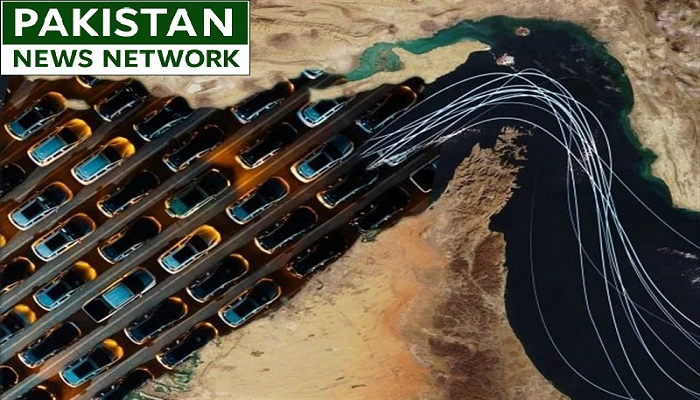
PNN – Japan’s car exports to the Middle East fell by more than 90 percent in April 2026 compared to the previous year due to the closure of the Strait of Hormuz.
According to the report of Pakistan News Network, the blow to the global economy as a result of the US and Israeli attacks on Iran and the closure of the Strait of Hormuz was not limited to the oil market. The devastating shock of this war disrupted the global automotive supply chain and inflicted heavy losses on the world’s largest automakers, especially the Japanese giants.
The crisis showed how vulnerable modern automakers are to disruptions in a sea passage. According to estimates by S&P Global, this war could create a 1.4 million-unit gap in global car sales, 800,000 to 900,000 of which would occur in 2026 alone.
Japan: Auto giants on the front lines of the crisis
Japanese companies have been hit hardest by the coronavirus pandemic, due to their heavy dependence on the Middle East market and transit routes. Japan’s auto exports to the Middle East fell more than 90 percent in both value and volume in April 2026 from a year earlier.
Toyota, the world’s largest automaker, has taken a $4.3 billion (about 670 billion yen) hit in the current fiscal year. This includes rising raw material costs, logistical disruptions and lost sales in the Middle East. In an unprecedented move, the company cut production of vehicles for the Middle East market by about 40,000 units in two months.
Nissan also faced a serious crisis. Production at its Kyushu plant was cut by about 1,200 units, including popular models such as the X-Trail and Serena. At the same time, about 1,400 Nissan Patrol SUVs destined for the Middle East were stranded in Japanese warehouses due to the suspension of exports, leaving the company struggling with storage space. Mazda and Subaru also stopped exports to the Middle East entirely.
South Korea: A crippled supply chain and a costly trip around Africa
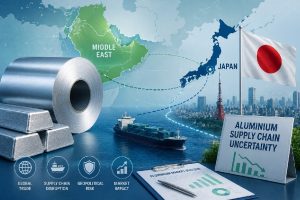
The Hyundai-Kia Group faced a dual challenge. On the one hand, South Korea’s economy is heavily dependent on raw materials that pass directly through the Strait of Hormuz. Naphtha, a key raw material for plastics and automotive parts such as bumpers and dashboards, was facing severe shortages and supply chain disruptions, with around 70 percent of its supply dependent on the Middle East. Aluminum, a key material for the chassis and body of electric vehicles, was supplied by large smelters in the region, such as Alba in Bahrain, and its supply was severely reduced when these plants were attacked and the route was closed. Helium, a gas vital for the production of semiconductors and the many electronic chips in modern cars, was largely supplied by Qatar, and its supply was severely restricted when a state of emergency was declared at Qatari facilities.
Meanwhile, as the Strait of Hormuz closed and the Bab el-Mandeb became more risky, Korean ships bound for Europe were forced to bypass the Cape of Good Hope in Africa. This alternative route added 10 to 15 days to the journey and greatly increased logistics costs. Hyundai CEO Jose Munoz responded to the crisis with a blunt statement: “Globalization is over. It’s over forever.”
Germany: The supply chain is out of breath
German automakers were hit hardest by the shortage of critical raw materials. With the closure of the Strait of Hormuz, large aluminum smelters in the Persian Gulf, which were the main suppliers of parts for companies such as BMW, Mercedes-Benz parts suppliers, and Hyundai Mobis, were unable to fulfill their obligations. Access to the vital element helium, which is essential for the production of semiconductors and is largely supplied by Qatar, was also disrupted. This situation caused the atmosphere for German automaker executives to become sharply bearish in April 2026.
The fatal blow came when Iran, in response to the attack on our country’s vital facilities, targeted the massive Alba aluminum smelter in Bahrain with missiles and drones. The attack caused “unusual downtime” on two of the plant’s production lines.
Alba alone produced 1.6 million tons of aluminum per year and was one of the world’s largest suppliers of high-quality aluminum. The aluminum produced by this plant and other plants on the Persian Gulf coast went directly into the supply chains of major automakers such as BMW, parts suppliers to Mercedes-Benz, and Hyundai Mobis.
The result of the attack was immediate and devastating. The global price of aluminum reached a four-year high of around $3,400 per ton, and production at parts factories that depended on the material was severely disrupted. Smelters in the Persian Gulf officially announced that they were “unable to meet their obligations.” Volkswagen also announced that although its supply chain was not directly affected, “its business in the Middle East has essentially come to a standstill.”
Conclusion:
The recent crisis has clearly demonstrated that the Strait of Hormuz is not just an oil passage, but a vital artery of the world’s industrial supply chain. The closure of this waterway could, within weeks, lead to production disruptions, export halts, and billions of dollars in losses for the world’s largest companies. From Toyota and Nissan in Japan to Hyundai and Kia in Korea, from BMW and Mercedes-Benz in Germany to Tata and Mahindra in India, all have paid a heavy price for the disruption of this passage.
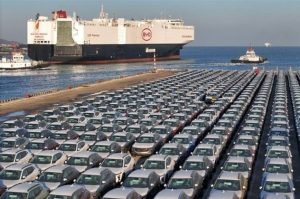
The bitter experience of 2026 showed that the security of global trade is not only tied to oil tankers, but also depends entirely on the cars that travel the streets of Tokyo, Seoul, and Berlin.