
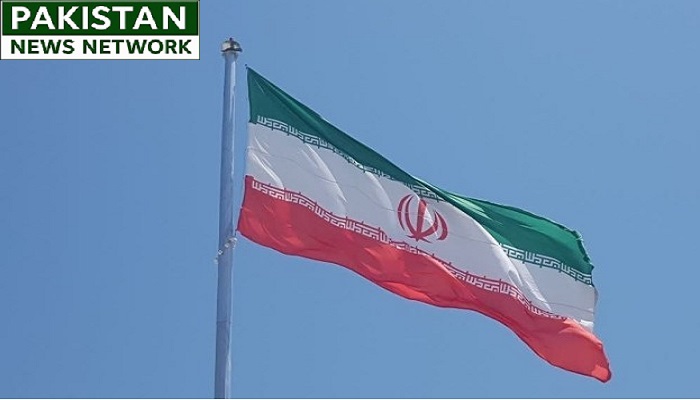
PNN – Assessing the performance of the parties involved in the recent imposed war, Al Jazeera emphasized that, by all standards, Iran was the victor.
According to the report of Pakistan News Network, a recent analysis by Qatar’s Al Jazeera network—examining the outcomes of the war waged by the US and the Zionist regime against Iran, as well as the subsequent memorandum of understanding concluded between Tehran and Washington—assessed the respective gains and losses to determine which side emerged victorious and which defeated. The report noted that merely eight months after the conclusion of the first round of conflict against Iran—specifically the 12-day war of June 2025—the drums of war began to beat once more, this time on a larger scale.
The US’s Ignominious Return to the Negotiating Table with Iran
Just as positive signs emerged regarding a potential political solution—mediated by Oman—to resolve the crisis between Iran and the US, negotiations abruptly stalled, and a major war broke out. This turn of events occurred after Benjamin Netanyahu, the Prime Minister of the occupying regime, succeeded in persuading US President Donald Trump to launch a swift, surprise war aimed at toppling the Iranian regime—or, at the very least, significantly weakening it.
The US military and the Zionist regime initially launched a massive, widespread attack across Iran, during which numerous senior military and political officials were targeted and killed. This action was intended to create a power vacuum and plunge Iran into internal turmoil.
However, the Islamic Republic of Iran managed to withstand the initial shock and responded swiftly and extensively to the US-Israeli aggression. Iran’s response involved expanding the scope of its attacks to target US bases in Arab countries across the region, alongside mobilizing its allies within the Axis of Resistance—particularly in Iraq and Lebanon.
Iran also utilized the Strait of Hormuz as a strategic lever in this conflict to disrupt global energy supplies and precipitate a worldwide crisis. Faced with this situation, the United States concluded that the military option was ineffective and was compelled to return to the negotiating table, ultimately leading to a ceasefire agreement.
Lebanon: A Decisive Factor in the Fate of the Iran-US Agreement
However, the Lebanese front will remain a vital factor in determining the fate of this agreement; for under the terms Iran has emphasized in the deal with the US, Israel must halt its aggression in Lebanon and withdraw from the country—and it is the US’s responsibility to pressure Tel Aviv.
Iran’s insistence on including the Lebanon front in the memorandum of understanding with the United States demonstrates Tehran’s commitment to defending its allies and its steadfastness in preserving resistance groups—particularly Hezbollah.
This stance reflects Iran’s firm belief that any agreement excluding Lebanon would be incomplete and prone to collapse; consequently, Tehran is prepared, if necessary, to let such an agreement fail—and revert to a military option—for the sake of Lebanon.
During the crisis, Iran demonstrated its ability to leverage strategic pressure points—particularly the Strait of Hormuz—to influence the course of the war and impose a ceasefire on the Lebanon front.
This places Israel in a complex dilemma: whether to resist U.S. pressure and insist on remaining in Lebanon—amidst ongoing threats from Hezbollah—or to abide by the ceasefire.
The Secret behind Iran’s Success in Pressuring the US and the Arabs’ Inability to Do So
This situation raises several questions, including: How was Iran able to unilaterally leverage its regional influence to defend its allies and impose its terms, whereas Arab nations—despite possessing numerous levers and mechanisms to pressure the US administration into reining in Israel and halting that regime’s aggression and occupation in Gaza—find themselves unable to do the same?
The inability of Arab nations to pressure the United States into reining in Israel in the Gaza Strip stems not from a lack of resources or leverage, but rather from the absence of a unified political will, deep-seated divisions among these states, and the intertwining of their strategic interests with Washington; this is precisely why Iran is able to exert pressure on the U.S., whereas Arab nations are not.
Assessing the balance of gains and losses: Why do we consider the US and Israel to be the losers?
When weighing gains and losses in a conflict, one must evaluate each party’s ability to achieve its objectives at the lowest possible cost; the party that incurs higher costs without achieving its goals is considered the loser.
This is why, in many regional and international assessments, the United States and Israel are considered the losers of this war; for they entered the conflict as the stronger party and the initiators of hostilities, having announced a set of objectives—including the destruction of Iran’s military capabilities (particularly its advanced missile program) and its nuclear program, the undermining of Iran’s regional influence by dismantling the “Axis of Resistance,” and, ultimately, the weakening of the country’s political system and the creation of conditions for its overthrow.
Here, one must also mention the remarks of U.S. President Donald Trump, who admitted to arming Kurdish forces opposed to the Iranian regime with the aim of having them enter the country and instigate internal unrest—an objective he ultimately failed to achieve.
The U.S.-Israel coalition also gambled on a rapid war—based on a decisive surprise attack targeting the apex of Iran’s power structure—hoping that a resulting power vacuum and internal turmoil would lead to the regime’s collapse; yet, this did not happen either.
Indicators and Criteria of Iran’s Victory
As for Iran—the party that was victimized and militarily weaker—its most significant success lay in absorbing the initial shock and blow, maintaining the stability of the system, and preventing its enemies from achieving their objectives. Furthermore, Iran was able to leverage its strengths to draw its adversaries into a protracted war of attrition that inflicted heavy losses upon them.
Examples include the rapid filling of the void left by the assassination of Iranian political and military officials, the prevention of domestic turmoil, the consolidation of national unity, and the escalation of the conflict into a regional war—and subsequently an international crisis—that compelled the stronger party to return to negotiations following the failure of the military option; notably, this occurred under circumstances where Iran, unlike in pre-war negotiations, had secured greater leverage and was able to dictate its terms.
Based on the terms of the memorandum of understanding between Iran and the United States, a significant portion of the resulting outcomes could have been achieved through diplomatic channels—without the need for war, the erosion of U.S. military deterrence, or the heavy costs associated with conflict.
However, Iran—having had war imposed upon it and having endured intense pressure over the preceding years—managed to rebuild its regional standing; it established itself as a regional power capable of negotiating on equal footing with a superpower like the United States and exerting influence over international equations.
Conversely, this war inflicted heavy human and material losses and plunged the region into a vortex of instability, the repercussions of which extended to the global economy. Amidst this, the Strait of Hormuz became a powerful lever of pressure in Iran’s hands; whereas the strait had been completely open prior to the conflict, Trump was compelled to devote a significant amount of his energy to efforts aimed at reopening it.
Furthermore, prior to this war, the regional and geopolitical landscape—shaped by economic pressures and sanctions imposed on Iran, as well as the blows dealt to the Axis of Resistance (including Hezbollah) following the Gaza war—was entirely favorable to the US-Zionist coalition; Washington could have leveraged these circumstances diplomatically to consolidate its gains without resorting to a costly war. However, the course of this war led to outcomes that ran counter to the wishes and expectations of the United States and Israel. As previously noted, the balance of power is not measured solely by the extent of military capabilities; rather, it hinges on the ability to effectively utilize those capabilities, manage the conflict, and bear its long-term costs. Based on these criteria, we can unequivocally state that Iran was the winner of this war.