
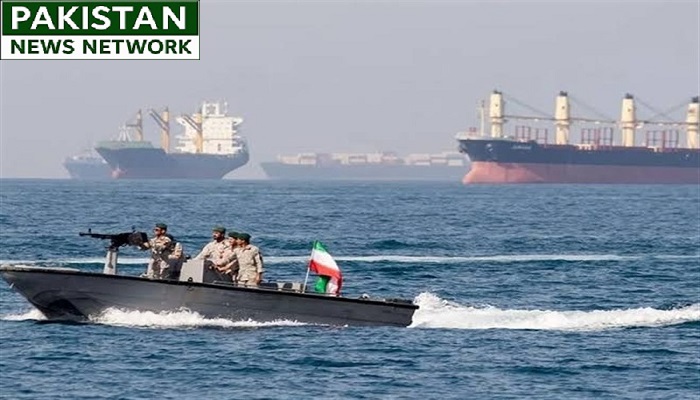
PNN – After months of conflict and incurring billions of dollars in costs, the United States has come face-to-face with the reality of an Iranian order in the Strait of Hormuz.
According to the report of Pakistan News Network; the United States and the Zionist regime launched an attack on Iran on the morning of February 28, 2026, based on the strategic calculation that their absolute military superiority would allow them to impose their will on Tehran within three to four days. However, events unfolded in a manner diametrically opposed to the White House’s predictions. Far from suffering defeat, Iran unveiled a new trump card that altered regional dynamics: an Iranian-led order in the Strait of Hormuz. Today, following months of conflict and billions of dollars in costs for the West, the United States faces a new reality—one in which Washington is no longer viewed as the region’s undisputed power; instead, contrary to expectations, it is Iran that is consolidating and cementing the foundations of its own envisioned order over the Strait of Hormuz and the global economy.
The Failure of U.S. Calculations during the Ramadan War
Prior to the conflict, U.S. strategists believed that their military—in collaboration with the Zionist regime—could launch a swift, devastating strike to neutralize Iran’s nuclear and missile programs while compelling Tehran to fully accede to American demands. However, the war that began on February 28, 2026, dragged on for 40 days; not only did the issues regarding Iran’s nuclear, missile, and regional activities fail to resolve in line with U.S. objectives, but Iran also leveraged a potent new instrument of pressure: the Strait of Hormuz. The closure of this strategic waterway—through which approximately one-fifth of the world’s oil supply had previously flowed—imposed staggering costs on the global economy and forced the United States to retreat from its initial positions.
The 60-Day Agreement: A Deadline That Turned into a Deadlock
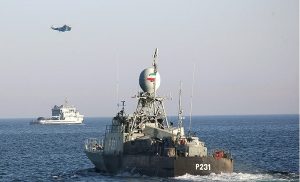
On June 14, 2026, the United States and Iran signed a 14-point memorandum of understanding establishing a 60-day ceasefire and reopening the Strait of Hormuz. Under this agreement, Iran pledged to ensure the free passage of commercial vessels for 60 days, while the U.S. agreed to lift its naval blockade. However, fundamental disagreements persisted; the U.S. failed to honor virtually any of the agreement’s terms and effectively acted in violation of its provisions by attempting to chart an alternative route through the Strait—bypassing the Iranian-controlled path—thereby causing tensions to escalate daily and ultimately leading to a resumption of war.
The Persian Gulf Waterway Management Authority: Establishing an Iranian Order in Hormuz
In May 2026, Iran established the “Persian Gulf Waterway Management Authority” (PGSA) as the official body governing traffic in the Strait of Hormuz. Introduced by Iran’s Supreme National Security Council, this authority is responsible for gathering vessel data, issuing permits, coordinating transit routes, and collecting maritime safety fees. The PGSA soon designated a 340-kilometer-wide area as a “controlled zone,” extending from south of Fujairah (UAE) in the east to the stretch between Qeshm Island and Umm Al-Quwain in the west. This move elevated Iran’s previous approach to a level of “institutionalized sovereignty.”
US Alternatives: From Oman to Failure
In an effort to reduce reliance on the Iranian route through the Strait of Hormuz, the US has considered establishing a parallel route along the Omani side of the strait. However, this option faces serious obstacles: first, alternative routes in Omani waters are subject to navigational and operational capacity limitations, posing a risk of grounding for large vessels. Indeed, a foreign ship recently ran aground while navigating unauthorized paths in the area. Secondly, the only safe and reliable route for passage is the one designated by Iran. Thirdly, the US Navy lacks the capacity to provide constant escort for every vessel traversing this busy waterway. Furthermore, Iran has explicitly declared that any US attempt to interfere with the security of the Strait of Hormuz would be regarded as a “threat to national sovereignty” and would be met with a “swift and decisive response.”
A Warning to Neighbors: Direct Negotiation Replaces Reliance on the US
Amidst this, the Persian Gulf states face a pivotal choice—more critical now than ever before. Recent months have clearly demonstrated that relying solely on US promises offers no guarantee of security; instead, it has exposed these nations to the perils of a costly proxy war. With the consolidation of an Iranian-led order in the Strait of Hormuz and the establishment of a formal management structure for the Persian Gulf waterway, a new regional reality has emerged—one that can no longer be ignored.
The Arab states of the southern Persian Gulf—from Kuwait and Bahrain to the UAE and Saudi Arabia—should adopt a pragmatic approach rather than clinging to past positions or waiting for a return to the status quo (which now appears impossible). This approach entails direct, bilateral negotiations with Iran to clarify the terms for the safe and sustainable passage of their commercial vessels, while acknowledging Tehran’s role in managing the waterway. Negotiating with Iran is not a sign of weakness; rather, it reflects a sound understanding of new geopolitical realities and a prudent effort to secure national interests, free from the influence of political emotions.
Countries that continue to pin their hopes on Washington’s promises must bear in mind that the U.S. has reached a dead end in the Strait of Hormuz; experience has shown that regional security is ensured solely through direct dialogue among neighbors, not by relying on military forces or granting bases to extra-regional actors.
Conclusion
Through this war, Iran has defined a new regional order—one in which control over the Strait of Hormuz has evolved into a permanent, institutionalized lever of pressure that persists even after the conflict has ended. By establishing a management body for the Persian Gulf waterway and setting clear regulations for vessel passage, Iran has effectively created a new model of operational control over traffic in the Strait of Hormuz, which has now become a central axis of geopolitical conflict.
The United States, having entered the fray anticipating a conflict lasting only a few days, now faces staggering costs, diplomatic deadlocks, and the ceding of control over one of the world’s most vital waterways to Iran. As a senior Iranian official has rightly noted, Iran has secured “a historic opportunity to ensure its long-term supremacy.”
Under these circumstances, the Persian Gulf states have no choice but to accept the new reality and initiate direct negotiations with Tehran. Continued reliance on failed U.S. strategies will not only fail to ensure their energy security but will also leave them in a more vulnerable position. Only through direct dialogue with Iran can stable conditions for safe passage through the Persian Gulf be established and national interests secured without the heavy costs of proxy warfare. Experience has shown that major errors exact a heavy price; it appears that, in its calculations regarding Iran, the United States has committed the greatest strategic blunder of the modern era.