
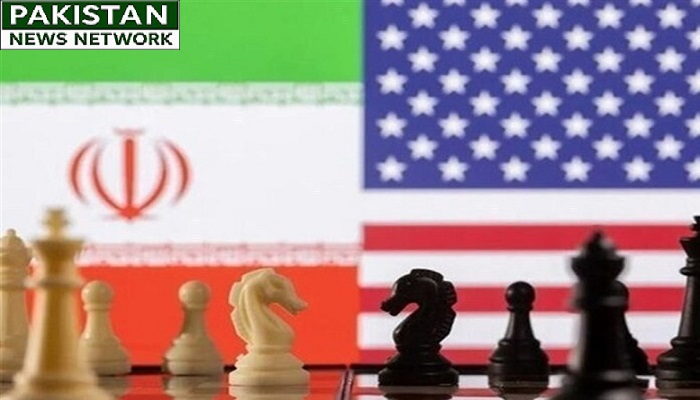
PNN – Al-Araby Al-Jadeed has examined the challenges and obstacles facing the U.S. plan to intensify sanctions and wage economic warfare against Iran.
According to the report of Pakistan News Network; amidst ongoing analyses regarding the U.S. economic war against Iran—launched after Washington’s humiliating failure in a military confrontation despite exhausting all available options—the Qatari website Al-Araby Al-Jadeed published an article titled “Challenges and Obstacles to Washington’s Plan for Economic War against Iran.” The article explores the reasons behind the likely premature failure of this strategy, noting that the United States is betting on strangling Iran’s economy to force Tehran to accept terms it had refused to yield to even under bombardment.
Dimensions of the US Economic War against Iran Following Military Failure
This US plan entails penalizing countries and companies that continue to trade with Iran, as well as blocking the nation’s oil exports and its financial and land routes; it represents the most significant effort to isolate Iran since the conflict began six months ago.
In this context, last Thursday—following the breakdown of diplomatic channels and the failure to reach an agreement—US President Donald Trump announced the launch of what he termed an “unprecedented and grueling economic process,” threatening any country that persists in trading with Iran.
However, the intensification of the US blockade against Iran faces significant challenges due to the country’s land borders with seven nations, its ties to China and Russia, and its reliance on trade routes that lie beyond US maritime control.
Meanwhile, the implementation mechanism for this US economic war against Iran remains unclear, pending the announcement of details by US Treasury Secretary Scott Bessent on Monday. However, early indications suggest that—having exhausted most of the direct sanctions it could impose on Iran—Washington will rely on secondary sanctions targeting Tehran’s trading partners.
Washington seeks to complete its maritime blockade of Iran by pressuring land routes, transit networks, and financial and aviation services—a strategy that potentially places pressure on Iraq, Turkey, and Pakistan.
Iran’s Readiness to Confront U.S. Pressure
Meanwhile, Iranian officials do not view this new economic pressure in isolation from security and military conflicts. On Sunday, Iranian President Masoud Pezeshkian stated that the country is facing an all-out war—encompassing economic, military, and security dimensions—adding: We have persevered and are striving to serve the people while facing this unequal war.
Mohsen Rezaei also threatened that Iran could block oil shipments passing through the Persian Gulf and target the interests of countries participating in the blockade. Furthermore, Iran possesses extensive experience in countering sanctions and selling its oil despite existing restrictions.
The Secretary of Iran’s Supreme National Security Council also announced the preparation of an “economic security document” designed to assist companies and the private sector in maintaining their operations.
Separately, the heads of the three branches of government—President Masoud Pezeshkian, Parliament Speaker Mohammad Bagher Ghalibaf, and Judiciary Chief Gholamhossein Mohseni-Ejei—met in Tehran on Saturday to discuss strategies for managing the economy, alleviating the burden of the cost of living, and supporting vulnerable groups.
Iran’s Capacities to Counter the US Economic War
Although the economic war declared by the US may increase costs for Iran and its neighbors, Tehran’s adaptability, its extensive experience in countering sanctions, its numerous alternative trade routes, and the integration of its economy with national security make the US goal of “complete economic isolation” for Iran difficult to achieve.
Economists believe that while the new US pressures impose costs on Iran, they cannot effectively isolate the country; Tehran can overcome these impacts by facilitating trade relations with neighboring nations.
Observers believe the oil sector will bear the brunt of this blockade, followed by the gas sector. However, Iran has faced severe Western sanctions for 47 years and has successfully countered them through various methods, including relying on intermediary companies to circumvent restrictions.
Furthermore, Iran now possesses significant military power that enables it to exert pressure on Washington, turning this conflict into a “contest of resilience” and endurance.
While it is true that the intensification of sanctions impacts Iranian society and its economic indicators, the extent of this impact must be examined within the proper context. In this regard, Iran possesses a deep “institutional memory” and a wealth of accumulated experience—spanning nearly half a century—in confronting various forms of economic pressure.
Sanctions against Iran have reached their peak in recent years, encompassing the majority of economic and political institutions as well as influential figures; the United States has spared no entity or commercial activity in Iran—regardless of size—from these sanctions.
This very experience has made Iran more adept at devising ways to circumvent restrictions and mitigate their impact. The recent US naval blockade against Iran represents a major, unprecedented escalation in sanctions, directly affecting export terminals and maritime shipping operations while creating obstacles to oil sales via chartered supertankers.
However, despite the painful operational costs involved, this blockade will not achieve its objectives to the extent anticipated by Washington and its allies—owing to Iran’s geostrategic position and the vast geographical scope it offers for maneuvering.
Iran’s Alternative Transit Strategy
In this context, data from the energy analytics firm Kpler indicates that China accounts for 80 to 90 percent of Iran’s oil exports. A Bloomberg report further notes that independent Chinese refineries operate without ties to the U.S. financial system, and that imposing sanctions on major Chinese banks would push relations between Washington and Beijing to a breaking point ahead of bilateral diplomatic meetings.
Meanwhile, an analytical report by the platform The Cradle shed light on the dimensions of Iran’s alternative transit strategy designed to counter U.S. pressure, revealing that following the imposition of a maritime blockade, Tehran has shifted the bulk of its trade from waterways to rail and road networks.
The platform emphasized that the increased frequency of freight trains on the direct line connecting China and Tehran—operating within the framework of the Belt and Road Initiative—has kept secure trade routes between the two nations open.
Furthermore, the activation of the North-South Corridor, involving Russia and India, has established stable overland supply lines that remain beyond the reach of the U.S. Navy and impervious to traditional sanctions mechanisms. This renders the imposition of total economic isolation on Iran extremely costly—and practically impossible—for Washington.
The Geographical Challenge Facing the U.S. Plan to Intensify Sanctions on Iran
Meanwhile, the United States faces a challenge rooted in Iran’s geography as it seeks to comprehensively isolate Tehran economically. The country’s vast land area—approximately 1.6 million square kilometers—along with its expansive geography and strategic location, creates options and opportunities that impact the effectiveness of U.S. pressure and lend greater resilience to the Iranian economy.
Iran’s non-oil foreign trade data for the first ten months of the previous year—prior to the war—reveal a diverse exchange network spanning key regional and Asian markets. China tops the list of export destinations with approximately $11 billion, followed by Iraq ($8 billion), the United Arab Emirates ($6.5 billion), Turkey ($5.5 billion), and Afghanistan (approximately $2 billion).
Regarding imports, the United Arab Emirates ranks first with approximately $15 billion, followed by China ($13.5 billion) and Turkey ($8 billion), while India and Germany each accounted for approximately $1.5 billion in imports.
Furthermore, trade with Turkey—Iran’s western neighbor—which has reached approximately $13.5 billion ($8 billion in imports and $5.5 billion in exports), exemplifies an economic interdependence reinforced by geographical proximity, shared land borders, and integrated transportation networks.
Consequently, a complete halt to this trade route is impossible; thus, while U.S. measures may drive up transaction costs and complicate supply chains, the goal of isolating Iran faces significant challenges given the realities of geography and the scale of mutual economic interests shared by Iran and its regional and international partners.