
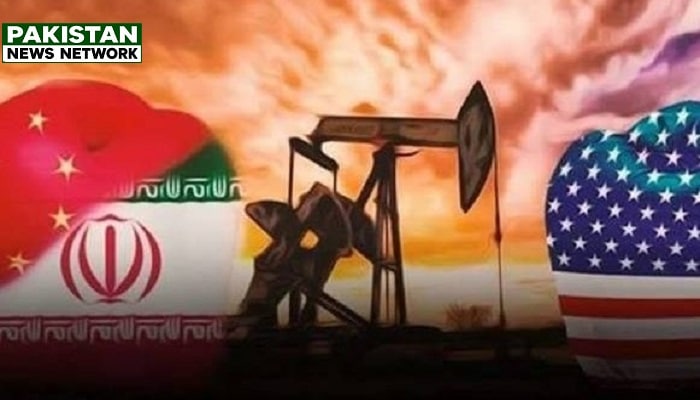
PNN – The cooperation of countries such as Russia, China, Pakistan, and Turkey has thwarted U.S. efforts to cripple Iran’s economy.
According to the report of Pakistan News Network; the analytical institute GIS Reports has examined U.S. efforts to economically isolate Iran, as well as Tehran’s strategies involving alternative land and maritime routes. Key points of the report include the following:
- Failure of the Strategy of Total Isolation and Ineffectiveness of Sanctions
Although the intensification of US economic sanctions has imposed heavy costs on Iran’s foreign trade, it has failed to paralyze the Iranian economy, thanks to parallel corridors and new trade networks with neighboring countries.
- Shifting Focus from the Persian Gulf to Northern and Eastern Corridors
Faced with restricted access to Persian Gulf ports and the severance of trade ties with the UAE, Iran has redirected its transit activities toward Caspian Sea ports (such as Anzali and Amirabad) and land borders with Pakistan, Türkiye, and Central Asia.
- Pakistan’s Key Role in Circumventing Sanctions
By designating six road corridors linking the ports of Karachi and Gwadar to the Taftan and Rimdan border crossings—and by facilitating barter trade, utilizing the TIR Convention, and bypassing the US dollar system—Pakistan has become a vital lifeline for Iran in the procurement of essential goods and fuel.
- Strategically Strengthening the International North-South Transport Corridor (INSTC) with Russia
The interconnection of Iran’s SEPAM and Russia’s SPFS financial messaging systems, the elimination of the US dollar in 90% of transactions through Rial-Ruble exchanges, and the expansion of rail and maritime routes along the North-South Corridor have established stable supply lines that operate beyond the control of the US Navy.
- Development of overland rail links with China via Central Asia
Connecting Chinese rail lines to Iran via Turkmenistan and Kazakhstan has established a secure route for the exchange of goods; while the volume of rail transport is more limited compared to maritime routes, it remains immune to maritime blockades.
- Economic resilience
Iran’s foreign trade is projected to reach approximately $76 billion by 2026—a figure that, despite being lower than pre-war levels, is sufficient to weather the “maximum pressure” campaign of the Trump era.
- Conclusion
An analysis by GIS Reports indicates that the cooperation of countries such as Russia, China, Pakistan, and Turkey—through the establishment of parallel transit and financial networks—has thwarted Washington’s attempt to completely paralyze Iran’s economy, merely increasing the cost for Tehran to circumvent sanctions.