
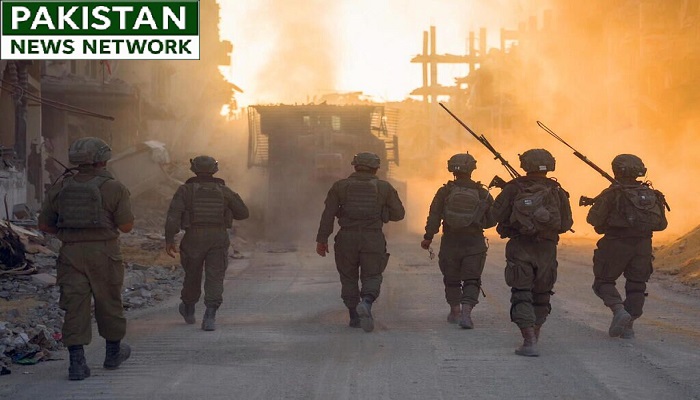
PNN – Avi Ashkenazi, a military affairs correspondent for the Israeli newspaper Maariv, addresses the challenges facing the Israeli military and the pressure exerted on it by politicians, noting that the cost of political decisions weighs heavily on exhausted combatants on the battlefield.
According to the report of Pakistan News Network; the Israeli army has been engaged in war on multiple fronts for over three years while simultaneously grappling with numerous challenges. In an article published today, the Maariv newspaper—after examining the standard challenges facing the Israeli military—notes that the Chief of the General Staff is also under pressure from politicians, warning that unless this trend is halted, the situation will deteriorate day by day.
The Hebrew-language newspaper Maariv begins its article by stating that the Israeli army is in dire straits. First and foremost, a manpower crisis is exerting pressure on the force; the army has lost thousands of combatants and combat support personnel. According to the Israeli army, the manpower shortage has reached 12,000 troops.
Maariv went on to state that the second challenge is a budget shortfall amidst the current economic climate, alongside the urgent need to bolster support for the troops. The Israeli military faces an annual funding gap of 40 to 50 billion shekels (approximately $17 billion); furthermore, additional funding is required for a multi-year plan aimed at strengthening and supporting the forces—an initiative estimated to cost 350 billion shekels (approximately $120 billion).
Maariv added that the Israeli army has been fighting on multiple fronts for nearly three years, adjusting the intensity of its operations based on developments on the ground. The military’s established practice involves issuing call-up orders for reservists to participate in various conflicts—such as “Northern Shield,” “Bashan Shield,” “Gideon’s Chariots” (I and II), the 12-Day War, and the 40-Day War with Iran—encompassing both personnel and equipment requirements.
Avi Ashkenazi went on to write: The IDF’s missions have increased over the past three years and, in some instances, have become exceptionally complex. On the other hand, the IDF does not possess limitless resources; its manpower is notably limited, and its equipment is suffering from wear and tear with each passing day and mission.
The military affairs correspondent for the Maariv newspaper went on to write: Today, only a very small percentage of the Israeli public bears this burden. The number of regular and reserve soldiers who have been engaged in combat over the past three years does not exceed two percent of Israel’s total population. The rest sit on the sidelines, posing as experts on Middle East security and strategy.
Ashkenazi continued: This pressure on the army comes at a time when politicians, seeking to appease their political base, occasionally issue statements about winning the war—calling for the leveling of Dahiyeh or continuing the conflict until Hezbollah is disarmed. Yet, these pronouncements lack any operational justification; they are merely hollow, empty slogans intended to mask the lack of strategy and planning within the political leadership. Ultimately, it is that same two percent who are forced to pay the price for these publicity stunts.
The article goes on to state that the Israeli military has failed to manage the manpower crisis. The issue is that the government is unable to pass a mandatory conscription law. The military has been neglected by both the government and the Knesset, and it is the exhausted, worn-out soldiers who are paying the price for this situation.
Maariv continues in the article: The problem with the IDF’s approach is that it has not prepared concrete plans for its rank-and-file soldiers. Today, they receive the lowest wages—even lower than those of foreign workers. Over the past three years, the IDF has failed to adapt to the changing reality; worst of all, it is currently not explaining to soldiers nearing discharge what awaits them in the near future.
Ashkenazi concluded by writing: It is time for the Chief of the General Staff, Major General Eyal Zamir, to wake up. He commands an army that draws its manpower from only two percent of Israelis; this situation deals a fatal blow to the entire military.