
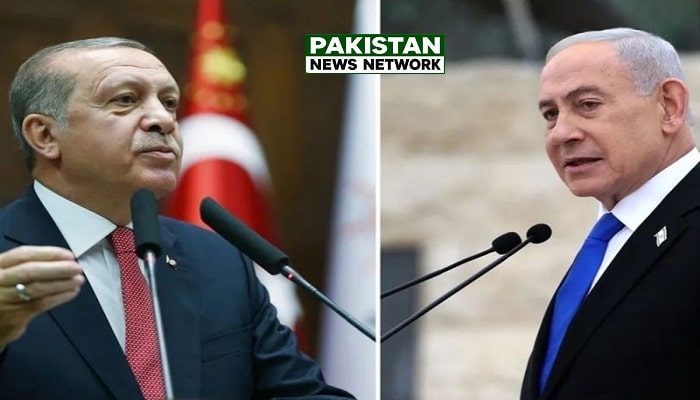
PNN – The newspaper Maariv reported that Israel views the agreement between Turkey and Libya as a strategic risk and threat.
According to the report of Pakistan News Network; this Hebrew-language outlet emphasized that the approval—by the parliament in eastern Libya—of the maritime boundary delimitation agreement signed with Turkey will directly impact Israel, as it will complicate the connection between Israel and European energy infrastructure via Cyprus and Greece.
The report further states that the agreement between Turkey and Libya could complicate Israel’s integration into Europe’s energy infrastructure via Cyprus and Greece. A tangible risk concerns the energy transmission cable intended to link Israel to the European grid; Ankara asserts that part of the cable’s route passes through an area under its jurisdiction and is demanding prior coordination for the conduct of field surveys.
The endorsement of this agreement by the parliament in eastern Libya strengthens its political position and could pave the way for demands that might delay operations, drive up project costs, and deter investors.
From Israel’s perspective, a potential consequence of this situation is the postponement of options for electricity imports and exports, as well as an increased need for support from the United States and Europe. However, this agreement does not automatically grant Turkey the right to block Israeli shipping, nor does it resolve the legal dispute concerning maritime boundaries and rights within the contested area.
According to this Zionist media outlet, other countries—such as Greece—have also characterized this demarcation of borders as illegal.
However, Cem Gürdeniz—a retired Turkish admiral credited with formulating the “Blue Homeland” concept—offered a very firm interpretation. This concept, which he began promoting in 2006, emphasizes the importance of maritime zones to Turkey’s power and interests.
Commenting on this decision, Gürdeniz wrote that the move represents “one of Turkey’s most significant diplomatic achievements in recent years within the struggle for the ‘Blue Homeland’.” According to him, the shift in the position of Haftar’s camp deals a major political and diplomatic blow to Greece, its European backers, and the United States.
He asserted that Athens’ strategy—which sought to exploit internal divisions within Libya in order to neutralize Turkey’s maritime claims—has suffered a severe setback.