
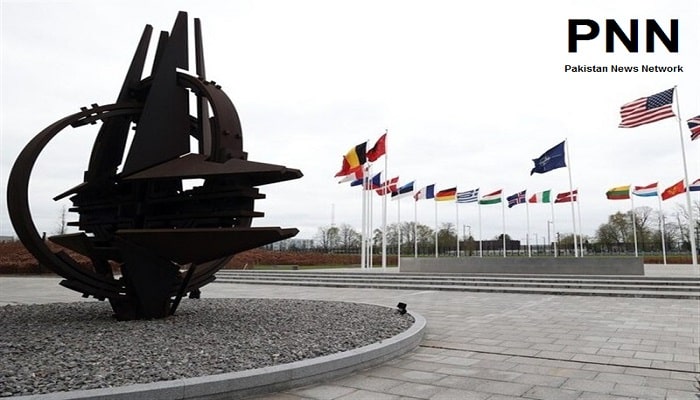
PNN – NATO is reorganizing its eastern defense structure for crisis situations.
According to the report of Pakistan News Network, citing Focus magazine, NATO is reorganizing its eastern defense structure. A new unit is supposed to send troops to Latvia and Estonia more quickly in case of emergency.
In this way, NATO is reorganizing its defense forces along its eastern border. The alliance intends to provide security to the Baltic States more quickly in the event of a conflict.
An additional unit is to be created for this purpose. In the event of a war with Russia, NATO will be able to deploy its forces more quickly in Latvia and Estonia.
Currently, NATO forces in the three Baltic States and northern Poland are under the command of a multinational headquarters in Szczecin, Poland.
The planned change will significantly alter the command structure. According to the report, the change takes into account the special situation of the Baltic States. Since Russia’s invasion of Ukraine, they have become a greater focus in the alliance’s planning.
A military representative described the purpose of the new unit as enabling the rapid deployment of large forces. He said this refers to the faster deployment of larger forces in the event of a crisis or war. This is especially important for a region that is considered militarily vulnerable due to its shallow depth.
According to the report, Germany and the Netherlands have reached an agreement with NATO to entrust the defense of Latvia and Estonia to the German-Dutch unit in Münster.
A fully operational army corps usually commands three divisions with approximately 40,000 to 60,000 soldiers. In peacetime, the corps consists mainly of a core structure with branches such as artillery, air defense, engineering and medical forces. This structure can be expanded rapidly if needed.
It is not yet clear, however, whether the so-called corps forces will be available in sufficient numbers. These are the capabilities that are needed for large-scale deployment. Germany and the Netherlands are now set to develop these capabilities together with other partners.
It is not yet clear when the decision will be officially implemented. The number of soldiers who would be under the new command in the event of a conflict is also not yet known.
The Dutch Ministry of Defense said that the allocation of the corps was still being finalized.
The German Ministry of Defense declined to comment on the matter, citing ongoing consultations with NATO. The NATO military alliance said it would issue a statement on the matter at a later date.