
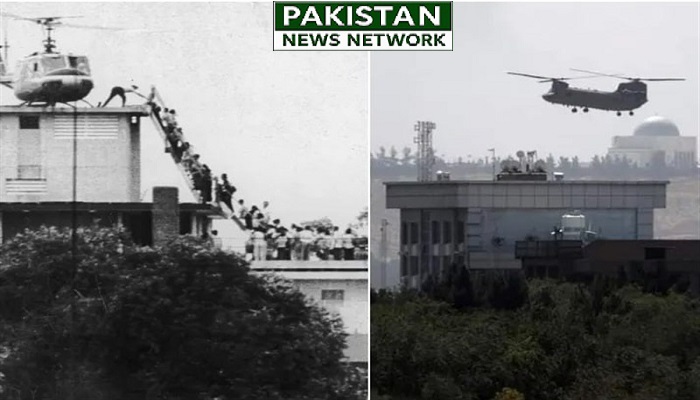
PNN – Is the US economic campaign against Iran—as Washington claims—the start of a new Normandy, or a prelude to the fall of Saigon?
According to the report of Pakistan News Network; Donald Trump’s terrorist administration has recently compared its so-called new sanctions policy against Iran to “D-Day,” dubbing it an “economic Normandy invasion” against the country.
“D-Day”—June 6, 1944—marked the massive Allied invasion of the beaches of Normandy, France; it is considered the largest amphibious operation in history and a turning point in World War II, initiating the sweeping advance that led to the liberation of Western Europe and the ultimate defeat of Nazi Germany.
In military and political discourse, Normandy symbolizes meticulous planning, an unparalleled international coalition, a surprise offensive, and—above all—the will and capacity to deliver a decisive blow to end the war; viewed in this light, the new sanctions are intended to convey to the public that the Trump administration is not pursuing a routine measure, but rather a decisive, sweeping, and consequential strike designed to shatter Iran’s economy and pave the way for ultimate victory.
However, when we strip away the promotional layers surrounding this designation and consider other evidence—such as the analysis of statements made by U.S. Treasury Secretary Scott Bessent on the day the sanctions were announced (Monday, August 24), the realities of the war against Iran on the ground, trade dynamics, Washington’s past conduct, and the views of international sanctions experts—we are confronted with a different set of realities that could fundamentally alter the framing of the issue.
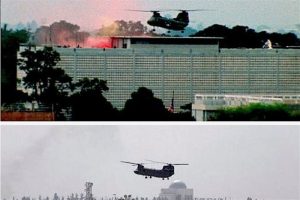
In that case, the new U.S. economic operations against Iran—rather than evoking the image of a successful Allied deployment—could instead conjure up memories of the last U.S. helicopter departing Saigon following the defeat in the Vietnam War, or the final U.S. helicopter flight from Kabul in 2020 after the defeat in the war in Afghanistan.
Key Clues in Bessent’s Remarks
Barely an hour had passed since the White House unveiled a new tool for what Scott Bessent termed an economic exclusion operation to economically strangle Iran, when he himself revealed the reason for his hesitation to employ it.
Speaking to reporters at the U.S. Treasury, Bessent stated that secondary sanctions against Iran were ready for implementation; yet, he deliberately refrained from naming the primary nations that would need to be targeted for the sanctions to be effective—namely, China and Russia.
Consequently, he was asked why he was resorting merely to threats rather than implementing the sanctions. Bessent replied: Why would I want to blow up the global financial system?
Daniel Fried—a senior fellow at the Atlantic Council and former U.S. Assistant Secretary of State for European Affairs—interprets the Treasury Secretary’s remarks as signaling a new U.S. policy that threatens punitive measures against third countries failing to sever economic ties with Iran; however, carrying out such a threat entails costs and risks that Mnuchin himself has shown little inclination to accept.
The Boomerang Effect of Secondary Sanctions
Imposing secondary sanctions on Iran—which entails penalizing countries that trade with Tehran—is a powerful tool; however, experts warn that it could inflict serious damage on the United States itself, effectively acting as a boomerang.
Jason Prince, a sanctions attorney at the Washington-based law firm Akin Gump and a former U.S. Treasury Department lawyer told The Atlantic in an interview on Tuesday that these tools are so powerful that their full implementation could have far-reaching consequences.
Prince stated that announcing secondary sanctions—even merely as a threat—constitutes an economic gamble that could have detrimental effects, the repercussions of which would resonate far beyond Iran.
He further noted that the problem lies in the fact that secondary sanctions render the United States itself more vulnerable at a time when the American economy is already under strain.
Nate Swanson, a senior fellow and Iran Strategy Project manager at the Atlantic Council, said in an interview with the think tank that while fully implementing this pressure campaign would indeed harm Iran, it would also deal a blow to the U.S. economy; moreover, the Persian Gulf states would suffer even more than the United States.
The U.S. technology, manufacturing, and financial sectors are likely to take the hardest hit.
However, this damage is not merely a theoretical possibility. The mechanism of secondary sanctions essentially means that, in order to exert pressure on Iran, the U.S. must pass on a portion of the associated costs to third-party companies, banks, and countries. The more Washington seeks to implement these sanctions broadly and effectively, the greater the scope of these costs will be.
China is a clear example of this. It is the largest buyer of Iranian oil, with Chinese refineries absorbing nearly 90 percent of the country’s exports. Consequently, if the Trump administration were to target major Chinese banks, refineries, and corporations in an effort to sever Iran’s primary economic lifeline, it would no longer be dealing merely with small firms or intermediaries; instead, it would directly encroach upon China’s economic interests.
Many U.S. sanctions experts analyze that, at this stage, Washington has refrained from targeting major Chinese financial institutions for precisely this reason.
This is the point where sanctions could shift from a tool of pressure against Iran into an economic dispute between the United States and China. Beijing has already warned that if its interests are targeted, it will respond to protect its rights and interests.
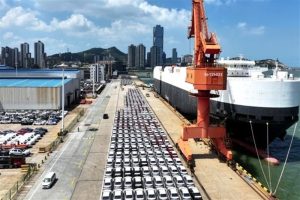
On the other hand, the timing does not seem ideal for the U.S. to take action against China, given that the trade truce between the two nations is nearing its end, Xi Jinping is scheduled to visit Washington, and the U.S. is approaching midterm congressional elections.
Nathan Sales—a resident senior fellow and director of the Iran Strategy Project at the Scowcroft Middle East Security Initiative—asks: Is Donald Trump truly willing to risk escalating trade tensions with China by taking necessary measures against Chinese banks, refineries, and ports to curtail trade with Iran? Is the U.S. economy prepared to withstand a retaliatory response from China? Such measures would be extremely difficult to implement.
Should the United States seek to reignite the trade war with China, Beijing could once again—as it did last April—subject the U.S. to “maximum pressure” by halting the export of rare earth elements; a move that previously forced Trump to back down from the trade conflict.
Last year, China’s restrictions on rare earth exports plunged the U.S. automotive and defense sectors into an “unprecedented crisis,” with American automakers warning that shortages would halt factory production and cause “serious disruption” to the defense industry.
Rare earth elements have extensive applications across key industries—particularly the defense sector—to the extent that it is said virtually any device capable of being switched on or off likely relies on them. While the United States led the production of these materials until the 1980s, it subsequently ceded the market to China following the closure of its own mines and now relies on that country for 80 percent of its supply.
Furthermore, in recent years, China has established a suite of regulations and mechanisms to counter foreign sanctions; consequently, sanctioning a major Chinese bank or company does not necessarily mean an end to its trade with Iran and could instead trigger a new round of countermeasures.
On the other hand, U.S. pressure could drive foreign countries and companies to establish financial channels outside the dollar’s sphere of influence. This does not mean that U.S. sanctions will rapidly dismantle dollar dominance; such a claim is inconsistent with current global economic realities. However, the extensive use of the dollar as a sanctions tool increases the incentive for countries concerned about exposure to U.S. policies to create alternatives.
Of course, a distinction must be made here: a reduction in the dollar’s role in certain transactions is not the same as the loss of dollar dominance. The dollar remains far ahead of its rivals, with its position sustained by the depth of U.S. financial markets, high liquidity, and the absence of a truly comparable alternative. However, the repeated use of financial sanctions could, in the long run, increase the incentive to establish parallel mechanisms.
Another “boomerang effect” of secondary sanctions for the United States is the increased cost and complexity of doing business for American companies themselves. Secondary sanctions are most effective when foreign firms and banks perceive the risk of losing access to the U.S. market and financial system as outweighing the profits from trade with Iran. However, if foreign companies gradually find alternative methods for payment, financing, and transaction settlement, the sanctions lose some of their potency, and global trade shifts toward more complex and costly networks.
This issue is of particular importance to the United States, as the easier it becomes to circumvent sanctions, the more Washington is compelled to constantly target new companies, banks, intermediaries, and routes to maintain the same level of pressure. The U.S. Department of the Treasury has effectively acknowledged this reality in its campaign against networks facilitating the evasion of Iran sanctions; in recent months, the department has repeatedly targeted networks of companies, currency exchange houses, oil brokers, and even channels linked to digital assets.
Consequently, secondary sanctions are not a “cost-free” tool for the United States. With every new sanction, Washington effectively forces the other party to make an economic calculation: do the benefits of trading with Iran outweigh the risk of losing access to the U.S. market and the dollar-based financial system? If the answer for many countries is “no,” the sanctions have succeeded. However, if major powers like China decide not to bear the cost of severing ties with Iran—and instead develop their own parallel financial and trade systems—the United States will enter a more difficult phase.
In this scenario, the economic pressure is no longer directed solely at Iran. The United States must strike a balance between two objectives: maintaining pressure on Iran while avoiding shocks to its economic relations with China and the global financial system. Statements by Bassent himself indicate that the U.S. administration is aware of this dilemma; on one hand, he views secondary sanctions as a “very powerful tool,” while on the other, he states that he does not wish to “blow up the global financial system.”
That is why, in the initial phase of the “economic exclusion operation,” Washington targeted dozens of companies, individuals, and vessels linked to Iran but refrained from targeting major Chinese banks crucial to Iran’s oil trade.
In fact, the very strength of secondary sanctions is also their weakness. These sanctions are potent only when economic actors value their access to the U.S. market more than their ties to Iran. However, if this tool is employed so extensively that it drives major powers to establish alternative channels for trade, payments, and financing, the very instrument intended to isolate Iran could gradually foster the emergence of economic networks operating beyond U.S. influence.
For this reason, the central issue is not merely whether new sanctions can damage Iran’s economy—there is virtually no doubt about that. The more critical question is how high a price Washington is willing to pay to inflict this damage, and whether it is prepared to jeopardize its own economic ties with powers like China—as well as the stability of the international financial system—in order to sever Iran’s connection to the global economy.
And this is precisely where an “economic D-Day” could turn into a double-edged sword: sanctions may target Iran’s economic arteries, but the further Washington goes in attempting to sever them, the greater the likelihood that the costs of this pressure will spill over onto the United States itself and its allies.
U.S. Constraints
The challenge for the United States is not merely that secondary sanctions could entail economic costs for its own economy; sanctions experts have repeatedly noted that while announcing sanctions on paper is one thing, their actual implementation hinges on a multitude of variables—most notably, the cooperation of other parties.
One of the key constraints facing Washington at this stage involves the Arab states of the Persian Gulf. Media reports indicate that, in recent years, Iran has utilized trade and financial networks based in regional countries—particularly the United Arab Emirates—to sustain its commerce and facilitate money transfers.
Consequently, if the U.S. intends to make secondary sanctions truly effective, it must press these Arab nations to sever parts of their economic ties with Iran; yet, under current circumstances, these countries have little incentive to engage in such a confrontation.
A major challenge for Washington lies with nations like Saudi Arabia, which—rather than pursuing a policy of “isolating Iran”—have in recent years moved toward de-escalation and the establishment of relations with Tehran.
Many reports and analyses indicate that, unlike during Trump’s first term, the Persian Gulf states are no longer at the forefront of efforts to isolate Iran—a trend that has intensified, particularly following the recent war.
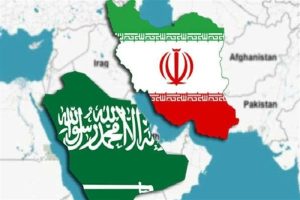
Therefore, persuading Persian Gulf powers—particularly Saudi Arabia, given its recent shift toward diplomacy and de-escalation with Iran—will require significant commitment and strategic planning on the part of Washington.
Comparing U.S. economic operations to the Normandy landings is problematic for this very reason. Thomas Warrick of the Atlantic Council notes that if there is a lesson to be drawn from the D-Day experience of 1944, it is that the crucial asset the U.S. possessed then—but lacks today—was a set of committed and coordinated allies. In 1944, the United States, Great Britain, and other coalition members not only engaged in a joint military operation but also shared a unified plan to sustain the war effort and achieve victory.
Retreat to the Economic Front
However, the limitations associated with U.S. enforcement of secondary sanctions go beyond the mere difficulty and high cost of this policy for Washington. The “economic exclusion” strategy itself must be viewed within the context of the situation in which the U.S. finds itself after months of conflict with Iran.
A war that was expected to yield a swift outcome through U.S. military superiority has dragged on, exacting a heavy toll on Washington in terms of human lives, finances, and military resources. Under these circumstances, shifting the focus from the military to the economic arena could offer a path toward a gradual exit from the conflict without formally acknowledging defeat.
In this war, the United States has incurred costs amounting to tens of billions of dollars, lost many of its own military personnel—with hundreds more wounded—and depleted a significant portion of its stockpiles of ammunition, as well as defensive and offensive missiles. Simultaneously, disruptions in the energy market and rising fuel prices have shifted the costs of the war onto the American economy and the daily lives of its citizens. These pressures have mounted even as the war has failed to force Iran into submission.
Under these circumstances, Trump faces a political dilemma: how to withdraw from the military theater without that withdrawal being perceived as a defeat.

An ‘economic exclusion operation’ could be part of the answer to this very issue. The U.S. government can now shift the narrative of the war: instead of explaining why Iran has not capitulated after six months of military operations, it can announce that the military phase has concluded and the economic phase—aimed at bringing Iran to its knees—has now begun.
The White House has employed this exact narrative in unveiling the new operation, claiming that the U.S. military has dismantled Iran’s military capabilities and that the United States has now entered the ‘final phase’—an unprecedented financial offensive.
From this perspective, an “Economic D-Day” is not merely a tool of pressure against Iran; it also serves as a communication tool aimed at a domestic U.S. audience. The Trump administration can offset the costs and attrition of the conflict by promising a fresh victory on the economic front: if a military campaign failed to bring Iran to its knees, sanctions will succeed where force did not.
For this reason, one must seriously consider the possibility that this “operation of economic exclusion”—at least in its current form—is less a blueprint for a full-scale economic blockade than an attempt to craft an alternative narrative following setbacks in the military arena; a narrative designed to assure the American public that Washington has not retreated, but has simply shifted its battle lines.
Normandy or Saigon?
Ultimately, “Economic D-Day” is less a mere label for a sanctions package than a test of Washington’s actual capacity to sustain pressure on Iran. The United States still possesses significant leverage; yet exercising it entails costs that could impact allies, the global economy, and even the U.S. itself. Conversely, Iran has years of experience adapting to sanctions and finding alternative avenues for trade and finance. Consequently, the gap between the threat of sanctions and the realization of the objectives Washington has envisioned may prove far wider than the Trump administration’s aggressive rhetoric suggests.
It is here that the comparison with the “D-Day” of World War II takes on a different significance. The Normandy landings marked the beginning of a military advance that ultimately led to Germany’s defeat and the Allied entry into Berlin; yet, the history of warfare offers another example: the Fall of Saigon—a moment when a major power, despite retaining significant military strength after years of conflict, was compelled to withdraw and craft a new narrative for the war’s conclusion.
The question now is where the “operation of economic exclusion” will fall within these two historical scenarios: the start of a new offensive that ultimately compels Iran to retreat, or an attempt to manage an exit from a conflict where the military arena failed to yield the outcome Washington desired? The answer will be determined not by the operation’s label or the threats issued by U.S. officials, but rather by what Washington is willing and able to expend in the coming months to carry out these threats, and how Iran responds to this pressure.