
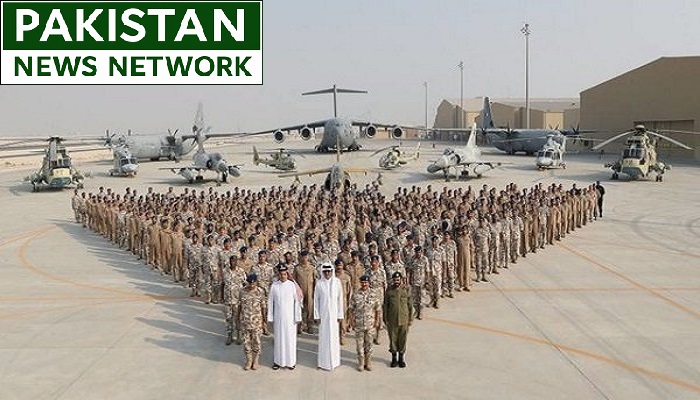
PNN – The recent war has once again exposed the costs of hosting US military bases for Qatar. Doha is now torn between continuing its security dependence on Washington and strengthening cooperation with its neighbors, especially Iran.
According to the report of Pakistan News Network; Qatar has tried for years to present itself as a neutral mediator in regional conflicts, but the US used its largest military base in the region, Al-Udeid Air Base in Qatar, to carry out direct attacks on Iran, and the country’s soil was not spared from the consequences. It remains to be seen whether Qatar wants to develop neighborly relations and take advantage of its economic advantages by taking confidence-building measures in relations with Iran, or whether it continues to seek to blackmail the US and beg for the creation of false American security.
Al-Udeid Air Base, the largest US base in the region
Al-Udeid Air Base is the largest US military installation in the Middle East. It is located 35 km southwest of Doha, the capital of Qatar, and only 200 km from the Iranian border. The base’s 4,500-meter runway hosts about 10,000 US troops and at least 100 warplanes, including B-52 strategic bombers. The base is the headquarters of US Central Command (CENTCOM) in the region.
During the war, reports indicated a significant increase in military activity at the base. Israeli media confirmed that B-52 bombers and KC-135 tanker aircraft were taking off directly from the base for operations against Iran. This was despite Qatari officials repeatedly claiming that they would not allow their territory to be used to attack Iran; a promise that was never fulfilled in practice.
Iran stood by Qatar in difficult times
While Qatar today hosts military bases that are used to attack Iran, it should not be forgotten that in 2017, when Saudi Arabia, the UAE, Bahrain, and Egypt severed diplomatic relations with Qatar and placed the country under a land, air, and sea blockade, it was Iran that rushed to Doha’s aid.
Qatar, which imports about 80 percent of its food from its Arab neighbors, faced a food shortage overnight. Store shelves were empty and long lines formed to buy basic necessities. In this emergency, Iran was the first country to come to Qatar’s aid. Just six days after the blockade began; Iran sent planes and ships carrying food to Qatar. Iran also opened its airspace to Qatari flights, providing 100 new flights a day.
Empty Promises of Imported Security
The massive US military presence in Qatar has not deterred any of the security threats against the country. During the war, the Al-Udeid base was targeted by Iranian missile attacks. The Pentagon officially confirmed that Iranian missiles had hit the base. The New York Times also reported that hundreds of US troops were evacuated from the base.
Before that, in September 2025, the Zionist regime, in an unprecedented move using more than 10 fighter jets, attempted to assassinate Hamas leaders in Doha, the capital of Qatar. This aggressive act once again showed that the presence of American bases on the territory of a country alone does not guarantee its security. Now, the leaders of Qatar must be asked: When American bases could not (or did not want to) defend this country against the Saudi coalition in 2017, nor against the Israeli attack in September 2025, nor during the third imposed war, what is the point of their presence other than wasting billions of dollars in oil and gas money?
Paralyzed Gas Facilities and an Import-Based Economy in Crisis
Qatar paid a heavy price for supporting the US war machine in this war. On March 2, 2026, Iran targeted Qatar’s strategic liquefied natural gas (LNG) facility at Ras Laffan. The attack destroyed about 17 percent of Qatar’s LNG export capacity. The closure of the Strait of Hormuz also cut off virtually all of the country’s gas export capacity; before the war, about 20 percent of the world’s LNG trade passed through the Strait of Hormuz, mostly from Qatar.
These strikes came at a time when Qatar’s economy is heavily dependent on imported food and essential goods. The closure of the Strait of Hormuz and disruption of trade routes crippled Qatar’s supply chain for essential goods. Gas exports were halted, vital facilities were damaged, and the country’s economy was on the verge of collapse. Qatar paid the price for supporting American bases in this war by crippling its economy.
Breaking Dependence on the Dollar and Severing Ties with the Zionist Regime
In order to become an independent and secure country, Qatar must take two other strategic steps. First, it must stop selling its oil and gas in dollars and buying US government bonds. The Gulf States, including Qatar, have pegged their currencies to the dollar and have huge dollar reserves to maintain this system.
The sovereign wealth funds of these countries have also invested billions of dollars in US Treasury bonds. This cycle is exactly the same mechanism that compensates for the US budget deficit and allows Washington to finance its endless wars. If Qatar truly wants peace, it must break out of this cycle.
Second, Qatar must sever all overt and covert ties with the Zionist regime. Qatar does not have formal diplomatic relations with the regime, but behind-the-scenes communication channels between the two sides have always existed. Evidence shows that Doha has been in direct contact with Tel Aviv officials on the Gaza issue. The regime’s recent military invasion of Qatari territory to assassinate Hamas leaders showed that the Zionist regime does not have the slightest respect for the sovereignty of regional countries. The regime does not want peace and cooperation among Muslim countries in the region, as it sees this as an obstacle to its regional hegemony. The Zionist regime seeks to sow discord and incite war in the region in order to deepen the divisions in the Islamic world.
Conclusion
The time has come for Qatar to make a choice. It can continue to host the largest US military base in the region and pay the price by destroying its security, crippling its economy, and becoming a target for attacks. Or it can learn from the bitter experience of war and embark on a path of cooperation with its neighbors.