

PNN – By revising its strategy regarding the naval blockade, Yemen is dealing heavy blows to Saudi Arabia’s reckless policies.
According to the report of Pakistan News Network; tensions between Saudi Arabia and Yemen have recently flared up once again. Saudi Arabia—which launched a war against Yemen in 2015 by forming a coalition of regional and extra-regional nations—adopted a strategy of land, air, and sea blockades after failing to achieve its military objectives, effectively turning Yemen into a sealed-off zone. However, about two months ago, Yemen’s Ansarullah announced a decision to alter the equation of the conflict; they resorted to countermeasures by focusing on Saudi Arabia’s “Achilles’ heel”: its oil exports.
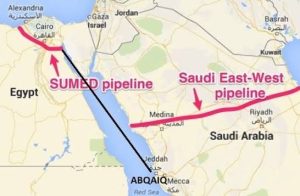
Previously, due to the closure of the Strait of Hormuz (stemming from regional tensions), Saudi Arabia’s oil exports via the Persian Gulf dropped sharply, forcing Riyadh to increase its reliance on an alternative route: the port of Yanbu on the Red Sea. However, the capacity of Saudi Arabia’s East-West Pipeline—which transports oil from the eastern oil fields to Yanbu—is approximately 7 million barrels per day; as this does not effectively serve as a complete substitute for the Hormuz route, it resulted in a reduction of Riyadh’s total oil exports by about half.
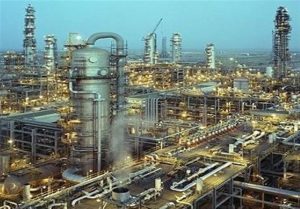
However, with the intensification of Ansarullah’s attacks—targeting oil facilities and terminals in eastern Saudi Arabia and, more significantly, increasing the risks associated with transiting the Bab al-Mandab Strait—the Red Sea route has effectively become blocked for Saudi oil tankers. Saudi Arabia, which once imposed a blockade on Yemen, now finds itself trapped in a reverse economic and logistical blockade.
Under normal circumstances, Saudi oil tankers bound for Asian markets—specifically key customers such as China, India, and South Korea—sail south from the port of Yanbu, pass through the Bab el-Mandeb Strait, and enter the Indian Ocean; this journey takes approximately 19 days. However, with the closure of the Bab el-Mandeb, tankers have no choice but to head north, transit the Suez Canal, enter the Mediterranean Sea, pass through the Strait of Gibraltar, enter the Atlantic Ocean, and then round the Cape of Good Hope (South Africa) to reach the Indian Ocean. This route takes nearly 48 days and more than doubles the costs associated with fuel, insurance, and Suez Canal transit fees.
Beyond the cost factor, there is also a significant technical challenge: supertankers face difficulties navigating the Suez Canal. Consequently, Saudi Arabia—in cooperation with Egypt—is compelled to transport a portion of its oil via the SUMED pipeline to the Mediterranean coast for reloading, a process that entails additional time, expense, and complex coordination. Furthermore, rounding the Cape of Good Hope during winter involves navigating severe storms, requiring precise navigation and the payment of higher insurance premiums.
At the same time, reports indicate that Saudi Arabia has been forced to offer new discounts to its Asian customers to offset falling demand and extended delivery times. While these discounts might sustain market share in the short term, they will severely reduce Riyadh’s export revenues in the long run and challenge the country’s financial capacity to pursue its reckless regional policies.
On the other side of the equation, having accepted defeat in the military and economic arenas, Saudi Arabia is seeking to foment internal conflict in Yemen and recruit mercenaries both within and outside the country. However, Ansarullah has explicitly stated that the current confrontation in Yemen has a distinct nature and will not devolve into an internal conflict or a war between Yemeni factions. In this context, Sana’a regards any cooperation with Saudi Arabia as “complicity in the aggression against Yemen” and considers it a red line.
All these developments are unfolding while Saudi Arabia, by persisting in its failed regional policies—particularly regarding Yemen—has not only failed to achieve security but now faces an economic and logistical blockade in the Red Sea, alongside a sharp decline in its oil exports.
Overall, it appears that aligning with the United States in confronting the Axis of Resistance has yielded nothing for Saudi Arabia but public humiliation and the squandering of national resources, leaving the country increasingly isolated.
Therefore, rather than persisting on this misguided path, it would be in Saudi Arabia’s best interest to abandon confrontation with the Axis of Resistance and fundamentally re-evaluate its regional policies—thereby freeing itself from heavy military and economic burdens while redefining its true position within the new order of West Asia.