
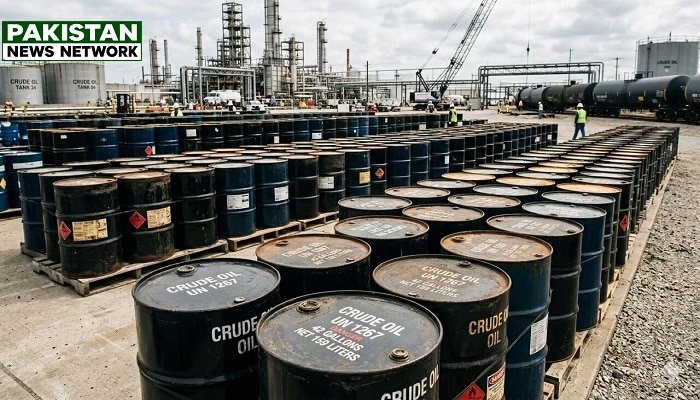
PNN – In a report highlighting the recent rise in oil supplies, Reuters examines the reasons why global oil prices remain high and how logistical issues—despite increased supply—are preventing energy prices from falling.
According to the report of Pakistan News Network; Middle Eastern crude oil exports have recently reached their highest level since the outbreak of the war involving Iran, as more Persian Gulf producers have resumed shipments through the Strait of Hormuz. However, oil prices remain elevated, indicating that logistical challenges are disrupting the market just as significantly as supply constraints.
According to a report by the market analysis firm Kpler, the flow of crude oil through the Strait of Hormuz has averaged approximately 14.2 million barrels per day since September 26—close to 80 percent of the pre-war level seen in February 2026.
Pointing to this rise in crude oil flows through the Strait, a Reuters analyst has raised the question: why does the price of Brent crude remain above $100 per barrel?
In response, the author identifies logistics as the primary factor keeping oil prices high.
Citing key drivers of current oil prices—such as conflicts in the Middle East and Ukraine—the news agency’s analyst notes that the current state of transportation has disrupted the massive flow of oil across existing routes. Furthermore, ongoing disputes have caused tanker shipping rates to rise; combined with surging insurance costs and a severe shortage of refinery capacity, this has impacted the entire supply chain.
According to this report, resolving current challenges will take months—if not years—and consumers will continue to face high energy costs.
Citing the closure of the Strait of Hormuz following the military aggression by the United States and the Zionist regime against Iran in February 2026, this report states that the move drastically altered the flow of crude oil.
A Reuters analyst, once again highlighting the current situation regarding the recovery of crude oil flows, has described this trend as remaining fragile.
In other words, although increased crude oil exports from Persian Gulf nations have helped alleviate the global oil deficit, Energy Aspects estimates that the market is currently facing a shortfall of approximately 1.6 million barrels per day—down from the peak disruption of around 4 million barrels per day in May. This situation could exert additional upward pressure on prices and keep global oil costs high—specifically, a price of $100 per barrel for Brent crude, which remains more than 40 percent above pre-war levels.
According to the author, while persistent tensions between Tehran and Washington account for part of the high price of oil, escalating transportation and insurance costs—once a relatively minor component of the final price—have now become a key factor in determining value. Indeed, due to current challenges facing Persian Gulf producers in the Strait of Hormuz, buyers have turned to crude oil sourced via the Atlantic; this route requires more time for delivery to Asian consumers, thereby placing increased strain on tanker fleet capacity. Consequently, rates for key oil tankers have surged to unprecedented highs.
In other words, transportation costs, which once accounted for about 3 percent of the final price per barrel, have now reached approximately 27 percent.
The report goes on to identify Ukrainian attacks on Russian oil refineries as another factor that has driven up diesel prices worldwide.
Diesel prices in the U.S. have currently reached record highs, becoming a major political concern for President Donald Trump ahead of next month’s midterm elections, given the fuel’s vital role in industry, agriculture, and modern manufacturing. While the G7’s decision to release diesel from strategic reserves might offer some relief, it acts merely as a temporary palliative, as it does nothing to restore lost refining capacity.
The report concludes by noting that the price of oil is no longer solely dependent on supply but also hinges on the oil industry’s capacity to transport and process it—a situation that makes lowering oil prices far more challenging.