
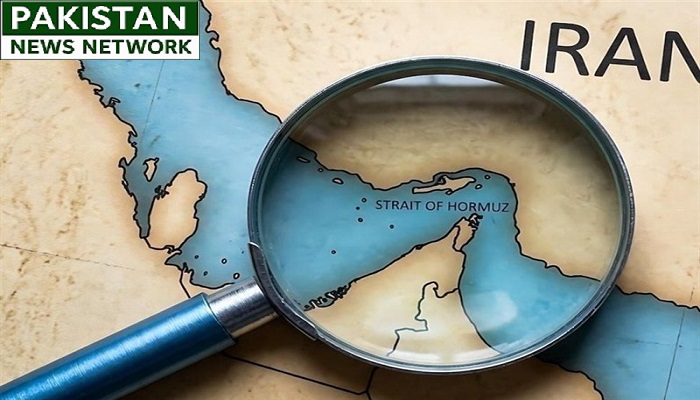
PNN – A Russian Iranologist examined the strategic importance of the Strait of Hormuz, not only in terms of energy but also regarding regional security and the balance of power.
According to the report of Pakistan News Network; Rajab Safarov—a renowned Russian analyst and expert on Iran—writes in an article for the Novosti news agency that examining the strategic importance of the Strait of Hormuz requires integrating several theoretical concepts. First, the Strait is a vital chokepoint for the global energy system, and any disruption to it creates a critical vulnerability. Second, control over the Strait equates to the exercise of geoeconomic power—defined as a nation’s ability to influence the outcome of global competition through economic leverage. Third, the nature of relations between Iran and the international community has evolved with unique characteristics, grounded in the exploitation of interdependencies within international trade.
Moreover, the current situation surrounding the Strait of Hormuz stands as the clearest example of the “weaponization of a maritime chokepoint”—that is, transforming a strategic geographic location into a weapon and utilizing it as a tool to exert asymmetric pressure—since the strait’s geopolitical significance extends far beyond the realm of energy alone, encompassing all dimensions of regional security and the balance of power in the Persian Gulf.
The Significance of the Strait of Hormuz in the Global Configuration of Key Maritime Corridors
From a geoeconomic perspective, the Strait of Hormuz holds a unique position in the global network of maritime energy transport routes. According to 2025 data from the U.S. Energy Information Administration (EIA), 20.9 percent of the world’s seaborne crude oil and liquid hydrocarbon fuel transits through this strait, making it the world’s second most important maritime chokepoint—ranking just behind the Strait of Malacca, which accounts for a 23.2 percent share. Prominent economist Daniel Yergin had previously—and aptly—described the Strait of Hormuz in 2011 as “the world’s most important oil transit chokepoint.”
However, unlike the Strait of Malacca—which connects maritime traffic between the Indian and Pacific Oceans—the Strait of Hormuz serves as the sole maritime gateway to the Persian Gulf, a region where the bulk of OPEC nations’ export capacity is concentrated. This means that for Saudi Arabia, Iraq, the UAE, Iran, Kuwait, and Qatar (regarding liquefied natural gas exports), there is effectively no viable alternative to the Strait of Hormuz. Indeed, the alternative route via the Cape of Good Hope in southern Africa—through which only 9.1 percent of global oil transit passed in 2025—adds thousands of miles to the journey, rendering exports economically unviable. Although the Suez Canal—with a 4.9% share of global oil transit in 2025—and the Bab el-Mandeb Strait—with a 4.2% share—are vital components of the East-West connectivity network, they cannot replace the Strait of Hormuz.
The Strait of Hormuz’s 20.9% share represents more than just the volume of energy transit; it underscores the Strait’s structural and irreplaceable role. Were it to be blocked, the consequences would extend far beyond a mere rerouting of energy flows; the entire maritime transport system for energy exports from the Persian Gulf would face collapse. Consequently, the Strait of Hormuz should not be viewed merely as a maritime chokepoint but rather as the “control valve” of global energy security. Indeed, researchers at the Complexity Science Hub Vienna estimate that a prolonged closure of the Strait could impact approximately $1.2 trillion in annual trade involving Persian Gulf exporting nations.
In relative terms, the Strait of Hormuz’s share of global maritime energy transit has remained stable, hovering between 20 and 21 percent. By 2025, the Strait had not only retained its status as the world’s second most critical maritime chokepoint—trailing only the Strait of Malacca—but had further solidified this position despite geopolitical upheavals, including escalating tensions over Iran’s nuclear program, attacks on oil tankers, and pressures stemming from sanctions. In contrast, transit volumes via alternative routes—particularly the Cape of Good Hope and the Suez Canal—have exhibited greater volatility; this underscores their role as backup corridors, utilized primarily during periods of temporary disruption to the primary routes.
Thus, regarding the Strait of Hormuz, it must be acknowledged that there is effectively no substitute for it; even with increased oil transport via the SUMED pipeline at the Suez Canal and a rise in tanker traffic around the Cape of Good Hope, the absolute volume of transit through the Strait has continued to grow. This reality empirically demonstrates that the Strait of Hormuz is not merely a maritime chokepoint but constitutes an irreplaceable structural component of the global energy system.
The fact that this strait accounts for 20 to 21 percent of maritime energy transit stems directly from the geographical characteristics of Persian Gulf oil and gas fields and the absence of economically viable alternatives. Efforts to bypass the Strait of Hormuz face fundamental economic obstacles rather than technological limitations; routing around the African continent adds 15 to 20 days to transit time and increases maritime freight costs by 30 to 50 percent. Consequently, this route can serve only as an emergency or contingency option and cannot compete economically with the route through the Strait of Hormuz.
Economic Consequences of Blocking the Strait of Hormuz on the Global Energy Market
The flow of crude oil and liquid hydrocarbons passing through the Strait of Hormuz exhibits a very distinct asymmetry. According to data from the U.S. Energy Information Administration (EIA) and tanker tracking information, the volume of transit through the strait reached 20.9 million barrels per day in 2025. The distribution of this volume by destination country highlights the overwhelming dominance of Asian economies. China is the largest importer, receiving 5.4 million barrels of oil daily—equivalent to 25.8 percent of the total transit volume. Saudi Arabia follows with 5.6 million barrels per day, representing 26.8 percent of the total. However, this figure does not represent oil imports for domestic consumption; rather, it primarily consists of re-exports or the transit of oil through the Strait of Hormuz to other nations—a distinction that must be considered when interpreting these data.
Next in line are India with 2 million barrels per day (9.6%), South Korea with 1.7 million barrels (8.1%), Japan with 1.7 million barrels (8.1%), and other Asia-Pacific nations with 2.3 million barrels per day (11%). In total, between 86% and 90% of all oil flowing through the Strait of Hormuz is destined for Asian countries. In contrast, the shares for Europe and the United States are just 600,000 and 400,000 barrels per day, respectively, together accounting for less than 5% of the total transit volume.
Consequently, the Strait of Hormuz cannot be viewed merely as a global energy chokepoint; in practice, it constitutes a critical strategic bottleneck for Asian economies—a reality that must be seriously factored into the modeling of scenarios involving geoeconomic influence and the exertion of pressure. Indeed, the dependence of Asia-Pacific nations on the Strait of Hormuz is structural in nature. Iran’s strategy of exerting asymmetric pressure on global energy markets by threatening to block the Strait of Hormuz stands as one of the most effective examples of leveraging geography in geoeconomic competition.
China—which sources over 45 percent of its oil imports via the Strait of Hormuz—and India—which faces a similarly high level of dependency—share the same vulnerability regarding reliance on a single transit route. The lack of alternative routes with comparable capacity renders these nations the most vulnerable players in the event of a blockade of the Strait. As a result of recent developments, Asian economies were the first to suffer the most severe impacts, forcing regional governments to impose restrictions on vehicle usage and shorten the workweek.
Conversely, the very small share of oil imports passing through the Strait of Hormuz destined for Europe and the United States—totaling less than five percent—indicates that the geoeconomic consequences of any crisis in the strait would be unevenly distributed. Asian consumers would bear the brunt of the costs, whereas Western economies would be negatively affected primarily through indirect impacts, such as rising global oil prices and supply chain disruptions. Researchers estimate the economic damage to European Union countries in such a scenario at approximately $50 billion—a relatively modest figure when compared to the consequences for Asian economies.
Russia cannot remain indifferent to the situation in the Strait of Hormuz.
In this context, the need to align Russian policy with the shifting realities of the Middle East takes on particular importance. Iran remains one of Russia’s key strategic partners in the region, and the expansion of trade, economic, and military-technical cooperation between the two nations—including regarding the security of transit through the Strait of Hormuz—aligns with the long-term interests of both countries. Furthermore, the recent direct military confrontation between the United States and Iran has fundamentally transformed the geopolitical landscape of the Middle East; Russia cannot remain indifferent to these developments, as regional stability directly impacts its own energy security. Given the current state of affairs, it must be acknowledged that the time has come for Russia and Iran to remove existing obstacles in the banking and transit sectors and elevate their bilateral cooperation to a new level.
Furthermore, recent military strikes by the United States and Israel in June 2025 and February 2026 demonstrated that the Islamic Republic of Iran currently possesses the political, military-technical-scientific, and technological capabilities to effectively withstand military action by two of the world’s most powerful militaries. Moreover, Iran is capable of inflicting heavy damage on U.S. interests in the region and directly challenging Israel’s security. This reality indicates that, under current circumstances, the world’s sole hegemonic power—even with the support of its partners—cannot prevent Iran from defending its geopolitical interests in the region through the use of military force and coercion.
Iran is becoming a global superpower.
It is precisely this factor that has caused deep concern among the leaders of certain Arab nations in the Middle East and the Persian Gulf monarchies. In the near future, these countries will be compelled to move away from their reliance on the United States and toward establishing sincere, good-neighborly relations with Iran. It is quite possible that this shift in geopolitical orientation will inevitably lead to the closure of all U.S. military bases and infrastructure in the Persian Gulf region, as well as the termination of their ties with Israel; this would be accompanied by an unprecedented decline in U.S. influence across the Middle East, alongside a commensurate rise in Iran’s influence in the region.
In fact, these developments and conflicts signify the emergence of a fourth global superpower—the Islamic Republic of Iran—and the consequences of this shift could bring about fundamental changes in the global geopolitical landscape in the near future. By controlling the Strait of Hormuz, Iran gains a geopolitical lever to influence 35 to 40 percent of the global economy, directly impacting major economies such as China, India, Japan, and South Korea.
Under such circumstances, should it choose to do so, Iran could leverage this powerful asset to press other nations for political concessions—such as the lifting of bilateral sanctions, the restoration of normal banking and financial ties, and coordination on joint international actions—and those countries would sooner or later be compelled to accede to such demands to ensure continued energy supplies and avoid economic damage.
In summary, it can be concluded that possessing a powerful economy capable of influencing global trade and economic trends is a key characteristic of a superpower—a status Iran may well attain in the very near future. Consequently, the strategic importance of the Strait of Hormuz could even surpass that of nuclear capabilities; should Iran establish full control over the strait, dozens of nations would likely gradually lift their bilateral sanctions and initiate extensive cooperation with the Islamic Republic. Consequently, with the lifting of sanctions and Iran’s emergence from international isolation, the country’s economy will be able to grow. In parallel, Iran will be able to expand its political influence and shape global decision-making processes through diplomacy, international organizations, and alliances.