
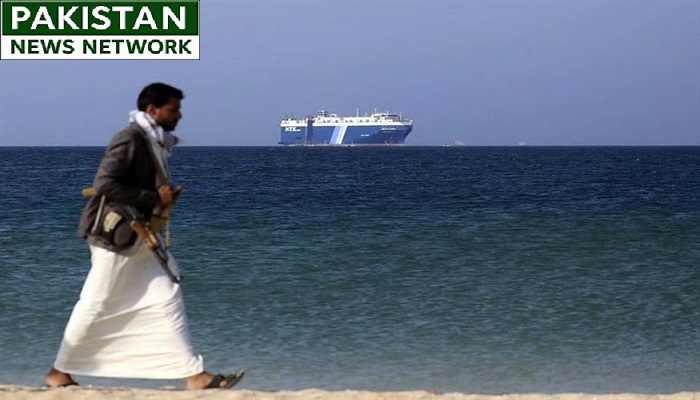
PNN – By imposing restrictions on Saudi oil export routes, Sana’a has turned Riyadh’s continued blockade of Yemen into a costly policy.
According to the report of Pakistan News Network; three and a half years after the announcement of a ceasefire between Sana’a and Riyadh, one reality has become increasingly clear to the Sana’a government: the cessation of military hostilities—absent the lifting of the blockade—has not signified an end to the crisis in Yemen. During this period, Saudi Arabia has not only failed to take decisive action to fully lift the restrictions imposed on Yemen’s ports and airports, but the country’s humanitarian situation has also seen no tangible improvement. On the contrary, available evidence points to an intensification of certain indicators of the crisis.
According to the UN humanitarian needs plan, 22.3 million people in Yemen require humanitarian aid and protection services, and 18.3 million face acute food insecurity. The UN has stated that conditions continue to deteriorate, with over a million additional people across 55 districts having reached emergency levels of food insecurity. The UN Security Council has also warned that, absent a political solution, the humanitarian situation in Yemen will continue to worsen.

Therefore, from Sana’a’s perspective, the issue is not merely that the ceasefire failed to lead to a comprehensive political agreement; rather, the problem is that the costs of the war for Yemen have not been significantly eliminated—they have simply changed form. While large-scale military conflict has ceased, economic and humanitarian restrictions persist, and Yemeni society continues to face one of the world’s most severe humanitarian crises. Under these circumstances, continued pressure—without imposing reciprocal costs on the opposing side—could not be viewed by Sana’a as a sustainable situation.
Developments following the Ramadan War have paved the way for a shift in this calculation. The closure of the Strait of Hormuz and the restriction of the primary oil export route from the Persian Gulf have heightened the importance of Saudi Arabia’s alternative routes. The East-West Pipeline transports oil from Saudi Arabia’s eastern regions to the port of Yanbu on the Red Sea coast, allowing a portion of Saudi oil to reach foreign markets without passing through Hormuz. However, the Bab el-Mandeb Strait remains a critical chokepoint for transporting this oil to Asian markets.
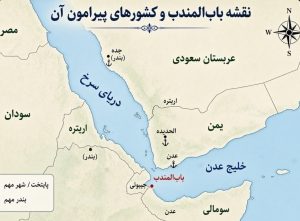
Thus, the route intended to reduce Saudi Arabia’s vulnerability to restrictions at the Strait of Hormuz has itself become a new point of vulnerability—a target Sana’a has precisely zeroed in on.
On July 20, 2026, in response to the ongoing blockade of Yemen, Ansarullah announced a naval blockade against Saudi Arabia. This decision was part of a series of measures aimed at exerting reciprocal pressure on Riyadh’s economic interests. Just two days later, on July 22, the oil tankers Anselia and Leila were targeted in the Red Sea; the announced blockade thus moved beyond mere political posturing and entered an operational phase.
On July 27, the scope of operations extended to Saudi Arabia’s oil infrastructure, with drone strikes targeting oil transport facilities serving the port of Yanbu. The significance of this attack lies less in the damage inflicted on a specific facility than in Yanbu’s strategic position within the new equation of Saudi oil exports. The East-West Pipeline is a critical route for transporting Saudi oil to the Red Sea coast, and Yanbu plays a pivotal role in this infrastructure. Consequently, targeting the oil transport facilities serving this port should be viewed as part of an effort to increase the vulnerability of Saudi Arabia’s alternative oil export route.
Pressure on oil tanker traffic also intensified in the following days. On July 28, the tanker Ghazal was forced to alter its course after receiving a warning. By July 31, according to Sana’a, eight tankers had been compelled to change course. On August 5, the tanker Wafa was targeted off the port of Yanbu, and on the same day, the tanker Daisy came under attack in the Gulf of Aden. By this stage, Sana’a had reported forcing 22 vessels to change course and targeting eight others.
The significance of this trend lies not in the number of ships targeted, but rather in the shifting of the pressure point. Sana’a is attempting to shift the cost of the blockade from within Yemen to Saudi Arabia’s economic routes. In this context, targeting ships and infrastructure associated with Yanbu are components of a unified strategy: increasing the cost of utilizing a route upon which Saudi Arabia has become increasingly dependent following the restrictions placed on the Strait of Hormuz.
Kpler’s data also reflects the impact of this pressure. According to the firm’s report, the volume of oil shipments passing through the Bab el-Mandeb Strait—which stood at approximately three million barrels per day prior to the escalation of Ansarallah’s actions—has dropped to around 1.5 million barrels per day. Consequently, Kpler’s claim specifically concerns a nearly 50 percent reduction in oil flow through the Bab el-Mandeb chokepoint; it should not be interpreted as a halving of Saudi Arabia’s total oil exports or even a halving of the aggregate oil exports transiting via the Red Sea.
This reduction—regardless of its duration—underscores the strategic significance of Sana’a’s actions. Saudi Arabia requires alternative routes to bypass the constraints of the Strait of Hormuz; however, if one of the most critical of these alternatives is also plagued by insecurity, forced rerouting of vessels, and escalating shipping and insurance costs, the strategic advantage of that alternative route will be eroded. In this context, the issue extends beyond a mere drop in export volume; the exporter is also concerned with rising costs and diminished route reliability.
Of course, Sana’a’s objective should not necessarily be viewed as the complete closure of the Bab al-Mandab Strait or a total halt to Saudi oil exports. Saudi Arabia still possesses alternative capacities to manage its exports and can divert a portion of the oil flow to other markets and routes. However, for Sana’a, creating a persistent and costly bottleneck could be just as significant as completely shutting down the route. Increased insurance and shipping costs, the rerouting of oil tankers, longer transit times, and reduced throughput capacity at the Bab al-Mandab Strait could all serve to shift a portion of the costs associated with the policy of pressure against Yemen onto Riyadh.
In reality, what is unfolding in the Red Sea is not merely a new round of military operations by Ansarullah; rather, it is an attempt to alter the equation that has governed the Yemen crisis for years. Under this equation, a ceasefire meant a reduction in military threats for Saudi Arabia, whereas for Yemen, it meant the persistence of significant economic and humanitarian pressures. Sana’a is now seeking to shift this imbalance and demonstrate that the continuation of the blockade can also exact a cost from the opposing side.
From this perspective, the attack on the Yanbu oil transport facilities takes on significance beyond a mere tactical operation. Sana’a is targeting the very route intended to mitigate Saudi Arabia’s vulnerability to a closure of the Strait of Hormuz. In other words, the pressure exerted on the Bab al-Mandab Strait complements the pressure on Hormuz: if Hormuz constrains the primary route for Saudi oil exports from the Persian Gulf, the Bab al-Mandab can place the alternative route under strain.
Thus, the message conveyed by recent developments is clear for Riyadh: maintaining the status quo no longer necessarily means containing the costs of the crisis within Yemen. If the blockade of Yemeni ports and airports persists, Sana’a could shift part of the cost of this policy onto the vital arteries of the Saudi economy. The central issue now is not how many oil tankers have been targeted; rather, it is whether Riyadh is willing to pay a price for continuing the blockade—a price that could be fundamentally eliminated by lifting it.
From this perspective, the Red Sea has become a new lever of pressure for Sana’a—one whose logic lies not in the total destruction of Saudi oil exports, but in altering Riyadh’s cost-benefit calculations regarding the continued blockade of Yemen. If Saudi Arabia fails to find an effective solution to this pressure, the blockade—the burden of which has for years fallen primarily on Yemen—will gradually become a problem for the Kingdom’s own economy and energy security.