
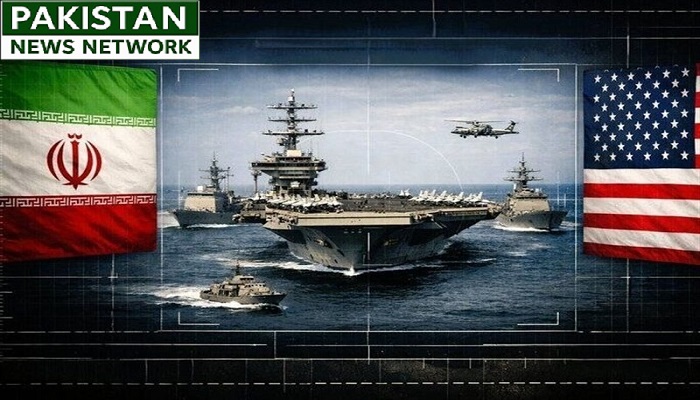
PNN – The battle for the Strait of Hormuz is not merely about oil; it is a conflict between two competing Civilizations—that of the superpowers and that of nations with independent identities.
According to the report of Pakistan News Network; the conflict currently unfolding in the azure waters of the Persian Gulf appears, on the surface, to be a struggle over a commercial waterway and oil exports. Yet, at a deeper level, the Strait of Hormuz has become the stage for a “civilizational campaign”—a confrontation between the Western global order, the rules of which were authored by the United States, and an “independent order” represented by the Islamic Republic of Iran. Here, the clash is not limited to missiles and warships; rather, two distinct definitions of history, identity, and sovereignty stand in opposition to one another.
Since the end of World War II, the United States has evolved from a mere power into the architect and guarantor of a “global order.” Key components of this US-backed order include freedom of navigation and international trade (as defined by the US itself), energy security centered on Persian Gulf oil, and the primacy of Western liberal-secular values over other systems of meaning. Within this framework, West Asia was designated as the fuel depot for the Western economic engine, and its security constituted a “red line” for Washington. The Strait of Hormuz—the heart of this vital artery—served as the most critical geostrategic point on the map, and the US has consistently maintained that any power attempting to disrupt the order of this waterway would face a decisive response.
However, this Western-constructed order suffered from a fundamental flaw: the West had authored all its rules, leaving the “non-Western other” with no choice but to either accept them or be ostracized as a “disruptor of the order.” It was against this backdrop that the American theorist Samuel Huntington proposed the “Clash of Civilizations” theory in the 1990s, positing that the source of future conflicts would be cultural and civilizational identities rather than ideology.
He identified Islamic civilization as a primary locus of friction with Western civilization, writing that the borders of the Islamic world would become the bloodiest civilizational fault lines. What Huntington failed to foresee, however, was that the greatest challenge to the Western civilizational order would arise not from a “monolithic Islamic civilization,” but from a single nation possessing an independent identity rooted in a religious revolution.

The greatest failure of the Western world order in the Middle East occurred with the 1979 Islamic Revolution in Iran. Prior to that, Pahlavi-ruled Iran had been a key piece of the puzzle: the region’s gendarme, the guarantor of security in the Strait of Hormuz, and a major importer of Western goods and weaponry. However, the Islamic Revolution removed this piece from the West’s chessboard. With the slogan “Neither East nor West, but the Islamic Republic,” Imam Khomeini fundamentally challenged the logic governing the bipolar—and subsequently unipolar—global order.
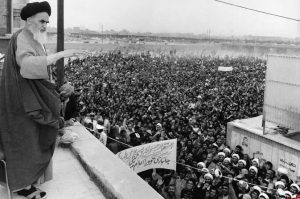
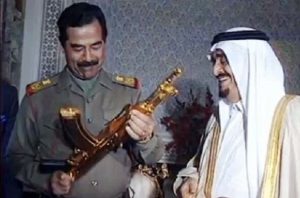
This shift in framework stands in direct opposition to Huntington’s analysis of a “unified Islamic civilizational bloc.” Post-revolutionary Iran was simultaneously in conflict with the United States and Israel and engaged in an ideological rivalry with Wahhabi Saudi Arabia; it fought an eight-year war against Ba’athist Saddam (who was backed by the West, the East, and the Arab world) and supported independence movements across the globe. Post-revolutionary Iran demonstrated that “civilization” is not necessarily a geographic-religious bloc; rather, it can be an “independent political-epistemic model” forged through self-belief and the redefinition of a national-religious identity. The Islamic Revolution entailed theorizing “intellectual independence from the West” in the minds of the Iranian people and establishing an “independent identity” that no longer required Washington’s validation.
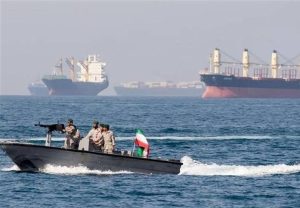
Now, in 2026, the Strait of Hormuz has become the flashpoint of this historic confrontation. The West claims that “freedom of navigation” and “global energy security” are at stake here—principles that it authored, guarantees, and adjudicates itself. Iran, however, maintains that the strait is a vital waterway—integral to its national security and sovereignty—and declares it will not allow its own security to be sacrificed for the West’s definition of “order.” What manifests militarily as a “classic geopolitical struggle” for control over a waterway has, on the narrative level, transformed into a “clash of civilizations”: a confrontation between a “West defending the old order” and an “Iran championing the right to independent self-determination.”
It is precisely here that the fundamental difference between Iran’s approach and that of many Arab countries in the region becomes apparent. Although these nations—ranging from Qatar and Kuwait to the UAE and Bahrain—share significant cultural and religious commonalities with Iran, they continue to define their political and security identities within the framework of the “American order.” US military bases are stationed on their soil, their economies are tethered to the stability of the dollar and Western trade, and the security of their regimes hinges on Washington’s protective umbrella.
Unlike Iran, the countries in question have not yet reached the stage of self-confidence and desire for independence where they are willing—or able—to bear the cost of breaking away from the Western script. It is here that Huntington’s prediction regarding the “civilizational solidarity of the Islamic world against the West” collapses, for a significant portion of the Islamic world has defined itself as belonging to the rival civilizational camp (the US-led order).
It is here that the civilizational drama of the Strait of Hormuz takes its final form: on one side of the waterway stands a power whose slogan is “the end of the old order and the birth of new rules,” while on the other stands a US-led coalition that includes Arab nations viewing their own survival as tied to the preservation of that very old order. The battle for the Strait of Hormuz is not merely about oil; it is a contest over which narrative of “order” holds legitimacy—the one crafted by great powers, or the one demanded by independent nations based on their own interests and identities.
Conclusion:
What is unfolding today in the Strait of Hormuz transcends conventional naval warfare. This arena represents a watershed moment in the history of the post-World War II global order—a juncture where a regional power, emboldened by an intellectual and identity-based revolution, has dared to challenge the rules of the game not as a peripheral player, but as an “independent screenwriter.” Iran asserts that the world has changed, that old rules are obsolete, and that the future order will be written not in Washington, but in independent capitals. It is precisely here that the line is drawn between a “geopolitical crisis” and a “clash of civilizations”—a conflict whose outcome will determine the fate not merely of a waterway, but of the global order itself.