
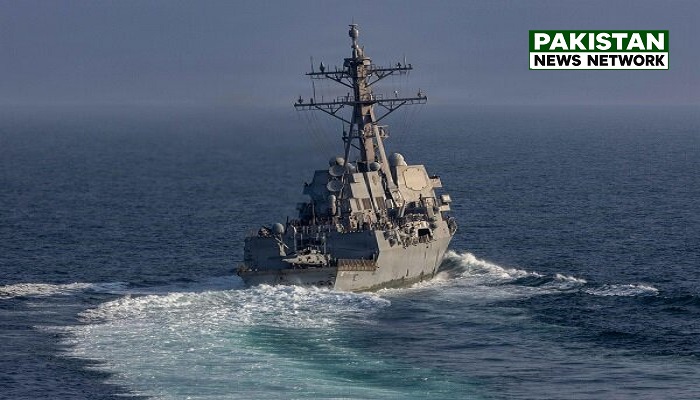
PNN – A British media outlet reported that the operational strain of a potential war against Iran, prolonged deployments, and rising costs associated with the construction and repair of naval vessels have eroded the operational capabilities of the U.S. Navy.
According to the report of Pakistan News Network; The Guardian reported that the U.S. Navy is facing increasingly constrained operational capacity due to the operational pressure stemming from a potential war against Iran, long-duration missions, and challenges related to the construction and repair of warships.
According to this report, the war against Iran has placed increased strain on the U.S. fleet, with some vessels undergoing deployments lasting 10 to 11 months—well beyond the standard operational deployment duration of approximately seven months. These extended missions have also resulted in the deferral of ship maintenance and repairs.
Noting the return of the aircraft carrier USS George Washington from the Middle East, The Guardian reported that the vessel’s departure last week marked the end of an unprecedented period during which the U.S., at times, had no aircraft carrier present in the Pacific region.
The newspaper also pointed to challenges in constructing new naval vessels, rising costs, and the United States falling behind China in the shipbuilding race. It noted that estimates from the U.S. Congressional Budget Office indicate that the cost of building naval vessels under the country’s 30-year plan will average $54 billion annually—a figure approximately 18 percent higher than the U.S. Navy’s own estimate.
According to a report by The Guardian, the U.S. Navy plans to expand its fleet from 286 to 381 vessels over the next 30 years; however, the complexity of ship designs, construction delays, and rising costs have posed challenges to the implementation of this plan.
The report also highlights the strain that a war with Iran would place on weapons stockpiles, personnel, and the fleet’s support capabilities—a situation that, according to experts, could have long-term consequences for the U.S. Navy’s operational readiness should such a conflict persist.
In recent years, the United States has sought to maintain its supremacy in the world’s oceans by increasing the number of its warships and submarines and expanding its naval capabilities; however, challenges such as shipbuilding difficulties, a shortage of specialized personnel, delays in repairs, and the high costs of military projects have made achieving these goals difficult.
In contrast, by expanding the capacity of its shipbuilding industry, China has accelerated the construction of warships. According to a report released by the Euronaval institute, in 2024 and 2025, China produced more than double the tonnage of warships compared to the United States—a trend that has heightened concerns among American military officials and lawmakers regarding the maritime rivalry with Beijing.