
PNN – By ignoring regional shifts and committing three major blunders in its aggression against Yemen, Saudi Arabia has plunged itself into a complex quagmire.
According to the report of Pakistan News Network; the people of Yemen have for over a decade faced one of the most protracted and grueling forms of blockade and aggression—a conflict that has transcended geographical boundaries to become a symbol of resilience and determination in the face of attempts at domination.
While Saudi Arabia continued to stall and obstruct, evading the implementation of the agreed-upon ceasefire roadmap, Yemen shifted its struggle over the past years toward confronting the Zionist enemy in support of Gaza; simultaneously, the restoration of the Yemeni people’s legitimate rights remained a top priority for Sana’a’s political and military leadership, who repeatedly emphasized their determination to reclaim those rights and their refusal to allow the aggression and blockade to continue.
A New Phase in the Conflict between Yemen and Saudi Arabia
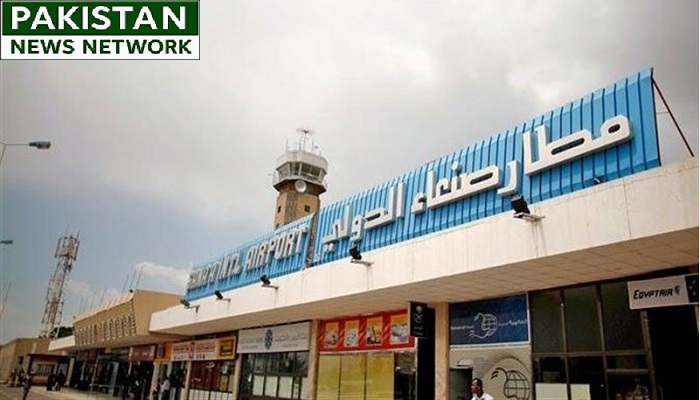
The Saudi regime—having assumed that Yemen had abandoned the military option against it—engaged in provocative actions over the past few days amidst regional tensions and instability, as part of an effort to circumvent Yemen’s initiative to break the blockade; by targeting Sana’a International Airport yesterday evening, it ushered in a new phase of confrontation.
The Saudi attack on Sana’a Airport—where Yemeni officials, backed by Iran, are working to break the blockade in a humanitarian effort—demonstrates Riyadh’s insistence on violating Yemen’s sovereignty and trampling upon the rights of its people; a course of action that Yemen’s leadership, nation, and armed forces will not tolerate, and regarding the consequences of which they had previously warned the Saudi enemy.
In response, Yemen’s armed forces immediately retaliated against the Saudi aggression—applying an “eye-for-an-eye” principle—by targeting several airports, including Abha Airport. The Yemeni army also warned airlines against using Saudi airspace, emphasizing that the cost of maintaining the blockade would not be confined solely to within Yemen’s borders.
Amidst rapid military and political developments in the region, observers believe that recent changes signal a transition to a new phase of confrontation. In this new phase, Yemen’s armed forces are applying different rules of engagement, leveraging their military capabilities, broad popular support, and regional and international shifts that are altering the balance of power in the region.
The Geopolitical Alliance between Yemen and Iran: Shattering the Delusions of Riyadh and Its Masters
In this context, Dr. Wassim Bazzi, a Lebanese writer and political analyst, stated that the Saudi aggression against Sana’a Airport dispels any remaining illusions that the Kingdom is interested in peace.
He added that the Saudi attack on Sana’a Airport occurred just days after an Iranian plane had landed there for humanitarian purposes; yet, rather than demonstrating good will—despite more than four years having passed since the ceasefire—Riyadh chose to reveal its true colors through this act of aggression, driven by folly and an inability to grasp the changing regional landscape.
This Lebanese analyst emphasized that the Saudi aggression and the Yemeni counter-response mark the beginning of a new phase of confrontation—a battle of right against wrong. In this context, the Islamic Republic of Iran’s steadfast support for Yemen in breaking the blockade is of great importance; conversely, Yemen has supported Iran in confronting American-Zionist aggression and remains committed to this stance.
The Hormuz Equation at Bab al-Mandab and a Major Warning for the Saudis
Wassim Bazzi noted that recent developments are paving the way for the first direct field alliance between Iran and Yemen—one with significant geopolitical, military, and strategic dimensions. This compels the world to anticipate the consequences of such solidarity, particularly if the battle for the Strait of Hormuz were to overlap with the battle for Bab al-Mandab—a scenario that would plunge the global economy into an unprecedented and complex crisis.
He also highlighted the Yemeni people’s broad support for their leadership’s chosen course of action, describing the rapid, spontaneous popular mobilization across various Yemeni provinces as a clear message regarding the public’s level of moral and combat readiness.
The Arab analyst stated that this popular mobilization by the Yemeni people reflects the extent of their support for their leadership and armed forces, demonstrating that the battle to lift the blockade is a matter of broad public and national consensus in Yemen. This mobilization also underscores the Yemenis’ resolve, steadfastness, and commitment to their achievements.
The Lebanese expert further noted that the region is entering a phase in which the Persian Gulf—with its waters, nations, and interests—will lie at the heart of this confrontation; should Saudi Arabia persist on its current course, it stands to suffer the greatest damage.
Dr. Wassim Bazzi stated that Saudi Arabia must realize that if this hostile approach continues, its oil and gas facilities, airports, and vital interests will suffer extensive damage—particularly given its hosting of US bases and its ongoing aggression against Yemen. It has become abundantly clear that Saudi Arabia lacks the power to make independent decisions, and that its actions are dictated by the Americans and the Zionists.
This Lebanese analyst stated: Saudi Arabia is terrified of Yemen’s honorable stance in championing the causes of the Islamic Ummah—particularly the Palestinian cause—as Yemen has now emerged as a key player within the Axis of Resistance. This position held by the Yemenis constitutes a strategic concern for Saudi Arabia; the Kingdom lacks popular support and national will, whereas Yemen possesses experienced leadership, battle-hardened armed forces, alliances, and popular legitimacy—assets that enable it to sustain its confrontation.
Three Major Blunders by Saudi Arabia That Fully Justify Breaking the Blockade on Yemen
In this context, Najah Mohammed Ali, an Iraqi researcher specializing in regional affairs, stated that recent developments in Yemen cannot be viewed in isolation from the broader regional landscape, noting that Saudi Arabia—alongside the United States and the Zionist regime—plays a role in escalating tensions.
He added that the targeting of Sana’a Airport falls within this same context and aims to drag the region into an all-out war. In this regard, it is anticipated that the Yemeni response will not be limited to the principle of “airport for airport” or “port for port”; rather, regional issues are interconnected—originating in Yemen and extending to Iran, Iraq, Lebanon, and Palestine—such that any new confrontation links these theaters together.
This Iraqi analyst emphasized that Riyadh has committed three major errors. The first was a tactical blunder: by targeting Sana’a Airport, it gave Sana’a grounds for retaliation and direct involvement in any Iran-related regional confrontation under the pretext of self-defense.
He stated that the second error is strategic in nature; Saudi Arabia’s economy is heavily dependent on oil, yet its oil assets and vital infrastructure remain vulnerable to military action—despite the kingdom’s recent moves toward Beijing to de-escalate tensions and join major economic blocs such as BRICS and the Shanghai Cooperation Organization.
Najah Mohammad Ali stated that the third error is a political one, stemming from Riyadh’s insistence on maintaining its alliance with the US and Israel at a time when the world is shifting toward a multipolar system. The Yemeni attack on Abha Airport was merely an initial message, and the battle to lift the blockade has entered a new phase—signaling that this move could mark the beginning of the collapse of the blockade imposed on Yemen.
The Iraqi expert emphasized that the targeting of Sana’a has also provided the Yemenis with full justification to pursue broader actions—potentially involving the strategic dynamics of the Bab al-Mandab Strait and the Red Sea—as part of their legitimate rights, following eleven years of sacrifice and steadfastness in the face of aggression and blockade imposed by Saudi Arabia and the United States.
Consequences for Riyadh of Aligning with the US-Zionist Front
Meanwhile, citing experts, the Al-Masirah website emphasized that after 11 years of blockade, the Yemeni people have the right to reclaim their entitlements—rights that can only be secured through force, determination, and popular resistance.
Al-Masirah stated that there is no justification for the continued blockade and the closure of Yemeni airspace; reopening Sana’a Airport poses no threat to Saudi Arabia, and Yemen harbors no aggressive intent toward anyone—seeking instead only its natural right to an end to the blockade.
These experts attribute Saudi Arabia’s hostile stance toward Yemen to the policies of the United States and the Zionist regime, emphasizing that the blockade imposed on Yemen serves as punishment for its support of Gaza. In this context, there are indications of messages sent by Saudi Arabia to the Zionist regime signaling a readiness to return to the path of normalization agreements.
The Al-Masirah website stated that the region is currently divided between the Resistance Front and a front led by the United States and the Zionist regime; Saudi Arabia has chosen to align itself with the forces of arrogance, yet it must realize that it will bear the consequences of this choice and needs to reconsider its position.
The Al-Masirah website added: We do not ask Saudi Arabia to join the Axis of Resistance; rather, we urge it to liberate itself from American-Zionist hegemony and put an end to the unjust blockade imposed on the people of Yemen.
Citing experts, the Al-Masirah website concluded: The changes the region has witnessed since the ‘Al-Aqsa Flood’—along with the shattering of the hollow hegemony of the US and the Zionist regime—have created an opportunity for the region’s people to reclaim their rights. Foremost among these are ending the blockade on Yemen and resolving outstanding issues in Lebanon and elsewhere. The time has come to seize this opportunity, for rights are reclaimed only through action and determination.