
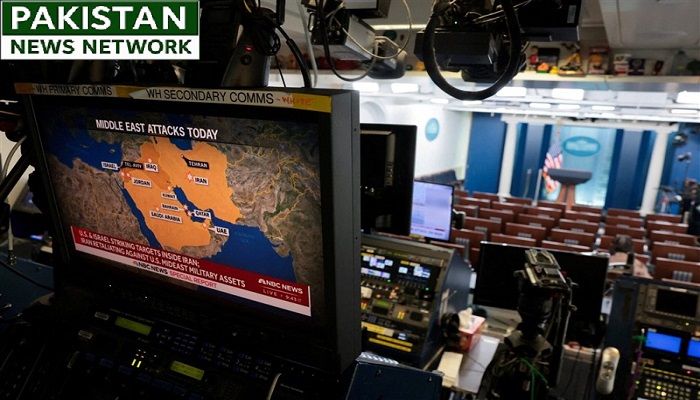
PNN – By linking its operational capabilities on the ground to global economic chokepoints, the Axis of Resistance has established a form of geoeconomic deterrence.
According to the report of Pakistan News Network; geopolitical shifts in the Middle East over recent decades indicate that the interplay between military power and economic interests has entered a new phase. In a world defined by supply chains, energy interdependence, and interconnected maritime trade networks, ports and strategic chokepoints serve a function that extends far beyond mere conduits for the transport of goods; these geographic locations act as pivotal instruments for projecting geoeconomic power and achieving strategic deterrence.
Against this backdrop, the Axis of Resistance—leveraging its geographical position and operational continuity—has evolved from a purely defensive-security alliance into an actor capable of directly influencing the equations of international political economy. The strategic link between the Strait of Hormuz and the Bab-al-Mandeb has established a durable network of geostrategic oversight that is redefining the balance of power among regional and extra-regional actors.
The importance of this network is evident in the volume of goods passing through it. According to a report by the U.S. Energy Information Administration, an average of 20.7 million barrels of oil and petroleum products passed through the Strait of Hormuz daily in 2024—equivalent to approximately 20 percent of global consumption and over one-quarter of the world’s seaborne oil trade. Furthermore, the daily transit of 10.5 billion cubic feet of liquefied natural gas (LNG)—representing 20 percent of global LNG trade—has made this strait a cornerstone of energy security. Meanwhile, the Bab el-Mandeb Strait, serving as the gateway to the Red Sea and the Suez Canal, complements this geographical structure.
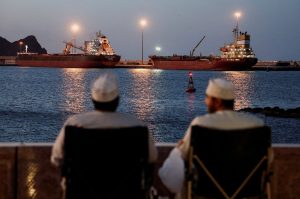
Any alteration to the security arrangements of these two chokepoints directly impacts maritime insurance costs, supply chain security, and the economic calculations of major powers spanning from East Asia to the West. Consequently, exerting influence over these waterways is no longer merely a tactical tool; rather, it is considered an integral part of the “Axis of Resistance’s” doctrine of strategic balance.
Geopolitical Interconnectedness: Integrating Hormuz and Bab-al-Mandeb into a Unified Doctrine
In classical studies of West Asian security, the Strait of Hormuz and the Bab-el-Mandeb Strait were typically examined as two distinct security zones. The Strait of Hormuz was defined within the framework of Persian Gulf security, while the Bab-el-Mandeb was viewed in the context of the rivalry over the Red Sea and the Suez Canal; however, developments in recent years have demonstrated that this separation no longer adequately reflects the reality on the ground. The Axis of Resistance’s new strategy defines these two bodies of water not as separate geographical entities, but as a unified operational and security space—a realm where pressure exerted on one chokepoint can influence calculations regarding the other. Within this framework, the Strait of Hormuz and the Bab al-Mandab Strait become two links in a single chain, the primary function of which is to enhance leverage over vital global energy and trade routes.
The significance of this interconnectedness becomes even clearer when considering that the Strait of Hormuz alone serves as a transit route for 20.7 million barrels of oil and petroleum products and approximately 10.5 billion cubic feet of liquefied natural gas daily—volumes that render it a vital artery of the global economy. Meanwhile, the Bab al-Mandeb Strait—linking the Indian Ocean to the Red Sea and, subsequently, the Suez Canal—plays a pivotal role in the flow of goods, energy, and supply chains between Asia and Europe. Consequently, integrating these two chokepoints into a unified security framework creates a form of geoeconomic depth capable of elevating the level of deterrence from the immediate periphery to a scope that extends well beyond the region itself.
From Hard Power to Geoeconomic Influence: Weaponizing Energy Chokepoints
Within this framework, the concept of power has also undergone a transformation. While deterrence was historically defined primarily by territorial control, the accumulation of weaponry, or battlefield superiority, the ability to influence critical nodes of the international economy has now emerged as a key component of power. By leveraging the geographic positioning of aligned actors and the operational interconnectedness across various fronts, the Axis of Resistance has gained the capacity to utilize maritime chokepoints not merely as transit routes, but as instruments for calibrating the balance of power.
This shift does not signify the replacement of hard power with economic power; rather, it represents the transformation of hard-power capabilities into geoeconomic levers. In other words, what has become crucial is not merely the potential for conflict within a waterway, but the ability to influence calculations regarding insurance, shipping, energy prices, and global market risks. At a time when the decision-making structures of major powers—particularly in the West—are highly sensitive to inflationary shocks, oil price fluctuations, and supply chain disruptions, any actor capable of influencing these variables effectively transcends the status of a mere regional player. From this perspective, exerting influence over strategic waterways serves the “Axis of Resistance” as both a tool of deterrence and a means to enhance its bargaining power in the diplomatic arena.
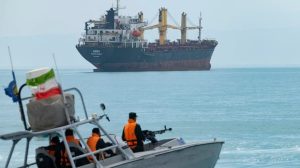
Multilateral Balancing: The Intersection of Interests between Emerging and Traditional Powers
A second Trump administration views maintaining effective access to maritime chokepoints and sustaining its dominant role in regional security arrangements as essential to the survival of its preferred order. In contrast, emerging Asian powers—particularly China and India—seek to ensure stability in energy and trade flows rather than pursuing direct military supremacy. This divergence in priorities creates significant room for maneuver for regional actors. By exploiting this structural gap, the Axis of Resistance can leverage its position on both sides of the Strait of Hormuz and the Bab al-Mandeb to engage in balancing.
The issue here is not merely one of posing a threat or causing disruption; rather, it is about becoming an actor whose role cannot be overlooked when devising any sustainable maritime security arrangements for the region. Consequently, exerting influence over these two waterways must be viewed as part of the broader process of redefining the Middle East’s security order—a process in which control signifies not just physical presence, but the ability to shape the decisions, calculations, and behavior of other actors.
Conclusion
Current developments in the North Indian Ocean region indicate that the competition over strategic chokepoints can no longer be understood merely in terms of limited maritime disputes or sporadic security tensions. What is emerging is a shift in the logic of power in the Middle East—a shift in which control over, or the ability to influence, vital energy and trade chokepoints has become a key component of deterrence and balancing.
Within this framework, the Axis of Resistance has leveraged its geographical continuity, distributed operational presence, and the simultaneous application of pressure across multiple levels to transcend its role as a purely security-oriented alliance and emerge as an influential actor in international political-economic calculations. The significance of this shift lies in the fact that the Straits of Hormuz and Bab al-Mandeb are no longer merely transit routes; they have evolved into strategic nodes within the region’s security architecture—nodes where any disruption, tension, or reconfiguration of existing arrangements could have direct repercussions for energy prices, supply chain security, maritime insurance, and the behavior of major powers.