
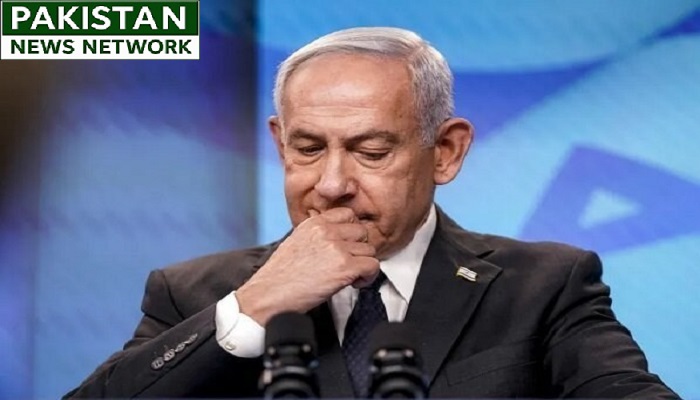
PNN – A German media outlet assessed the war against Iran as a failed operation with counterproductive results for Israel.
According to the report of Pakistan News Network, the German newspaper Passer Neue Presse assessed the Israeli Prime Minister Benjamin Netanyahu as under high pressure in light of recent developments and considered the war against Iran to be counterproductive for him.
The article continues: Netanyahu promised victory while critics spoke of defeat. Here, the question arises: How will the war against Iran test Israel’s relationship with the United States and Trump’s loyalty to him?
Israeli Prime Minister Benjamin Netanyahu had promised Israelis a complete victory over Iran. The maximum goals he had formulated at the start of the war were to eliminate Iran’s nuclear and missile threats and to permanently weaken – perhaps even overthrow – the Iranian leadership. Yet, nearly four months later, the situation is alarming and discouraging for him. Many critics believe that the Israeli regime’s ambitious goals have been lost in the war.
Danny Citrinovich, a well-known Western expert on Iran issues, even spoke of Israel’s defeat in Iran, saying: Despite the loss of some Iranian officials, the Iranian leaders have emerged from this conflict even stronger. According to him, while Netanyahu is pushing for a military strike, US President Donald Trump has given up on it.
Last night, it was announced that Trump and Iranian President Masoud Pezishkiyan had signed a framework agreement to end the war. According to Pakistan, the mediator, the agreement is to be implemented immediately.
At the same time, relations between Israel and its most important ally (the United States) have suffered significant damage. Just months before a crucial parliamentary election in the occupied territories, Netanyahu is under more domestic political pressure than he has been in a long time.
Yair Lapid, the leader of the Zionist regime, said in his speech to parliament: Netanyahu promised us a historic victory, and what we got was a crisis with the Americans, the opening of the Strait of Hormuz to the Iranians, money for the Revolutionary Guards and ballistic missiles aimed at Israel.
Ben Kaspit, an Israeli journalist known for his critical stances towards Netanyahu, also said in a televised debate: In my darkest dreams, I could not imagine a worse catastrophe.
Netanyahu himself, of course, rejects this depiction. He continues to present the war against Iran and its allies in the region as a series of strategic successes.
He said in a press conference on Monday evening that Israel is stronger than ever and that, in his view, the Iranian axis of evil is weaker than ever.
Netanyahu has made the Iranian threat a central theme of his policy for years. Hardly any other Israeli politician has been more a symbol of the fight against Tehran’s nuclear weapons than he is. “I can say that this is my life’s work,” he told a news conference.
Netanyahu lobbied Trump to take a tougher stance on Tehran and supported his decision in 2018 to withdraw from the international nuclear deal with Iran. In retrospect, even Israeli security experts see it as a serious strategic mistake.
For Netanyahu, the ongoing confrontation with his archenemy, Iran, has become a central element of his political narrative — and a testament to his leadership.
He also used his close relationship with Trump as political capital during the campaign. In 2019, he appeared alongside the US president on large banners with the slogan “Netanyahu – a different league.” The message was: Trump is a great pro-Israel ally, and only Netanyahu has a good rapport with him.
However, this strategy could create problems for Netanyahu ahead of the parliamentary elections next fall. The relationship with Trump, which the Israeli prime minister has long touted as a foreign policy asset, has recently taken a significant turn for the worse over the war on Iran and tensions over Lebanon.
Iran, an ally of the Lebanese resistance group Hezbollah, wants a halt to Israeli attacks on Lebanon as part of the ceasefire agreement. However, the Israeli regime wants to keep its forces in southern Lebanon to protect residents of the Israeli border area. The conflict has also repeatedly threatened to undermine the US-Iran ceasefire.
Trump reportedly told Netanyahu in a heated phone call earlier this month: “You’re absolutely crazy.” Accusing Israel of jeopardizing its diplomatic efforts with Iran, Trump reportedly said: Now everyone hates you.
Trump recently called Netanyahu a “tough guy” in an interview with the New York Times.
Aaron David Miller, a Western expert on Middle East issues, wrote in an article on the X website that no American president has ever publicly said about the Israeli prime minister what Trump said about Netanyahu.
For a politician who has so much of his career tied to the fight against Iran, the development is particularly bittersweet, Miller said. “The very Iran issue that Netanyahu has used for decades to assert his power has now become his biggest political burden,” he added.
Israeli political scientist Jonathan Reynolds has also said that the war and the potential US deal with Iran have hurt Netanyahu deeply. However, he believes it is too early to declare the political death of Netanyahu — the longest-serving Israeli prime minister and a defining figure in Israeli politics in recent decades.
The elections, for which a date has not yet been set, must be held no later than October 27.