
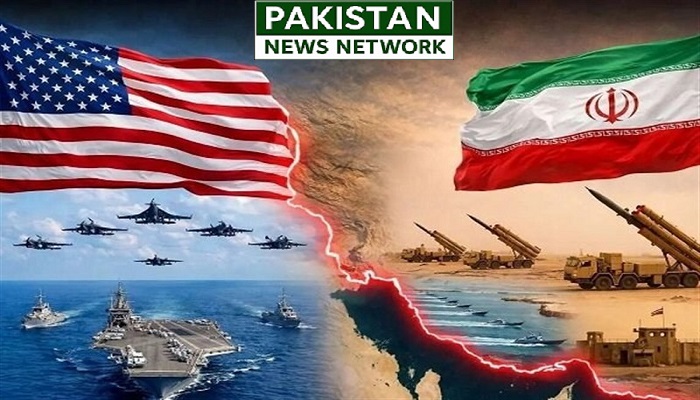
PNN – Although Iran suffered heavy losses in the war with America, it was America that lost its credibility.
According to the report of Pakistan News Network, political analysts in Turkish newspapers and media consider the Islamic Republic of Iran’s tough stance against the Zionist regime’s continued attacks on Lebanon and linking this issue to the agreement between Tehran and Washington as an important and strategic issue.
Now in Turkey, from political and executive officials of the government and various parties to independent media analysts, there is a clear consensus on the victory narrative, and everyone is talking about the defeat of the United States and the Israeli regime.
In the statement of the Supreme National Security Council of Turkey, Ankara also expressed satisfaction with the agreement reached between Iran and the United States and noted that Turkey will continue to participate effectively in efforts to ensure lasting peace and stability in the region.

Trump joked
Osman Siret, a famous Turkish analyst who has traveled to Iran several times, says about the outcome of the war: There are many jokes about Trump on English-language social media. Perhaps the most famous and catchiest joke is this: Trump announced that we have agreed to reopen the Strait of Hormuz, which was open before our attack! Of course, this agreement is still in its early stages and is fragile. But in any case, the Strait of Hormuz was open before the war, oil flowed normally, discussions on the nuclear issue were always possible! Although Iran suffered a lot of losses, it is America that has lost its credibility and can no longer claim to be a reliable security guarantor for its allies. Perhaps Trump’s only achievement is to isolate the UAE from other countries in the region and align it with Israel.
Osman Siret continues: The important achievement for our region is this: the anti-Israeli collective psychology has strengthened in the region and everyone has understood that Israel is vulnerable and can be targeted with missiles. The narrative of Israel as a victim and oppressed has been largely weakened in Western societies. But the contribution of the countries of the region, including Turkey, in this matter is very limited. It was the heroic stance of the Palestinian people and the capacity of the Iranian resistance that made it possible to strengthen this anti-Israeli collective psychology.
The thread analysis went to waste.
Ms. Sholeh Demirtas, a conservative Turkish analyst, says in a detailed note about the outcome of the war between Iran and the United States: A significant portion of the analysis conducted on Iran inspires a strange sense of repetition. Years pass, the actors change, the nature of the crises changes, but each time, they repeat this catchphrase: This time, the end of Iran has come! However, a careful study of the history of the past 45 years reveals Iran’s capacity for survival and shows that this country has never been on the path to collapse. Iran remains one of the countries about which collapse scenarios are constantly written, but we never see these scenarios come true. A look at the situation that emerged after the 1979 revolution reveals the codes of this situation. The Shah’s regime had been overthrown, a significant part of the state apparatus had been purged, and a large part of the country’s educated cadres had gone abroad. The coalition that carried out the revolution was also very heterogeneous within itself. Liberals, leftists, nationalists, and Islamists had fought against the same regime, yet their visions for the future of Iran were completely different, and after a short time, they faced attacks from Iraq. The war became the first major test for the young republic, and many observers at the time believed that Iran could not bear the burden. After the war, a period of sanctions began. For many years, a normal market system was impossible for the Iranian economy. Access to oil revenues was restricted, the banking system was cut off from international networks, and foreign investment was largely stopped. Despite this, Iran survived.
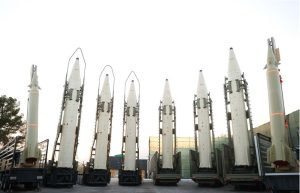
Ms. Demirtas continues: From the mid-2000s onwards, during the developments in Afghanistan, Iraq, Syria, Yemen and other developments, Iran gained a wide sphere of influence. One of the important symbols of this era was Qassem Soleimani, after whose assassination analysts thought that Iran’s regional architecture would collapse. But this did not happen. After that, domestic protests occurred, but the Iranian people refused to link their dissatisfaction with the demands of Trump or Netanyahu to overthrow the government. So the question is: What is the reason for all this resistance? There is a very deep historical issue at play. Unlike many modern countries in the Middle East, Iran is not defined solely by its current regime. The idea of Iran does not arise solely from nationalism. It is rooted in a state memory that has survived for centuries under different dynasties, ideologies, and political systems. This long continuity, from the Safavids to the Qajars, from the Pahlavis to the Islamic Republic, allows for a distinction between the state and the government in Iranian society. Even when people protest the status quo, they can still react to protect the integrity of the country. Many foreign analyses ignore this point.
Sholeh Demirtas concludes by saying: The story of Iran is the story of a country that has managed to maintain its historical continuity in a region that has been a constant source of crisis in the modern era. For years, Washington treated the Iranian issue as something that could be solved through military pressure, sanctions, and diplomatic isolation. However, it has become clear that Iran’s influence is not simply a result of its nuclear program, missile capabilities, or regional allies. Iran also has the capacity to impose costs over a wide geographic area, from the Strait of Hormuz to Iraq, the Persian Gulf, and energy markets. Therefore, any attempt to completely neutralize Iran often creates new risks of instability.
America lost
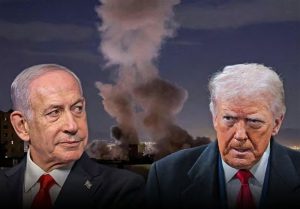
Ersan Al, another Turkish political analyst, says in a sarcastic tone: The wise men and intellectuals of the foreign policy world have finally reached a consensus that the United States has lost the war with Iran. Trump and Netanyahu’s bold statements about a ground attack and the collapse of Tehran have gone nowhere. Now they are resorting to predictions that this situation is temporary and that war could return. This is also baseless. Even if the conflict returns to its most intense form, the outcome will not change. We have also added Israel to the list of losers. The whole world is happy with the cessation of hostilities and Trump’s declaration that the war with Iran is over. This is also part of the process that is isolating Israel. Israel has lost its place and the performance and power of the Abraham Accords have also diminished.