
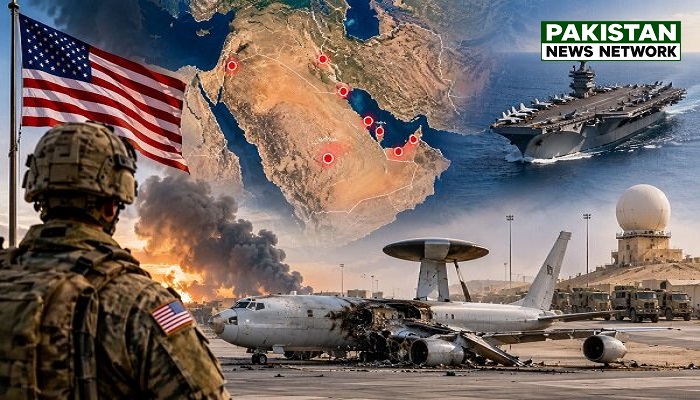
PNN – The heavy damage inflicted by Iranian attacks on dozens of U.S. military bases and centers has confronted Washington with a new challenge and cast doubt on the future of its military presence in the Middle East.
U.S. military bases in the Middle East—long considered one of Washington’s primary instruments for projecting power and managing regional security dynamics—now face a new challenge. Iranian missile and drone attacks have demonstrated that, contrary to previous American assumptions, these facilities are highly vulnerable, and ensuring their security imposes a heavy cost on Washington.
A recent investigative report by the Associated Press (October 31) reveals that 26 U.S. military bases and facilities in the region have sustained billions of dollars in damage as a result of over 115 missile and drone attacks by Iran. The report, based on an analysis of satellite imagery and interviews with regional officials, indicates that the Iranian attacks went beyond radar and air defense systems, also targeting aircraft, hangars, warehouses, communication facilities, and locations housing U.S. troops. Two regional officials also told the Associated Press that the United States has withdrawn a significant portion of its military equipment and assets from the Persian Gulf.
Meanwhile, the withdrawal of U.S. military personnel from Iraq—including the evacuation of bases such as Ain al-Asad and facilities in Erbil—has once again turned the future of Washington’s military presence in the region into a contentious issue. Although this withdrawal took place within the framework of a prior agreement between Baghdad and Washington, its coincidence with ongoing conflict and the heightened vulnerability of U.S. bases has compounded the strategic significance of this development.
The question now arises: will heavy military losses, rising deployment costs, and the increasing difficulty of securing these bases compel Donald Trump to reconsider Washington’s decades-old strategy? Will the United States be forced to scale back its military presence in the Middle East and relinquish part of its traditional standing in the region?
From Radars to Hangars: Striking U.S. Military Infrastructure
An investigative report by the Associated Press has revealed new details regarding the damage inflicted by Iranian attacks on U.S. military infrastructure in the Middle East. Based on the report—which draws on an analysis of satellite imagery and interviews with four regional officials—more than 115 missile and drone attacks carried out by Iran and its proxy groups through the end of August 2026 have damaged or partially destroyed 26 U.S. military bases and facilities in the region. The extent of this damage has cast serious doubt on Washington’s claims regarding its security superiority and its ability to protect its own military installations.
The pattern of the attacks also indicates that Iran did not merely target buildings and auxiliary facilities; rather, it prioritized infrastructure that is critically important for detecting and countering missile and drone attacks. U.S. early-warning radar systems and air defense equipment located in Kuwait, Bahrain, Saudi Arabia, and Jordan were among the initial targets.
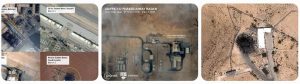
Following the damage inflicted upon these systems, the scope of the attacks expanded to include aircraft hangars, warehouses, communication centers, fuel facilities, and locations housing American forces. This trend demonstrates that U.S. bases—contrary to the image of robustness and security projected by Washington—are vulnerable to sustained and targeted attacks.
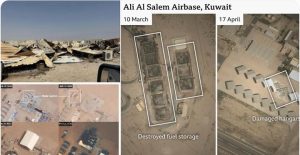
Kuwait has sustained the most significant damage. Ali Al Salem Air Base was targeted at least 30 times, resulting in damage to or the destruction of at least 15 aircraft hangars, several warehouses, and 10 other buildings at the base. At Camp Buehring, more than 30 structures were also damaged or destroyed.
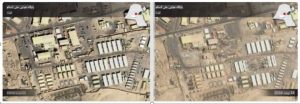
In Saudi Arabia, an E-3 Sentry early-warning aircraft was damaged at Prince Sultan Air Base, and several other aircraft—including two refueling aircraft—also sustained damage.
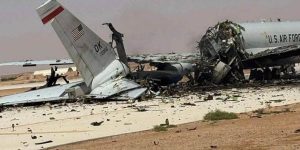
An updated report by the U.S. Congressional Research Service from October 2026 also indicated that 15 American aircraft were damaged at bases in the region. In the UAE and Bahrain, hangars, radar systems, and communication equipment were also targeted. In addition to these losses, a drone attack on Kuwait’s Shuwaikh Port on March 1, 2026, resulted in the deaths of six U.S. military personnel.
The significance of these developments extends beyond mere financial loss; by targeting various layers of U.S. military infrastructure, Iran has demonstrated that Washington’s extensive military presence in the region does not necessarily equate to security or immunity.
According to Raphael Cohen, an analyst at the RAND Corporation, the U.S. military’s reliance on fixed infrastructure can no longer continue as it has in the past. This assessment points to a significant reality: bases that were intended to serve as instruments for projecting American power have now become vulnerable and costly liabilities for this presence.
Retreat Under Pressure: The Reconfiguration of the U.S. Military Posture in the Region
Observers note that the extensive damage sustained by U.S. bases, coupled with the growing threat posed by Iranian missiles and drones, has altered the calculus of Washington’s military deployment in the Middle East. A report by the Associated Press further indicates that, following heavy damage to its facilities, the U.S. military has withdrawn a substantial portion of its equipment and military assets from the Persian Gulf.
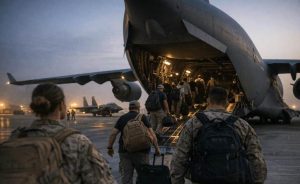
This redeployment encompasses aircraft, air defense systems, communication equipment, and the infrastructure essential for base operations. Consequently, in order to protect its forces, Washington has been compelled to move away from a model of concentrated and predictable deployment at certain military installations.
This trend is also reflected in the Pentagon’s strategic calculations. The Washington Post has reported that U.S. Department of Defense officials are considering a reduction in troop levels across the Persian Gulf states, as well as a reassessment of plans to reconstruct damaged bases. One of the options under discussion involves relocating a portion of these forces to areas beyond the reach of Iranian strikes—such as Jordan or the Red Sea coast of Saudi Arabia.
Reports also indicate that the possibility of maintaining intelligence and arms cooperation with regional countries—without the continued large-scale deployment of U.S. forces—is being examined. However, no final decision has yet been announced regarding a permanent change to the U.S. military posture.
The withdrawal of U.S. forces from Iraq should also be viewed in this context. The United States has finally removed its troops and equipment from the Erbil base, bringing the coalition’s military mission in Iraq to an end. Prior to this, the Ain al-Asad base had also been handed over to Iraqi forces.
Although this process was planned based on a prior agreement between Baghdad and Washington, the frequent and heavy attacks on U.S. positions in Iraq—and the subsequent withdrawal of forces exposed to these assaults—have heightened the security significance of this development. The mission to counter ISIS has been relocated to Jordan, while Washington has retained the capability to provide support and conduct military interventions from outside Iraq.
Taken together, these developments indicate that the United States has been compelled to alter its deployment strategy to maintain its regional presence. However, relocating forces to more distant locations introduces new logistical and operational costs, while also imposing limitations on Washington’s military freedom of action.
Is the U.S. Leaving the Middle East?
Despite heavy losses and rising military costs, a complete U.S. withdrawal from the Middle East faces serious strategic obstacles. Over the course of several decades, Washington has established a network of bases and command centers in the region—facilities that serve not merely to station troops, but also to enable control over vital energy routes, the management of military operations, and the maintenance of American political influence over regional governments.
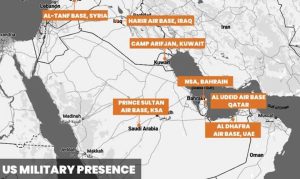
The Strait of Hormuz—where the United States is currently entangled—along with the surrounding waterways, continues to hold a special place in U.S. security calculations due to its decisive role in global energy transport and trade. Consequently, withdrawing from the region would mean relinquishing a portion of the levers of power that Washington has invested years in maintaining.
The importance of regional bases is evident in the missions of key U.S. hubs. Al Udeid Air Base in Qatar serves as the primary hub for U.S. Central Command and the center from which U.S. air operations in the region are directed. Bahrain hosts the U.S. Fifth Fleet, which plays a critical role in maritime operations and the protection of Washington’s interests in regional waters. Kuwait provides the logistical infrastructure and support necessary for U.S. forces. Relocating or closing these facilities would entail far more than simply moving a few thousand troops; it would directly impact the United States’ command, support, and rapid-response capabilities.