
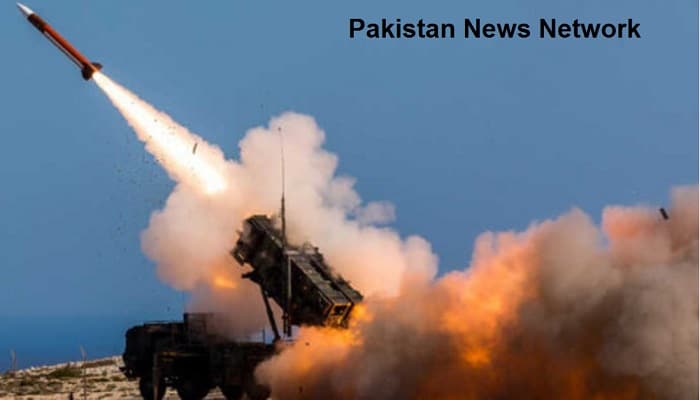
PNN – The Washington Post reported, citing American officials, that the United States used more than 200 THAAD interceptors and dozens of other missiles to defend Israel during the war with Iran, raising concerns about the depletion of American missile defense reserves.
According to the report of Pakistan News Network; The U.S. military has depleted much of its advanced missile defense interceptor inventory after spending far more advanced munitions on Israel in the midst of a war with Iran than the Israelis themselves were using, according to a Department of Defense assessment provided to The Washington Post.
The imbalance in U.S. munitions raises questions about U.S. military readiness and security commitments around the world, according to three U.S. officials, who spoke on condition of anonymity.
The Washington Post quoted the anonymous US officials as saying: The United States has deployed more than 200 Terminal High Altitude Area Defense (THAAD) interceptors in defense of Israel — nearly half of the Pentagon’s total — along with more than 100 Standard-3 and Standard-6 interceptors launched from Navy ships in the eastern Mediterranean. In return, Israel has fired fewer than 100 Arrow interceptors and about 90 David Sling interceptors.
The American media outlet, citing military analysts, added: This data provided provides a rare glimpse into how the United States and Israel cooperate.
While indirect talks with the American side were underway, the United States and the Zionist regime launched an aggression against Iran, and Iran, in response to the aggression against its territory and in self-defense, carried out Operation True Promise 4, targeting American bases in the region and specific targets in the occupied territories.
Kelly Grieco, a senior fellow at the Stimson Center, said: These numbers are significant. The United States has taken on most of the missile defense mission while Israel has maintained its stockpiles. Even if the operational logic were sound, the United States has approximately 200 THAAD interceptors and a production line that cannot keep up with demand.
The Washington Post emphasized: The US lack of interceptors has worried its allies in Asia, particularly Japan and South Korea, which rely on the US as a deterrent against potential threats from North Korea and China.
The American newspaper noted: US and Israeli officials often praise their close cooperation and the strength of Israel’s multi-layered air defense system, but the Pentagon’s assessments suggest a more unbalanced dynamic.
An American official, referring to America’s military weakness, said: If the war resumes, this imbalance is likely to intensify.
Another American official acknowledged: Israel is not capable of fighting wars alone, but no one really knows that because they never see the end of it.