
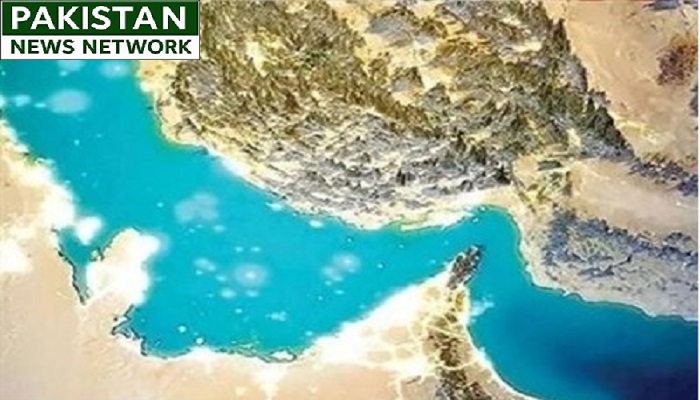
PNN – According to the Persian Gulf expert, the war changed the way the countries of the region view Iran and their security partnership with the United States.
Kamran Karami, in an interview, said in relation to the lessons that the countries of the southern Persian Gulf have learned from the recent war between the United States and the Zionist regime against Iran: Before the start of this war, the Arab countries had to some extent come to the conclusion that they should move towards diversifying international partners in the issue of regional security and even their own security, and distance themselves from excessive trust in the United States in the military-security fields and be able to balance it.
This expert on developments in the Persian Gulf stated: One of the most important lessons that this war taught, especially with the involvement of the Gulf Cooperation Council, led by Saudi Arabia and the UAE, is that the members of the Gulf Cooperation Council will have a different view of Iran, and their perspective on the security partnerships they have with the United States will change, and the process of diversifying security partners will accelerate. This means that the members of the Gulf Cooperation Council will move towards other actors, including Iran, in the issue of regional security and other actors at the international level.
In response to the question, “If you were to categorize the countries on the southern edge of the Persian Gulf, which category would the UAE and Saudi Arabia fall into?” he said: A player like the UAE has more freedom of action than Saudi Arabia in terms of foreign policy and which faction it joins. Saudi Arabia must consider its own domestic and regional security concerns, along with public opinion. This will cause the Saudis to take more serious considerations on the issue that has been on the agenda for a long time, namely joining the process of normalizing relations with the Zionist regime.
This analyst of Persian Gulf issues said about the Emirates: Abu Dhabi is trying to meet its needs in the field of security and regional political economy from an actor like the Zionist regime and strengthen its relations with this regime. Perhaps, at the beginning of the cooperation, the Emiratis will observe the sensitivities about some specific cooperation, such as giving specific bases to the Israelis on UAE soil or entering into very high-level security issues that are considered a threat from Iran’s perspective. However, if they want to strengthen their relations with the Zionist regime at the regional and international levels, it naturally does not seem that even war can change this view of the Emirates.
Regarding other members of the Gulf Cooperation Council, he said: Countries like Bahrain, Kuwait, and even Oman are not considered serious players. Of course, Qatar may move more towards bilateral cooperation with Iran, even in security areas, than in the past. But regarding Oman, I don’t think there has been any change in the country’s attitude towards Iran compared to before. That is, do the Omanis want to strengthen cooperation with Iran or distance themselves.
This expert on developments in the Persian Gulf region said about the cooperation between Iran and Oman in managing and navigating vessels through the Strait of Hormuz: In this discussion of the Strait of Hormuz, which is scheduled to be held within 60 days, it should be said that the regional arrangements that will be made regarding the security issue in the Strait of Hormuz waterway and that other actors in the Persian Gulf Cooperation Council are scheduled to cooperate with Iran and Oman, this could be a turning point. This turning point is related to regional security arrangements and for Iran to consider how actors like the UAE or Saudi Arabia enter regional security arrangements. This is a turning point, but it is not possible to state with certainty what approach these countries will follow.
He added: If these countries can enter the process of regional security arrangements and somehow accept the joint sovereignty of Iran and Oman over the Strait of Hormuz; in parallel, issues related to the security of the Strait of Hormuz, whether it is a cooperative security or not, will be raised. This is an opportunity for all the countries of the Persian Gulf, but whether in the current situation the member states of the Gulf Cooperation Council will have a more serious entry or will simply be forced to accept the sovereignty of Iran and Oman in the transit issue, these are issues that are too early to judge in the current situation.
Regarding the situation of the Gulf Cooperation Council after the recent war, the expert said: For a long time, we have not witnessed much group acting and role-playing by this council. In fact, actors such as Qatar or the UAE practically bypassed the mechanisms of the Gulf Cooperation Council on a number of issues and at a certain time and pursued their own interests. It seems that in the current situation, this will happen again.
According to him, this question has been raised among the members of the Gulf Cooperation Council for a long time: are we going to sacrifice our own security for collective security? This is while the member countries of the Council, whenever they were faced with such a situation, went towards ensuring their own security. In fact, they prioritized their own security rather than trying to get involved in issues within the framework of the Gulf Cooperation Council or through this council.
Karami stated that there is a large gap in the Gulf Cooperation Council, especially in security-political issues, and added: This gap may deepen in the future. For example, when the Emiratis recognize an issue, they will move towards it. This performance of Abu Dhabi is quite tangible and experienced in the developments in Libya, Egypt, Yemen, and Sudan.
This expert on developments in the Persian Gulf region stated: If the countries in this region want to cooperate with the Islamic Republic of Iran on securing the Strait of Hormuz, it is possible to achieve this through the Gulf Cooperation Council. However, it remains to be seen which solution Iran prefers more: will it prefer a bilateral mechanism or will it move towards cooperation with the Council on securing the Strait of Hormuz. This issue depends on Tehran’s approach.
Emphasizing that the recent war deepened the rift in the Gulf Cooperation Council, he stated: This council was formed in 1981 based on a sense of threat from Iran, but throughout its life, issues arose between the member states of the Gulf Cooperation Council that exposed the rift in the structure of the council and deepened the challenges and threats among its members. Some small players became regional and, to some extent, international players, and the philosophy of the Gulf Cooperation Council was practically called into question.
Karami concluded by stating: I do not think that the Gulf Cooperation Council countries want to interact with Iran with the same attitude and philosophy as in 1981, so I believe that the most important achievement of the recent war is that we can observe this change in attitude in the coming months and years.