
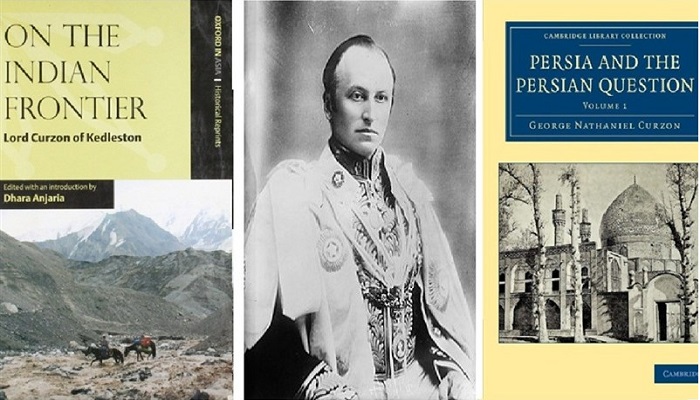
PNN – Lord Curzon was a key figure in the “Great Game,” playing a strategic role in British policy spanning from Iran to the Khyber Pass and the Indian subcontinent.
According to the report of Pakistan News Network, the presence and role of British politicians such as Lord Curzon in Iran and the Indian subcontinent (India and Pakistan) were defined within the context of a major geopolitical rivalry known as “The Great Game” between the British Empire and the Russian Empire. If one seeks to trace the historical intersection of the subcontinent, Iran, and the modern-day province of Khyber Pakhtunkhwa, the name of Lord George Curzon—Viceroy of India—undoubtedly stands out above all others. Curzon was one of the few British politicians who—having traveled extensively to the East—studied Iran from a strategic perspective, wrote about the tribal regions and the Khyber Pass, and played a direct role in shaping British policy in the Indian subcontinent (including the creation of the North-West Frontier Province, now Khyber Pakhtunkhwa). In his view, Iran was not merely a neighboring country but a vital link in the security of British India, while the land of the Pashtuns was regarded as the British Empire’s defensive bulwark against the encroachment of Tsarist Russia.
Russia’s expansionism and growing influence in Central Asia during the 19th century alarmed British officials in India and sparked numerous political and diplomatic conflicts between the two empires—a rivalry that later became known as the “Great Game.” The construction of the Trans-Caspian Railway, and particularly its 1890 extension to the highly sensitive border region of Kushka in southern Turkmenistan, further heightened British concerns, as it enabled Russia to rapidly deploy large forces toward Afghanistan. Russia feared British commercial and military incursions into Central Asia, while Britain worried that Russia might annex India—the “Jewel in the Crown”—into its vast empire. Consequently, an atmosphere of suspicion, mistrust, and a constant fear of war emerged between the two empires.
North-West Frontier Province; Khyber Pakhtunkhwa
The creation of the North-West Frontier Province (Khyber Pakhtunkhwa) was a significant event in the history of the British Raj in India. The North-West Frontier was the most sensitive region for British policymakers, as it was central to their imperial strategies at the time. Credit for this initiative goes to Viceroy Lord Curzon, who championed the creation of the new province despite strong opposition from some British officials. The British believed that establishing the new province would place them in a better position to govern and administer the region in a more methodical and professional manner—measures essential for the defense and security of India.
In 1849, Britain annexed the Punjab and formally incorporated it into its territory. Upon crossing the Indus, the British came into contact with the Pashtun tribes, marking the beginning of a new chapter in the history of British rule in India. This region was an integral part of the “Great Game”—a strategic contest Britain engaged in to counter internal unrest and external threats to India originating from the northwest frontier. For administrative convenience, the British divided the border region into settled areas and tribal zones. The aim was to ensure the central government maintained full control so that both international and domestic issues could be addressed swiftly and directly, as the ultimate objective of Britain’s overall border policy was the “security of India.” In 1901, the British government in India, under the administration of Viceroy Lord Curzon, decided to divide the Punjab into two parts; consequently, a new province was formed, known as the “North-West Frontier Province” (present-day Khyber Pakhtunkhwa).
The province was surrounded by Afghanistan to the north and west, Kashmir, Gilgit and Punjab to the east and Balochistan to the south. Tribal areas were beyond the administrative structure of the province. These areas became a barrier between Afghanistan and the British-ruled areas. The first chief commissioner of this state was Colonel II Harold Dean. Upon his death in 1908, George Rose Capel succeeded him.
Lord George Nathaniel Curzon (1859–1925)
He was a prominent British politician during the first quarter of the twentieth century and a well-known figure in both politics and the field of Iranian studies. He served as British Foreign Secretary from 1919 to 1924—a period that coincided with efforts to implement the Anglo-Persian Agreement of 1919 and the rise of Reza Shah on the Iranian political stage. He was recognized in political circles as an authority on affairs concerning Iran and India; however, the bitter memory of his insistence on concluding the 1919 Agreement inevitably colors the judgment of any Iranian scholar regarding him.
Curzon had traveled across the globe: Russia and Central Asia (1888–1889); Persia (September 1889 – January 1890); Siam, French Indochina, China, Korea, and Japan (1892); and an intrepid journey to Afghanistan and the Pamirs (1894–1895). He authored several books based on his travels, including Russia in Central Asia (1889), Persia and the Persian Question (1892), and Problems of the Far East (1894). Persia and the Persian Question, presented here.
In January 1899, Curzon was appointed Viceroy of India. In 1901, Curzon made a famous statement: As long as we rule India, we remain the world’s greatest power; should we lose it, we would instantly plummet to the status of a third-rate power. He served as Viceroy of India for seven years, achieving great success during his tenure; however, due to disagreements with the British War Office, he was compelled to resign. Returning to England in 1905, he was appointed head of Oxford University, where he devoted himself for a time to study, research, writing, and university reform.
He harbored deep distrust regarding Russia’s intentions. This prompted him to encourage British trade in Iran, and in 1903, he visited the Persian Gulf. Curzon advocated for an exclusive British presence in the Persian Gulf.
During his tenure, Curzon oversaw the restoration of the Taj Mahal and expressed satisfaction with the undertaking. Influenced by Hindu philosophy, Curzon remarked: India has exerted a deeper influence on the history of human philosophy and religion than any other landmass in the world.
Mahatma Gandhi praised Curzon as the first Viceroy to express sympathy for imprisoned Indian workers and to criticize the way the system was administered. Jawaharlal Nehru, the first leader of independent India, also paid tribute to Curzon, stating that as Viceroy, Curzon had demonstrated his genuine love for Indian culture.
In 1918, during World War I, when Britain occupied Mesopotamia, Curzon attempted to persuade the Government of India to reconsider its plan to turn Iran into a buffer zone against Russian advances. British and Indian forces were present in Iran, guarding the Abadan oil fields and monitoring the borders with Afghanistan. Curzon believed that British economic and military aid, channeled through India, could keep the Iranian government afloat and transform it into a state dependent on Britain. The Anglo-Persian Agreement of August 1919 was never ratified, and the British government rejected the plan because Russia held a geographical advantage, and the defensive benefits did not justify the high economic costs.
Lord Curzon’s Trip to Iran
Published in 1892 and based on his six-month stay in the country, the book “Persia and the Persian Question” is considered Curzon’s masterpiece and can be viewed as a sequel to his earlier work, “Russia in Central Asia”. In late 1899, Curzon was commissioned by “The Times” to write a series of articles on the political climate in Persia; however, while there, he decided to write a comprehensive book about the country. This two-volume work covers Persia’s history and governmental structure, and includes charts, maps, and illustrations—some of which were photographed by Curzon himself. General Albert Houtum-Schindler and the Royal Geographical Society (RGS) assisted Curzon in accessing materials that would otherwise have been unavailable to a foreigner; General Schindler provided information on Persia’s geography and resources and also served as an unofficial editor.
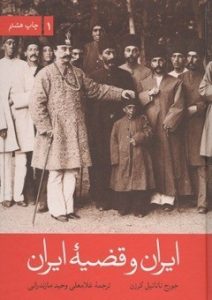
As stated in the introduction, the author’s aim is to produce a “standard work in English” on the subject. Following two introductory chapters, chapters 3 through 12 document Curzon’s travels and observations across various regions of the country—including his journey from Ashkhabad (modern-day Ashgabat, Turkmenistan) to Iran and his stays in Quchan, Mashhad, Khorasan, Sistan, Tehran, and elsewhere. The first volume concludes with separate chapters dedicated to the Shah and the royal family; the government; institutions and reforms; the northwestern provinces; the army; and railways. The second volume opens with seven additional chapters (19–25) describing travels to various parts of the country, including Qom, Kashan, Isfahan, Shiraz, Bushehr, and the eastern, southeastern, and southwestern provinces. The remaining chapters (26–30) address the navy, the Persian Gulf, revenue and resources, trade and commerce, and the policies of Britain and Russia regarding Iran. In Curzon’s view, the essence of the “Persian Question” lies in the rivalry between the Russian and British empires for influence in Iran—a topic he discusses in detail in the final chapter. This chapter also examines Iran’s “two Asian neighbors”—Afghanistan and the Ottoman Empire—both of which held vast territories that had once been part of the Iranian realm. Curzon concludes the book on an optimistic note regarding the country’s future development, yet he counsels patience, warning that grand schemes for the rapid reconstruction of Iran will only lead to failure. He also cautions against the dominance of foreign concessions: The exploitation of Iran’s resources must manifest as internal progress; otherwise, the monopolization of finances by foreigners will arouse envy and foster the perception of usurpation. The book features illustrations and maps that were unparalleled at the time.
Alongside his political objectives, Curzon was also fascinated by Iran’s history and civilization. In his writings, he frequently spoke of Iran’s historical grandeur, Persian culture, and the civilizational role of the Iranian people—though this cultural admiration was framed within a British Orientalist and colonial perspective.
Lord Curzon played a prominent role in imposing the infamous 1919 Agreement. His objective was to turn Iran into a protectorate and secure complete control over its army and finances. Documentary evidence from Lord Curzon’s correspondence reveals that he viewed Ahmad Shah as a greedy monarch who constantly solicited funds from Britain. Curzon and British officials were among the primary proponents of constructing railway lines in Iran to serve colonial and military ends.
Lord Curzon, Khyber Province, and the Pashtun Tribal Areas
During his travels and political missions to northwestern India and the border regions of Afghanistan, Lord Curzon conducted extensive studies on the Pashtun tribes. He regarded these areas as among the most complex and sensitive parts of the British Empire, as the Pashtun tribes were neither fully subject to Kabul nor easily brought under British rule. Among the remarks Curzon made regarding the Khyber region and the Pashtuns are the following:
Borders are the razor’s edge upon which the issues of war and peace in the modern world hang.
These fierce-natured people (the Pashtuns) fascinate me greatly—owing to their tribal customs, their manly character, and, above all, their fierce independence.
The Pashtuns, who trace their origins to present-day southern Afghanistan, constitute the world’s largest (patriarchal) multi-lineage ethnic group; they share a common ancestry and historical background, as well as a distinct moral code, behavioral norms, and a strong sense of spiritual and collective identity. The Pashtuns’ hereditary ethical code is known as Pashtunwali (or Pakhtunwali). It is a traditional system of governance that has been preserved to this day, primarily in rural tribal areas. Beyond its observance by the Pashtun population itself, the code has also been adopted by certain non-Pashtun Afghans and Pakistanis living in Pashtun regions—or in close proximity to Pashtuns—who have gradually become “Pashtunized” over time. Pashtunwali promotes self-respect, independence, justice, hospitality, love, forgiveness, courage, integrity, vengeance, tolerance toward all (especially strangers or guests), and the protection of women, honor, and land. It is the personal responsibility of every Pashtun to discover and practice the essence and meaning of Pashtunwali.
In his observations, Curzon describes the Pashtuns as a people with a fierce spirit of independence. In his view, Pashtun tribes were loyal to tribal freedom, indigenous traditions, and unwritten tribal codes above any other political authority. He frequently notes that these tribes were reluctant to accept foreign authority and resisted any form of alien military or political presence.
One aspect that particularly caught Curzon’s attention was the social system of the Pashtun tribes. He identified the tribal structure, local councils, the influence of tribal elders (Maliks), and traditions rooted in “Pashtunwali” as the primary factors behind the region’s social cohesion. His analysis concluded that, in many areas, tribal law held greater sway than the authority of formal governments.
Curzon also spoke of the combat capabilities and military prowess of the Pashtun tribes. He believed that the mountainous geography of the border regions, combined with the tribes’ martial spirit, made these areas among the most difficult to control militarily. For this reason, he held a cautious view regarding the policy of direct military intervention in the tribal areas.
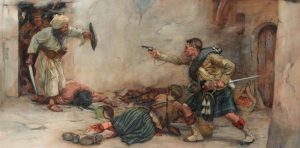
In his memoirs and notes, Curzon speaks of the Pashtun tribes of the Khyber region—the Afridi, Wazir, and Orakzai—with a mixture of admiration and concern. He praised their independent spirit, martial nature, tribal loyalty, and combat prowess, yet simultaneously described them as a people “uncontrollable by ordinary methods of government.” In his view, these frontier tribes could not be fully subjugated; rather, they had to be managed through a combination of respect, subsidies, military force, and political influence.
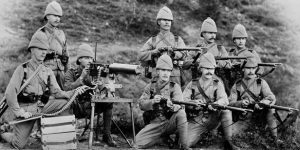
Curzon believed that Britain could not directly occupy and administer Afghanistan, as the experience of the Afghan wars had demonstrated that the territory was extremely costly and unstable for foreign powers. Consequently, he advocated for maintaining an independent Afghanistan that remained under British influence—a country that would serve as a buffer between Russia and British India. This perspective later became a cornerstone of British frontier policy.
The sections concerning Peshawar and the Khyber Pass are among the most significant parts of the book, as Curzon regarded this region as the British Empire’s most sensitive frontier. He viewed Peshawar as the “Gateway to India”—a city that, in his eyes, served as the meeting point of the Indian, Afghan, and Central Asian worlds. In his description of Peshawar, he discusses its bazaars, caravans, ethnic diversity, and semi-military atmosphere, illustrating that for Britain, the city was not merely an administrative hub but a frontline for the security of India.
The book is also noteworthy from a literary standpoint; for Curzon was not merely a politician, but a keen observer and a vivid descriptive writer. He traces the route beyond India’s frontier, continuing through Kashmir toward Gilgit and on to the Pamir region—situated between the Karakoram range and Chitral, and bordering Badakhshan. He writes of this land as the gateway through which countless conquerors had entered the subcontinent over the ages, recounting—with an adventurous spirit—perilous rope bridges, mountain fortresses, raging rivers, tribal attire, and the mysterious atmosphere of the frontier. He offers observations on everything from local dress and lifestyles to fortresses, the game of polo, the demeanor of the inhabitants, and, of course, the landscapes.
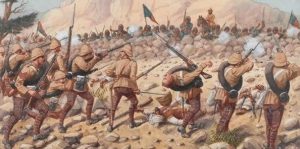
The fact that the Afridis were among the world’s finest guerrilla fighters was also acknowledged by Sir William Lockhart in a memorandum issued from his camp in the Maidan region on November 18, 1897, intended to guide the troops campaigning in Tirah. He warned his men that the British force was “opposed, perhaps, to the best marksmen and the best natural riflemen in the world,” and that the country they inhabited was the most difficult terrain on earth.
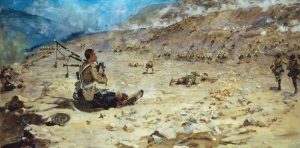
In one instance, the Afridis of the Khyber Pass contacted a group of arms smugglers to purchase Martini-Henry rifles at Persian Gulf ports and transport them covertly through Iran and Afghanistan to the Khyber. The British Royal Navy intercepted and seized several shipments of such weapons.
The Afridis were also skilled at manufacturing their own weapons across the tribal belt. They began producing precise copies of Martini-Henry rifles in local workshops—fashioned largely from scrap material auctioned off from British Indian government military depots—which were then distributed to other parts of the tribal and settled regions. This activity was first revealed in April 1892 by Harold Deane, the Deputy Commissioner of Kohat District, in a letter to the District Superintendent of Police in Peshawar. Peshawar police had arrested five men from Mohmand in Shabqadar, in possession of one Martini-Henry rifle and five Martini-Henry carbines. During the investigation, they confessed to purchasing the weapons from an individual named Hussain—a gunsmith from Kohat Pass, likely operating out of the notorious Darra Adam Khel arms market. The weapons were constructed entirely from materials salvaged from parts of firearms that had been auctioned off at various gun shops in Punjab. Two Hindus from Peshawar, Amir Chand and Bhagwan Das, purchased these materials—which were being discarded by the Ferozepur ordnance depot—and sold them to gunsmiths in Kohat Pass. The gunsmiths of Kohat Pass primarily used discarded British cannon barrels to manufacture their own local firearms.
Durand Line, the razor edge between Afghanistan and Pakistan
Borders are inherently contentious and divisive lines, often marked by their bloody histories. As Lord Curzon stated in his 1907 Oxford lecture: Borders are a primary concern for virtually every foreign ministry in the civilized world. Moreover, they represent a razor’s edge upon which hang modern issues of war or peace, and the life or death of nations.
The Durand Line extends from the Pamirs in the north to the Arabian Sea in the south, covering a distance of 2,430 kilometers. It begins in the snow-capped mountains of the north, traverses fertile central lands, and terminates in the arid, barren regions of the south. The line cuts through Pashtun tribal areas and the Balochistan region, politically separating the Pashtuns, Baloch, and other ethnic groups living on either side of the border. It separates Khyber Pakhtunkhwa, the Federally Administered Tribal Areas, Balochistan, and Gilgit-Baltistan (part of Jammu and Kashmir)—located in northern and western Pakistan—from the northeastern and southern provinces of Afghanistan.
Under this agreement, British India retained most of the Pashtun-inhabited territories it had previously occupied—specifically the frontier tribal regions of Swat, Bajaur, Chitral, Chagai, Buner, Dir, Kurram, parts of Waziristan, and the Khyber Pass. In certain areas, tribes such as the Wazir and Mohmand were effectively split in two. The reason the Amir was permitted to retain the Wakhan Corridor—a narrow strip of land in northeastern Afghanistan that currently separates Tajikistan from Pakistan and Gilgit-Baltistan (part of Jammu and Kashmir)—was that the British utilized it as a preemptive strategic measure against the Russians. The British kept the tribes under their control in check through a combination of semi-autonomy, agreements with tribal leaders, and the payment of subsidies, alongside coercive measures such as punitive actions and collective punishments.