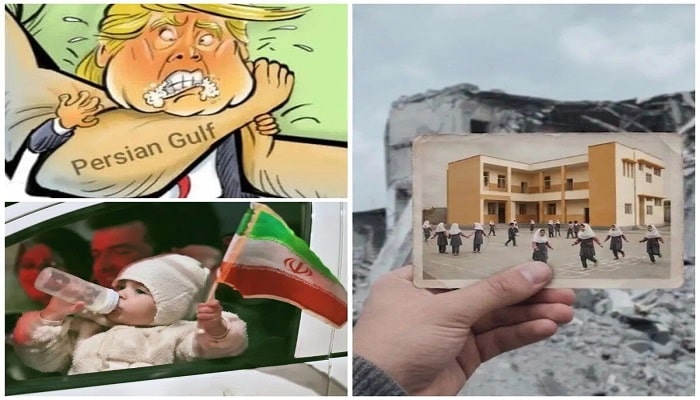
PNN – In the days when Western media tried to create a heavy psychological atmosphere against Iran by highlighting military threats and Donald Trump’s contradictory statements, our country’s embassies and missions in East Asia and the Pacific changed the equations of the narrative war in favor of the Islamic Republic of Iran with an innovative and humorous approach. Special report on this “meme-based diplomacy operation” shows how Iranian missions, by taking advantage of the indigenous culture of these countries, carried out the most successful reverse psychological operations against Washington and Tel Aviv.
From the “missing key meme” in Indonesia and Malaysia to clever satirical posts in Australia and Japan, Iranian diplomacy this time, armed with laughter and artificial intelligence, not only solidified the image of a powerful and oppressed Iran in the public opinion of these regions, but also portrayed America’s political isolation in Asian forums.
In the days when the sky over the region was brightened by the military aggression of the United States and Israel, another arena also witnessed a breathtaking battle: the media arena and public diplomacy. What transformed “classical diplomacy” at this time was the clever and humorous approach of Iran’s missions abroad.
Unlike in the past, when official statements and dry diplomatic condemnations were the order of the day, Iranian embassies, inspired by the rich culture of Persian humor and utilizing the latest digital tools (from artificial intelligence to viral memes), created a wave of global solidarity against Trump’s bullying; as foreign media wrote in their analysis of this phenomenon: Iran is winning the cyber-war against America.
This analytical report takes a documented look at this “reverse psychological operation” that solidified the image of Iran’s oppression and authority throughout the world.
What is a “Meme War”?
In recent years, with the expansion of the role of social networks in international politics, the term “Meme War” has entered media and political literature.
This concept refers to the purposeful use of humorous images, short videos, caricatures, and ironic messages to influence public opinion, undermine a rival narrative, and produce viral content.
In this new mode of media action:
Official narratives give way to short, humorous content
A global audience and social networks becomes the main arena of influence
Speed of dissemination and the ability to go viral become of great importance.
Why “war”?
Because this type of media action takes place in the context of real political and military tensions and is considered a low-cost, fast, and effective tool for influencing global public opinion.
Operation Lost Keys; A Story That Made the World Laugh
The beginning of this wave of activity began with a simple but clever joke. In response to Trump’s infamous insult and threat to “show the Iranians hell,” the Iranian embassy in Harare (Zimbabwe) wrote with complete calmness: We have lost the keys. The Iranian embassy post in Zimbabwe alone has received nearly 4 million views in 24 hours.
This simple post triggered a global chain reaction:
Embassy in Pretoria (South Africa): Shut up… the key is under the lock, we only open it for friends.
Embassy in Sofia (Bulgaria): The door is open for friends. Epstein’s friends need the key! (Referring to the network of political corruption in the West)
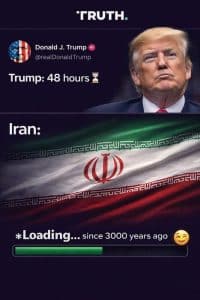
- Jakarta (Indonesia) Embassy: announced that the key was “lost 3,000 years ago,” an allusion to the age of Iranian civilization.
Qatar’s Al Arabi News Channel described the coordination as a “clever psychological operation,” writing: Iranian embassies neutralized Trump’s threats with a collective joke.
Content Analysis: This “participatory humor” caused the international media to cover this humorous reaction instead of Trump’s threats. In effect, we saw a shift in the media agenda from war to humor.
Reflections in East Asia, ASEAN and Oceania
Iranian missions in East Asia, relying on the indigenous culture of these countries, played a key role in the spread of this wave.
The irony hub of Kuala Lumpur (Malaysia)
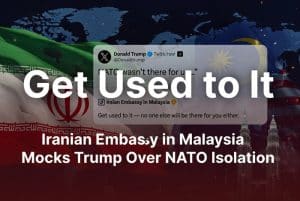
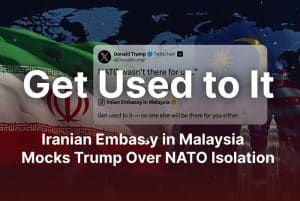
The Iranian embassy in Malaysia has become one of the most prolific actors in this arena. They posted a screenshot of Trump’s comments complaining about America’s “loneliness in NATO” and wrote in a cold and blunt response: Get used to this situation… no one will have your back anymore.
The post received more than 650 likes and thousands of views in Malaysian and Indonesian cyberspace in less than 24 hours. Iranian diplomats at the Islamic University of Malaysia (IIUM) also cemented this media success by emphasizing acceptance of a ceasefire based on Tehran’s 10-point conditions.
The Straits Times newspaper in Singapore wrote in a report: Iran’s humorous diplomacy in Southeast Asia has attracted the attention of the younger generation and changed the traditional image of Iran.
AI Diplomacy in Jakarta (Indonesia)
The Iranian embassy in Jakarta has shown that Tehran is not only adept at military warfare, but also at cognitive warfare, by releasing cinematic images and AI. They shared the meme “Trump vs. Iran’s 3,000-year history,” portraying the narrative of “the desperate West vs. the civilized East.”
The BBC News network has noted in an analysis that Iranian embassies are using modern digital tools to change the media narrative.
Psychological operations in Bangkok (Thailand) and Canberra (Australia)
While the Iranian embassy in Thailand directly responded to Trump’s insults with the hashtag “Watch your words,” the Iranian embassy in Australia also created a wave of solidarity with Iran among Oceanian countries by sharing humorous videos of America’s isolation in the Pacific.
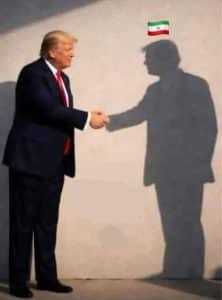
Key narratives that exposed the West’s contradictions
Iranian proxies did not stop at just joking, but instead used analytical tools and artificial intelligence to open old wounds in American foreign policy.
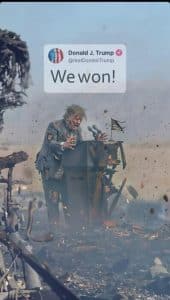
Exposing the “Hollywood Victory”: The Pretoria embassy published images of ousted US military commanders with red crosses and wrote: “Regime change was successful.” This headline showed the failure of the US “regime change” policy in Iran.
- Historical and legal argument: The Kinshasa embassy (Congo) wrote in a viral analysis: Do you know why all wars are named after the country being attacked? (Vietnam, Korea, and Iraq)… Because if they were named after the aggressor, they would all be called “US wars”! This simple argument caused a wave of reposts among Asian and African intellectuals.
The Middle East Eye analysis site called this argument “a simple but effective technique for exposing Western hypocrisy.”
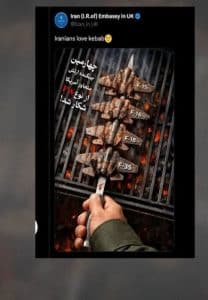
Ridiculing military technology: The Tunisian embassy gave a derogatory portrayal of Washington’s capabilities by calling the American pilots who fled after the downing of an F-15 a “Chair Force.”
Performance of Iranian agencies in different regions
East Asia (China, Japan, South Korea)
The Iranian embassy in Beijing used Weibo, China’s alternative to Twitter, to publish its humorous content with more subtlety. The focus on the narrative of Eastern resistance to Western hegemony in the region was widely welcomed by Chinese users. The embassy in Tokyo also managed to attract the attention of young Japanese people by publishing short animated videos of “Trump Lost the Key.” The most viewed content in this region was a comparison of Europe’s behavior in the war in Ukraine with silence on Israeli crimes, published by the Seoul embassy.
South Asia (India, Pakistan, Bangladesh, Sri Lanka)
The Iranian embassy in New Delhi adopted a dual but clever approach. On the one hand, by maintaining official diplomatic dignity to gain the trust of the Indian government, and on the other hand, by publishing subtle memes in Hindi and English to attract the public opinion of young Indians. The embassy in Islamabad, however, took a sharper and more challenging tone, describing the US peace proposals as “hypocritical.” This approach was met with an unprecedented reception in Pakistan, where public opinion is strongly anti-American. The embassy in Dhaka (Bangladesh) also focused on the human aspects of the attacks, publishing images of child victims that were widely covered in local Bangladeshi media.
South Caucasus (Azerbaijan, Armenia, Georgia)
The Iranian mission in Baku acted with high sensitivity and focused on preserving national interests in the Caucasus region. The content published in this region was mainly in Azerbaijani Turkish, Armenian and Georgian. The embassy in Tbilisi (Georgia) showed that the wave of solidarity with Iran has transcended geographical borders by publishing a video of a rally of Palestinian supporters in front of the US embassy in Tbilisi. In Yerevan (Armenia), anti-war content and condemnation of aggression were also welcomed by the Armenian media.
Oceania (Australia, New Zealand, Papua New Guinea)
The Iranian embassy in Canberra (Australia) has created a wave of solidarity with Iran among Oceania countries by sharing humorous videos of America’s isolation in the Pacific. The embassy’s humorous approach, in response to the Australian Prime Minister’s statement calling for “restraint” from Iran, was widely covered in the New Zealand media with the line First advise the aggressor to exercise restraint.

Foreign media’s assessment of Iran’s humorous diplomacy operation
International media and networks have given wide coverage to this new approach of Iranian diplomacy.
Media outlets including Al Jazeera English, Economic Times, Bernama, and WION have reported that in recent months, some Iranian embassies have used digital tools and humorous language to respond to the positions of American officials, including Donald Trump, instead of the traditional diplomatic approach.
According to the Al Jazeera English report, Iranian embassies in some countries have used humorous language and social media content to republish and reinterpret Trump’s controversial statements; an approach that the media outlet has described as part of the “war of narratives in the digital space.”
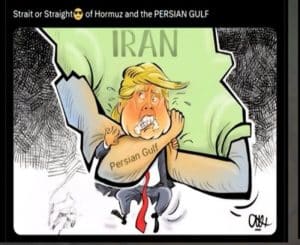
Reuters Malaysia and Bernama have also reported that the Iranian embassy in Malaysia has caused a widespread reaction in the Southeast Asian media space by publishing humorous messages about the isolation of the United States in NATO.
- Reuters Notion: The humorous response of Iranian embassies around the world seems coordinated and calculated.
Indian media outlets, including the Economic Times and Moneycontrol, have also addressed this trend and referred to it as the “online narrative war between Iran and the United States,” where Iranian embassies have attempted to challenge the dominant narrative of Western media by republishing critical and humorous messages.
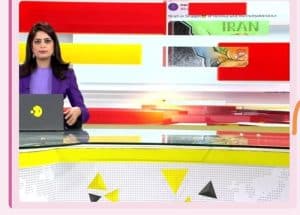
WION Media (India): Tehran is winning the battle of narratives against Washington. The media outlet wrote in an article titled “Iran’s Online Warrior Wolves”: Using its embassies and consulates, Iran has created a coordinated digital force that uses memes, images, emotional language, and legal arguments to shape global public opinion.
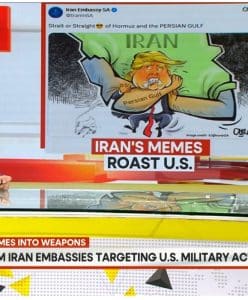
The term “wolf warriors” is often used to describe Chinese diplomats who are known for their aggressive approaches, both in real life and online. But now Iranian diplomatic missions can also be seen as a new breed of “wolf warriors,” conducting various forms of information warfare.
International media outlets such as Al Jazeera and WION News have coined the term “meme war.” They have used this term to describe the coordinated actions of Iranian embassies in cyberspace.
Analytical websites such as Eyerys and WION have also described this trend in their reports as a “change in the tools of Iranian public diplomacy,” where humor, internet memes, and informal language have become tools to influence global public opinion.
Evaluation and Conclusion; Winning the War of Narratives
Achievements:
Changing Narratives: Instead of covering sanctions and maximum pressure, mainstream media outlets were forced to cover “Iran’s diplomatic prowess on social media.”
- The “Iran Isolation” Project Failed: With embassies uniting in a coherent satirical front, the message of “Iran united and strong” was conveyed to the world. As reported by India’s WION, Iran is “winning the cyber-war.”
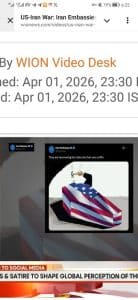
The popularization of diplomacy: The world’s younger generation, alien to dry statements, this time sided with Iran with the “weapon of laughter.”
- Exposing Trump’s contradictions: By quickly reposting Trump’s contradictory statements, Iranian agencies solidified the image of the US as an “untrustworthy government” in the global mind.
Strengthening Iran’s image: Informal surveys on social media show that Iran’s image as a “victim resistant to bullying” has been strengthened among users in Asia and the Pacific.