
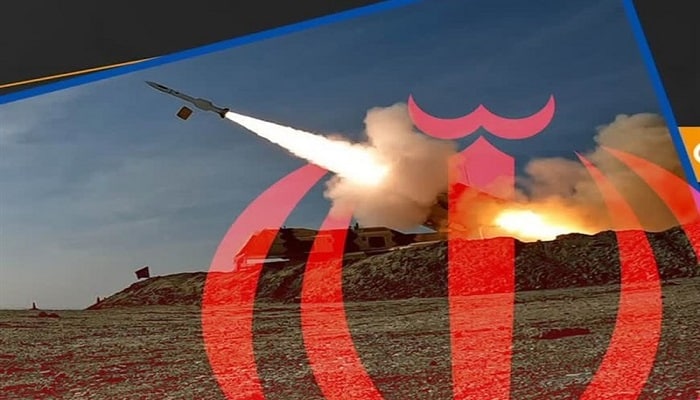
PNN – Despite the huge US-led propaganda investment against Iran, most Arab nations sided with Iran in the war.
According to the report of Pakistan News Network, after the start of the US-Israeli war against Iran with the cooperation of US allies in the Persian Gulf region, despite the treacherous positions that Arab rulers had taken in supporting the aggressors, Arab nations often had different positions and Arab public opinion was in favor of Iran; in a way that confused Western research centers and even forced some Persian Gulf television channels to openly blame Arab nations for supporting Iran’s attacks on American bases in Arab countries.
In this context, “Sayed Shabel”, an Arabic-language writer and analyst, wrote in an article examining Arab public opinion on the war against Iran: On February 28, 2026, the United States and the Zionist regime launched the most severe air attack against the Islamic Republic of Iran, but this military aggression was met with a strong Iranian response, which was manifested in the launch of hundreds of missiles and drones deep into occupied Palestine and American bases in the region.
Also, in this war, Iran relied on the “weapon of narrative,” which was able to turn any potential material damage into a “bulwark of courage” that captured the collective conscience of the people of the region, including the Arab nations.
While American and Israeli warplanes bombed children in Iran and attempted to destroy a 47-year-old revolutionary experiment, images of Iranian-made ballistic missiles and the subsequent closure of the Strait of Hormuz shifted the battle to other fields. At that time, the wall of silence on Arab streets began to crack and plans for infiltration were redrawn, far from the official calculations of Arab regimes whose positions oscillated between complicity, aiding the aggressors, or absolute silence.
In the midst of this transformation, it was natural for a different political reality to emerge at the grassroots level, in which Iran emerged as the sole resister against the arrogant powers and aggressors in the eyes of large segments of the people of the region and even the world, despite the enormous costs it incurred.
The failure of America and Israel in deceiving Arab public opinion in the war with Iran
The war clearly revealed a deep gap between what the great powers and their allies spend on “demonization” and propaganda campaigns and the reality of what is being deposited in the consciousness of Arab nations. Despite the occupation regime’s allocation of hundreds of millions of dollars in 2026 to finance digital media campaigns and influencers on social media platforms to portray Iran as the main enemy and an existential threat to the Arab world, poll results proved the catastrophic failure of these huge investments.
According to the Arab Public Opinion Index 2025 (which continued to have an impact until 2026), 44% of Arabs consider Israel to be the greatest threat to their national security, with 21% placing the United States in second place, while Iran comes in third place with a proportion that does not exceed 6-8%. This arrangement not only did not change after the war, but was reinforced in some Arab countries, where sympathy for Iran increased in the face of a foreign attack.
In the Arab Barometer polls, support for Iran rose to 55% in Tunisia and higher in Iraq and Palestine. This development was not a mere coincidence, but rather the result of the Iranian government’s persistence and its ability to establish a “counter-response” equation, coupled with strategic media support for the resistance axis, which was able to transform attacks and aggressions into “signs of stability” that strengthen the popular base and thwart the aggressors’ goals in the war.
The scene of the assassination of Iranian leaders and commanders was read in Arab thought only as evidence that the Iranian regime was the only party that had truly paid the price of direct confrontation, and that its top leaders were ready to sacrifice their lives before any other citizen.
This reading turned “spiritual victory” into a reality that trumped military numbers and proved that peoples suffering from foreign domination and technological monopoly by Western capitals would automatically gravitate towards someone who had the courage to respond to the enemy or who could prove their ability to manufacture weapons and be self-sufficient, which explains the sudden rise in Iran’s popularity in all countries of the region.
Decreasing sectarian polarization and the emergence of a common enemy as a unifying force in the Islamic Ummah
This forty-day battle caused a strong tremor in the wall of sectarian strife in the region, which had been fed for decades by the American-Zionist axis, because the deceptive slogan of the “Shiite danger” propagated by this axis proved to be a lie, and Arab public opinion found itself facing a great moral paradox: an Islamic country being bombed by a coalition led by Washington and Tel Aviv.
This forced large sections of Sunnis in Arab society to set aside deep religious differences and embrace a narrative centered on resistance as a necessary option against this imperialist aggression. This situation was not just a temporary feeling, but was also manifested in a reduction in the intensity of sectarian discourse in traditional areas of tension such as Lebanon and Iraq, as the focus shifted to rejecting normalization and security alliances with the Israeli enemy.
This dramatic shift in public opinion proved that the sense of existential threat from abroad always outweighs internal and religious differences, especially if placed in the balance of national dignity. This made the war, despite its intense bitterness, an opportunity for Iran to eliminate and correct the stereotypical mental images and misinformation accumulated in the Arab mind over decades.
Therefore, Iran emerged in the public opinion of the Arab nations with the image of a “national hero beyond sects and borders,” which reminded the Arabs of historical role models such as Gamal Abdel Nasser in 1956. At that time, too, matters were not measured by military standards, but by the ability to resist oppression and change political equations, not only at the regional level, but also at the international level.
Two Currents for Arab Political Activism in the Shadow of War
At the elite level, the Arab scene witnessed a broad political movement coinciding with the intensification of the military atmosphere in the region, where a sharp divide emerged between two main currents:
– The first current: a trend that was influenced by the Western political and media narrative and supported a military attack on Iran under the slogan of “regime change”, even if it resulted in the massive destruction of Iran and the massacre of thousands of Iranians. The irony is that these trends, despite their alleged liberalism, receive generous financial assistance from the Arab monarchies in the Persian Gulf, which are far from any form of true democracy.
– But the second current: It included nationalist and leftist forces that defended Iran’s right to respond to aggression, supported the Iranian revolution, and highlighted its long history of supporting the Palestinian cause. Members of this current also played a role in eliminating religious narratives used to foment sedition among the people.
Between these two main currents, other currents emerged that presented diverse narratives; from support to incitement, among the most prominent of which was the “Sunni Political Islam” current, which itself divided into two branches:
A – The radical Salafist movement, linked to the religious circles of the Gulf regimes, which reproduced the traditional and weak discourse based on demonizing Iran on purely religious grounds.
B – A more pragmatic and less fanatical movement on the religious level, which believed that an Iranian victory – or at least its ability to inflict painful blows on the Netanyahu cabinet – might limit Israel’s role in the Gaza Strip and Syria, a factor that would allow the Hamas movement to breathe and give the Syrian regime the opportunity to move in a wider space.
In general, it can be said that Arab public opinion in the past two months has been in favor of Iran, to the point that it has confused Western research centers and even forced some Gulf networks to openly blame the Arab people who supported Iran’s attacks on American bases. Some Arab regimes have even adopted punitive and security measures to curb this growing pro-Iran sentiment.