
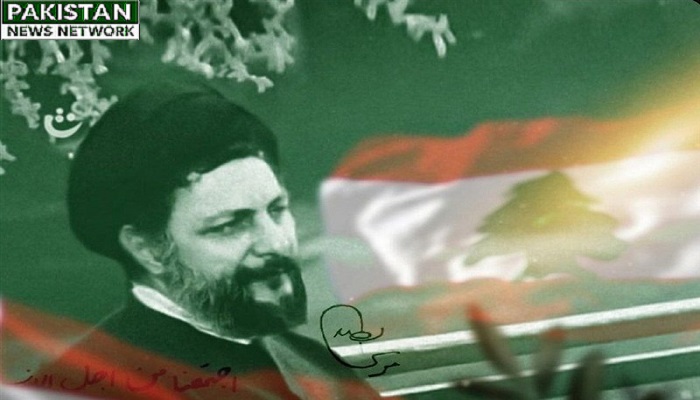
PNN – Forty-eight years after the disappearance of Imam Musa Sadr, the secrets of the case remain undisclosed, and the Libyan side refuses to cooperate.
According to the report of Pakistan News Network; forty-eight years after the disappearance of Imam Musa Sadr and his companions—Sheikh Mohammad Yaqoub and journalist Abbas Badr al-Din—the secrets of this case remain locked away behind Libya’s doors.
The release of Hannibal Gaddafi: A major blow to the Imam Musa Sadr case
The decision to release Hannibal Muammar Gaddafi—following nearly a decade of detention in Lebanon—has effectively closed off one of the avenues that held out hope for uncovering the fate of the Imam and his companions. Furthermore, according to Judge Hassan al-Shami, rapporteur of the official committee investigating the Imam Musa Sadr case, the investigative file handed over by Libya to Lebanon offers no new information.
According to Al-Akhbar, although a recently released document indicates that Imam Sadr was—at some point during his disappearance—held in a private prison belonging to Abdullah al-Senussi (a prominent figure of the former Libyan regime who has been imprisoned in Libya since 2012), the Lebanese side found no evidence in the case file it received to suggest that adequate investigations regarding this information had been conducted with al-Senussi.
According to Al-Shami, this information is particularly significant given that al-Senussi has been in a Libyan prison since September 2012; yet, the Lebanese side found no sufficient evidence in the file received from Libyan authorities indicating that any investigation had been carried out with him concerning the case of the Imam and his two companions.
Two days before Al-Senussi’s extradition to Libya, the rapporteur for the official committee investigating the Imam Musa Sadr case met with him in Mauritania during a session that lasted approximately six hours. Al-Shami stated that Al-Senussi denied everything during the meeting, claiming he had no connection to the case.
However, a significant question raised by the committee following Al-Senussi’s extradition to Libya is why the dossier Libya handed over to Lebanon made no mention of the investigations the committee had conducted regarding Al-Senussi, nor did it include the findings of those investigations.
On October 17, 2025, Zaher Hamadeh, the investigating judge in the case of Imam Musa Sadr, decided to release Hannibal Gaddafi on $11 million bail, subject to a travel ban. On November 6, the bail was reduced to $900,000 and paid on November 10, resulting in Gaddafi’s release after nearly ten years of detention in Lebanon and the lifting of the travel ban.
A few days after Hannibal Gaddafi’s release, Lebanon received the investigation file regarding the disappearance of Imam Musa Sadr and his two companions from Libyan authorities. However, Judge Hassan Al-Shami told the newspaper Al-Akhbar that what they had received from Libya contained nothing new; noting that approximately 95% of the file’s contents had already been examined between 2012 and 2016.
Al-Shami added that the file is also incomplete, as a significant portion of the information and documents remains with Libyan authorities; they have failed to honor their obligations under the 2014 memorandum of understanding, the 2016 meeting held in Libya, and the commitments made in Beirut in the autumn of 2025.
He emphasized that since the beginning of the year, the committee handling the Imam Musa Sadr case has received no response from the Libyan side, despite the signing of a new memorandum of understanding in Beirut about two months prior to the end of 2025. Furthermore, a meeting held in Rome on December 29, 2025, with the prosecutor assigned to the case yielded no new information; we heard nothing but promises, given that we were supposed to receive the required information within 15 days.
Is Imam Sayyid Musa Sadr alive?
However, in response to calls for a definitive answer regarding Imam Sadr’s fate, Al-Shami maintains the fundamental position the committee has held for years: from both legal and humanitarian standpoints, the Imam cannot be considered deceased unless proven otherwise.
Al-Shami emphasized that evidence available to the committee indicates the Imam was moved between several Libyan prisons—at least three: Janzur, Sabha, and what is known as the “Al-Nasr Office” (a secret political prison in Tripoli).
He noted that this information suggests the Imam remained in detention for a long period—possibly at least until the year 2000—raising the possibility that he was subsequently transferred to other prisons or locations that investigations have not yet identified.
Judge Hassan Al-Shami stated that the committee investigating the Imam Musa Sadr case does not rely solely on this information; the current and former Libyan officials he met—alongside Italian and Lebanese investigative documents—failed to provide a comprehensive account regarding the Imam’s disappearance or assassination. The narratives presented remained fragmented and contradictory, with multiple versions of the same incident emerging in some instances.
Regarding medical examinations, the committee conducted dozens of DNA tests between the collapse of the Libyan regime and mid-August 2026, yet none yielded a match. Al-Shami emphasized that conducting these tests away from media attention is part of the process of completing the investigation and gathering evidence, and does not imply that results are being concealed.
He also dismissed the notion that a lack of a match in these tests constitutes proof of death in itself, stating that the committee operates based on legal and humanitarian principles regarding enforced disappearance—principles that presume the abducted individual remains alive until proven otherwise.
Al-Shami went on to refer to information provided by Hannibal Gaddafi during his initial interrogation in December 2015, noting that, according to the interrogation transcript, Gaddafi spoke of the Imam’s detention in Janzour.
According to Gaddafi, the Imam remained in Janzour roughly between 1978 and 1982 before being transferred to a secret political prison at a military airbase in Sabha, and subsequently to the “Al-Nasr Office” in Tripoli. There is also information indicating that he was later returned to Sabha.
Hannibal Gaddafi’s statements also included information regarding the individual who had impersonated the Imam—wearing his clothes and taking his passport to Rome—as well as details on how Muammar Gaddafi handled the case and the involvement of Mutassim Gaddafi (head of the National Security Bureau) and Saif al-Islam Gaddafi in the affair.
The rapporteur for the committee investigating the Imam Musa Sadr case further emphasized that, given the information Hannibal had provided at the time of his initial detention, no further information was expected from him.
He stated: Hannibal Gaddafi was arrested—initially for withholding information and subsequently for involvement in an ongoing abduction case—but after a second interrogation early in his detention, he refused to speak further; the committee no longer expected to elicit new information from him through additional questioning.
Judge Hassan al-Shami said: However, Hannibal’s release dealt a severe blow to the Imam Musa Sadr case and shattered the promises the Lebanese side had received from Libyan and non-Libyan intermediaries regarding the handling of the matter.
13 Suspects and Unexecuted Orders
However, regarding Lebanon, Al-Shami does not attribute the problem to the investigation process itself, but rather to the limitations on the Lebanese judiciary’s ability to carry out its procedures outside Lebanese territory. The investigating judge is currently prosecuting—in absentia—13 suspects added to the case since 2013, whereas Hannibal Gaddafi was the only one present in court prior to his release.
The judicial process in Lebanon has encountered obstacles due to the failure of Libyan authorities to execute summonses and the failure to issue Interpol arrest warrants. In this regard, Al-Shami stated that Lebanon has submitted notices to Interpol concerning several wanted individuals—including Abdel Salam Jalloud, Abdullah Senussi, and others—yet the organization has not cooperated with the Lebanese side; a situation that is surprising and constitutes a violation of international law.
At the political level in Lebanon, Judge Hassan Al-Shami stated that Parliament Speaker Nabih Berri is continuously following up on this case. However, Lebanon needs to increase pressure on Libyan authorities—whether through its own international relations or via nations with influence in Libya, particularly neighboring countries and certain influential European states—to compel them to cooperate with the investigation.
After 48 years, the mystery surrounding the investigation lies not so much in a lack of leads as in the difficulty of accessing them: documents have not been handed over, detainees have not been adequately interrogated, and court rulings have not been enforced. Meanwhile, Lebanon continues to await cooperation from the Libyan side.
The case of Imam Musa Sadr must be treated as that of an abducted person, not a deceased one.
Judge Hassan Al-Shami further stated that the phrase “revealing the fate of Imam Musa Sadr” is incorrect and is contested by us; classifying this case under the laws regarding enforced disappearance requires that Imam Musa Sadr be regarded as an abducted individual whose release is sought, rather than as a deceased person whose fate is merely under investigation.
He emphasized that using the phrase “revealing his fate” implies an acceptance that Imam Musa Sadr has passed away, whereas the information available to the committee continues to frame the case within the context of abduction and enforced disappearance. Therefore, inquiries should not begin with the question, “Where is his body?” but rather with, “Where is the Imam, who is holding him in custody, and what has happened to him?”
The rapporteur for the Imam Musa Sadr case follow-up committee stated that a person’s absence for decades—however long that period may be—does not justify a presumption of death unless there is evidence to prove it.
However, the primary obstacle in this case since the fall of Muammar Gaddafi’s regime in October 2011 has been the lack of serious and sustained cooperation from Libya. Cooperation from the Libyan side regarding the Imam Musa Sadr case was limited to only a few stages, followed by long periods of silence and a breakdown in communication.
This stems from the intertwining of tribal and political interests in Libya, as well as the ongoing connections between figures from the former regime and their relatives or allies within the current system.
Hassan al-Shami emphasized that what Lebanon has received from successive Libyan governments amounts to nothing more than empty promises—pledges of cooperation and memoranda of understanding, followed by years of silence—until a new party steps in to restart the cycle.
Despite the Libyan side’s persistent evasiveness, no one can ignore the fact that this crime took place in Libya, making Libya itself the primary venue for the case.
This means that any serious progress in the matter hinges on opening Libyan investigative files and granting the Lebanese side access to witnesses, detainees, and documents—rather than merely exchanging promises and incomplete dossiers.
Continuing his remarks, Judge Hassan al-Shami revealed that officials from the official committee pursuing the Imam Musa Sadr case traveled to Iraq in mid-August—away from media attention—and met with a number of senior Iraqi officials to discuss avenues for cooperation and the possibility of Baghdad playing a role in uncovering details of the case and supporting the investigation into it.
On August 25, 1978—during the final leg of a tour of several Arab nations—Imam Musa Sadr arrived in Libya at the official invitation of Muammar Gaddafi; he was abducted there on August 31. On September 18, 1978, amidst intense public outcry across Lebanon, religious seminaries, and the regional press, the Libyan regime issued a statement officially claiming that Imam Sadr and his two companions had departed Tripoli for Rome on Alitalia flight 881 on August 31.
However, in October 1978—following a month-long investigation and review of relevant documents and evidence in Libya and Italy—the Lebanese government’s inquiry committee reported to its government that Imam Sadr and his two companions had not only failed to arrive in Rome but had also not departed from Tripoli on the date or the flight specified in the Libyan regime’s statement.
In June 1979, the investigating magistrate in Rome issued a ruling declaring that Imam Sadr and his companions had never entered Italian territory by any means. This ruling was officially communicated by the Italian government to the governments of Lebanon, Syria, and the Islamic Republic of Iran, as well as to the Supreme Islamic Shia Council.