
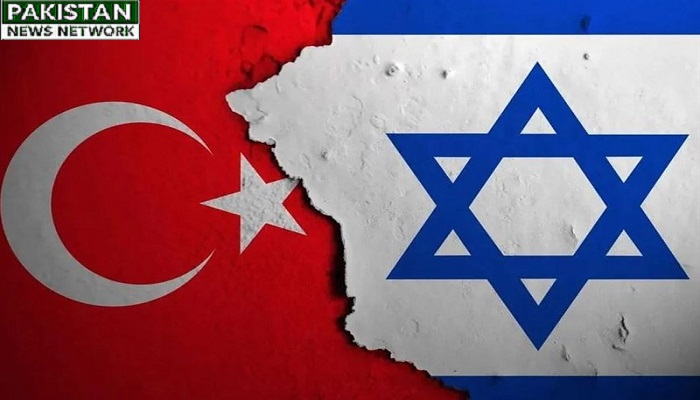
PNN – Analysts state that the harsh stances adopted by Israeli Regime against Turkey are not merely election-related rhetoric but carry genuine substance.
According to the report of Pakistan News Network; a great deal of analysis and commentary regarding the Zionist regime is currently circulating within Turkish media and news circles.
Interestingly, signs are also emerging in the European nations of Greece and Cyprus—both of which have significant political disputes with Ankara—suggesting that the Mossad intelligence agency and Netanyahu’s team are instigating tensions against Turkey.
Some analysts believe these matters should not be taken seriously and that such statements should be viewed merely as pre-election bluffs by Benjamin Netanyahu and his team. However, another group of political experts holds a different view, arguing that the harsh stances taken by Zionist officials against Turkey go beyond mere election rhetoric and possess tangible, real-world dimensions.
Below, we review excerpts from an analysis by Osman Sert—a prominent Turkish analyst—regarding the Israeli regime, and subsequently examine other aspects of this issue:

Will Turkey and Israel go to war?
It cannot be easily predicted that Turkey and Israel will soon engage in open warfare. However, the recent tension marks a significant turning point for the future—one that cannot simply be overlooked.
This situation—characterized by accumulated tensions and disputes—did not arise overnight, nor is it a problem that can be resolved through short-term mediation or back-channel diplomacy.
We must recognize the gravity of the issue. On one hand, Israel has a history of violating the airspace of countries across the region; on the other, Turkey is constantly assessing its defensive capabilities against this threat.
When a Turkish F-4 aircraft was shot down by Syria in 2012, Damascus sought to test its reinforced defense systems in an area that had previously been breached by the Israeli Air Force.
However, the situation has now changed; as Turkey strengthens its military and political presence in the region—extending from the Horn of Africa to the Persian Gulf—and Israel has struck nearly every country in the region since October 7, we are witnessing Israel stoking tensions near Turkey’s Hatay border. Israeli officials clearly state that their objective is not to attack Damascus’s defense capabilities, but rather to prevent the expansion of Turkey’s military influence in Syria.
All this is taking place against a backdrop of heightened sensitivities, driven by the U.S. withdrawal from the region and the conditions that emerged following the conflict with Iran.
We must acknowledge that the tension between Turkey and Israel is no simple matter; it is far more complex than it appears on the surface. A multitude of seemingly contradictory dynamics are at play simultaneously.
Let us not forget that even during the Gaza massacre orchestrated by Netanyahu and the conflict with Iran, Turkey did not halt fuel supplies to Israel. Despite claims that trade had ceased, commerce with Palestine—rather than Israel—actually flourished. What the Palestinians did with all that fuel remains a major question mark.
In both Turkey and Israel, the conflicting rhetoric employed by ruling powers helps consolidate their respective voter bases. In Turkey, we have grown accustomed to rhetoric suggesting—particularly as elections approach—that our troops are on the verge of going to war. The situation in Israel, however, is not quite so straightforward.
We in Turkey face two fundamental issues: first, Israel’s security doctrine is predicated on preemptive strikes, and its social psychology is reinforced primarily through war. Indeed, anti-Turkish rhetoric is not limited to Netanyahu alone; there is a prevailing public narrative that Turkey is the “new Iran” and that a Sunni axis is emerging as a threat alongside the Shiite axis.
Secondly, the tension between Turkey and Israel is rooted in a structural and tangible context that transcends mere political agendas. There are two competing security architectures at play: what might be termed the “Abraham Accords order” and the “Mecca Pact framework.”
Israel is mapping out a strategy against Turkey along an axis stretching from India to the United Arab Emirates and Greece. Ankara, meanwhile, seeks to counterbalance this through various forms of regional engagement.
Within this matrix, Syria serves as the primary point of contact for both sides. Ankara’s growing influence in Damascus further exacerbates the situation.
In this context, the United States is not withdrawing entirely from the region; rather, it seeks to ensure that regional stability aligns with its own strategic dynamics—and the Mecca Agreement represents one facet of this objective. Following the Israeli strike on the Idlib base, Tom Barrack—the U.S. Ambassador to Turkey and Trump’s special envoy for regional affairs—adopted a stance that was notably critical of Israel.
Meanwhile, anti-Israel sentiment is steadily rising across the Atlantic. Of course, Washington’s shift toward a closer alignment with Ankara does not imply that it can fully rein in Israel.
Turkey’s NATO membership reduces the likelihood of military tensions reaching our borders. However, the operational presence of Türkiye and Israel beyond their borders remains a risk.
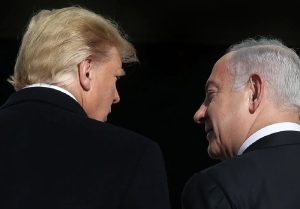
Under these circumstances, Turkey must be realistic and avoid decisions that would drive up our defense costs. Our economic situation has limited the funding available for the defense sector.
Defense experts emphasize that establishing a genuine balance of power vis-à-vis Israel will take Turkey three to five years. The air defense gap created by the S-400—the costliest strategic blunder in the history of the Republic—is reaching a critical juncture where Eurofighter jets must be integrated into the system, and both missile defense and offensive capabilities must be brought up to adequate levels.
The problematic aspect is that, driven by urgent needs, the breakdown of the rule of law in Turkey, and a lack of financial transparency, the allocation of funds for weaponry is proceeding within an environment devoid of oversight, control, or efficiency.
It is impossible to contain Israel without possessing a well-equipped and powerful military force. Not only Turkey but also other nations in the region must be prepared to bear a heavy cost to establish a balance of power capable of containing Israel.
The Washington-Tel Aviv Perspective
Many Turkish analysts share a view similar to that of Osman Sert regarding the Zionist regime; they believe that the rivalry between Turkey and the regime has transcended mere disagreements between leaders and evolved into a structural competition over the post-American security order in the region. However, in Washington and New York, some American analysts hold the view that while the rivalry between Turkey and Israel is real, it should be managed rather than allowed to escalate into a military confrontation.
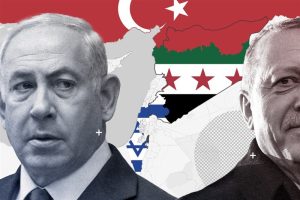
Gonul Tol, a leading expert on Turkey and a researcher at the Middle East Institute in Washington, believes that Benjamin Netanyahu—in order to preserve his political and party standing—has reached a point where he is willing to risk direct action against Turkey; consequently, tensions could escalate, and unless the US considers strengthening containment mechanisms, unforeseen developments might occur.
Meanwhile, a Brookings Institution report states that the rivalry between Turkey and the Israeli regime is no longer geographically confined to a single area; by establishing defense arrangements with Greece and Cyprus, Israel has extended the tension into the heart of Europe’s security environment and the Eastern Mediterranean.
This institute also maintains that the United States should actively mediate between Turkey and Israel to prevent the emergence of two hostile regional blocs.
Meanwhile, Henri Barkey—who was born in Ankara to an American diplomatic family and has long engaged with Turkish political and security issues through his work with the State Department, the CIA, and various American think tanks—believes that Turkey’s approach toward Israel and the region carries significant strategic implications; he argues that Turkey’s aspirations to play a regional role should not be oversimplified.