
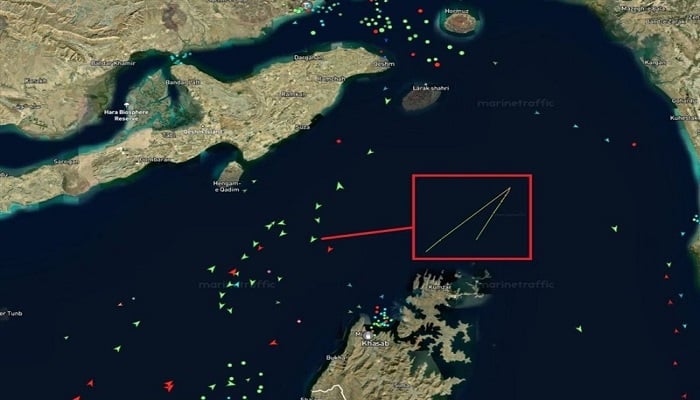
PNN – Al Jazeera, referring to Iran’s equation in the Strait of Hormuz, announced that traffic in the strait continues to be affected by Tehran’s decision.
According to the report of Pakistan News Network, in a scene that reflects the complexities of the maritime conflict in the Persian Gulf, regional and international circles emphasize that the blockade that the United States announced on the Strait of Hormuz, despite the large military display that accompanied it, has not achieved its full goals.
Al Jazeera reported in a report to this effect: After Iran announced that it would reimpose restrictions on navigation in the Strait of Hormuz, the effects of this decision are still being revealed, while tensions between Tehran and Washington continue and the movement of ships in one of the most important sea passages for transporting oil in the world has been disrupted.
Less than 24 hours after announcing the reopening of the Strait of Hormuz, Iran suddenly announced it was tightening restrictions again, according to a report by Ahmed Jarrar, a leading regional expert and analyst for Al Jazeera. The move came after US President Donald Trump praised the ease of navigation and in response to Washington’s continued naval blockade.
The Al Jazeera correspondent reported as follows:
However, subsequent developments showed that Iran’s decision was not temporary, but rather an ongoing policy, with Tehran insisting on its commitment to closing the Strait of Hormuz unless American restrictions on Iranian ports were lifted.
Tehran accused the United States of violating the ceasefire and continuing to impose a naval blockade, calling what the American forces were doing an act of piracy.
In this context, the spokesman for the Khatam al-Anbiya headquarters emphasized that the situation in the Strait of Hormuz is subject to the complete lifting of restrictions on the movement of ships to and from Iran, which is a direct reference to the connection between freedom of navigation and the lifting of the blockade.
Stabilizing Iran’s equation in navigation in the Strait of Hormuz
But on the ground, the effects of Iran’s decision are still evident, as shipping sources reported that commercial vessels have received wireless messages from the Iranian Navy emphasizing the continued ban on passage.
In notable incidents, the website Tanker Trackers noted that the IRGC Navy forced two Indian ships to retreat from the Strait of Hormuz, including a giant tanker carrying about two million barrels of Iraqi oil.
According to a source at Basra Oil Company, the Indian tanker had been stuck near the Strait of Hormuz for weeks and was eventually forced to turn back.
In a related development, The Wall Street Journal reported, citing shipping sources that about 20 ships waiting to pass near Lark Island had turned back toward Oman, despite having previously agreed to pay dues to Iran.
These developments indicate the continued use of the Strait of Hormuz as leverage in the confrontation between Tehran and Washington, where the United States seeks to impose a naval blockade to restrict Iranian oil exports, while Iran seeks to circumvent these restrictions and maintain its revenue stream.
In this context, Tehran relies on what is known as a “shadow fleet,” which allows it to continue exporting oil beyond official restrictions.
The fleet includes hundreds of tankers, using complex ownership networks, changing flags, and misleading documentation, in addition to transferring cargo between ships at sea, according to U.S. Treasury Department data.
Payment methods used include cryptocurrencies, Chinese yuan, or barter, in an attempt to circumvent the traditional financial system.
On the other hand, in a news report, the British newspaper The Times announced that navigation and ship tracking data indicated the continued activity of Iranian-linked tankers, some of which were temporarily stopped without being seized or confiscated.
Oil prices rose sharply in early Asian trading on Monday as tensions at sea and Iran’s stand against a US blockade intensified.
Earlier, the US Navy seized an Iranian ship accused of trying to break a blockade.
The seizure has reignited fears of a sharp escalation in the conflict and a prolonged disruption in the Strait of Hormuz. Iran has warned it will retaliate for the illegal US move.
West Texas Intermediate crude is now up 6.21 percent at $89.06 a barrel from the previous trading week. Brent crude is up 5.27 percent at $95.14. The gains come after a sharp sell-off on Friday, when both benchmarks fell more than 9 percent after Iran agreed to reopen the strait and the United States expressed optimism about possible talks. That optimism was dashed over the weekend when the United States seized an Iranian-flagged ship, the Toska.
Iran immediately condemned the seizure as “piracy” and warned of imminent retaliation.
Sultan Al Jaber, CEO of Abu Dhabi National Oil Company, said that after 50 days, production had been lost to almost 600 million barrels of oil.