
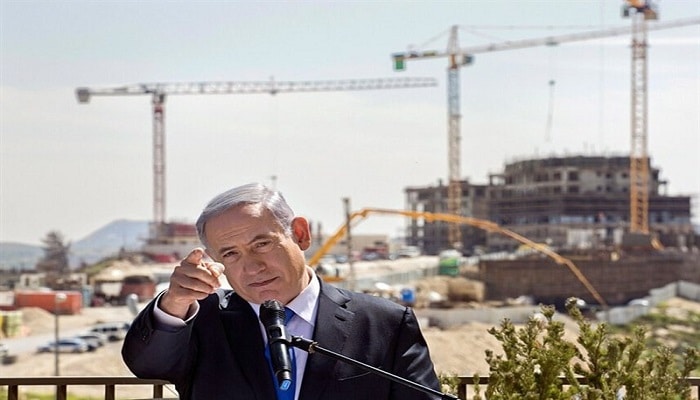
PNN – Netanyahu’s endless wars in the past 31 months have led to the bankruptcy of 800 construction contractors in the occupied territories.
According to the report of Pakistan News Network, the damage inflicted on the residents of the occupied territories following the recent forty-day war between the Islamic Republic of Iran and the Zionist regime was beyond their expectations and previous predictions.
According to initial estimates, as a result of Iran’s missile and drone attacks in response to the joint US-Israeli aggression, more than 26,000 compensation claims have been filed with the Israeli Tax Authority, including the destruction of homes, workplaces, cars, equipment and furnishings inside buildings. Initial assessments indicate that the war-mongering cabinet of Benjamin Netanyahu and his allied parties must pay at least $500 million in compensation to Israeli settlers for these damages, while more than 6,000 people have also been displaced.
The important point is that, according to official reports published in Hebrew-language media, as a result of the war that began in October 2023, about 1,900 apartments in occupied Palestine have been destroyed or damaged and are no longer habitable. Accordingly, approximately 5,500 households are currently in need of alternative housing. Meanwhile, reports that address the impact of the war on the Israeli economy emphasize the paralysis of the construction industry in the occupied territories.

The reason for this is the disruption in the import of construction materials, which has sharply increased prices, which could accelerate the bankruptcy process of construction contractors in the occupied territories. This is despite the fact that in the past year alone, about 800 Zionist construction contractors went bankrupt. Also, between October 7, 2023 and the end of 2025, approximately 1,500 construction contractors also ceased their activities. The sum of these circumstances means that in the coming months there will be a decrease in the supply of residential apartments, which will accelerate the increase in rents and negatively affect the inflation rate.
Concerns about rising inflation are important because a survey conducted in the midst of the war with Iran showed that about 15 percent of Israeli settlers were more concerned about economic stability than fear of missile strikes. It was also found that 80 percent of self-employed workers had lost their income during the war, compared to 45 percent for employees. So, almost one in two households reported a decrease in income as a result of the war.
Of course, this level of damage is not distributed equally between Arabs and Jews. The Arab section report found that about 59 percent of Arabs living in the occupied territories lost their income in the recent war. In this regard, one in four Zionists is very worried about not being able to make regular payments to their household in the coming months. In this case, there is no difference between employees and the self-employed.
Influenced by these conditions, Israeli Economy and Industry Minister Nir Barakat launched a plan on Wednesday called the “Cheap Israel Basket” with the aim of “restoring purchasing power to the people,” which includes offering 100 consumer goods (such as dairy, pasta, rice, shampoo, cereals, baby products, etc.) at prices more than 30 percent lower than the current low market price. This is said to be an initiative to address one of the main challenges of the Israeli economy, namely the cost of living, and in particular the price of food and basic consumer products after the forty-day war with Iran.
Despite these economic hardships, the budget bill that Netanyahu’s right-wing cabinet passed in parliament on the last day of its approval deadline, with a vote of 62 to 55, does not meet the concerns of the majority of residents of the occupied territories. One-sixth of the budget is to be spent on the military, and Netanyahu included an additional $270.3 million (800 million shekels) for Haredi educational institutions in the bill in a last-minute bid to win votes from far-right parties. This issue has angered the secular movement and the opposition, especially in a situation where this group forms the structure of the army and combat forces and plays a major role in securing tax revenues, and now, in the context of the war with Iran, they have suffered the most in terms of revenue.

Therefore, influenced by these circumstances, the joint Ma’ariv-Valanews poll provided a clear picture of the general feelings of the Zionist settlers towards the political and economic authorities. The survey revealed that the satisfaction rate with Smotrich, the Minister of Finance, who has the main role in securing and distributing the budget, has dropped to 29 percent. In the opposition spectrum, only 9 percent support him. The satisfaction rate with the performance of Benjamin Netanyahu is 47 percent. Regarding this situation, the head of the Chamber of Self-Employment and Business Organizations in Israel, while expressing sharp criticism against Smotrich, said: The behavior of the Finance Minister during this period demonstrates a worrying disconnect from the existing reality and a fundamental lack of understanding of the needs of the self-employed sector. He said that while a million self-employed individuals and business owners are struggling with reduced income, uncertainty and severe cash flow problems, the government continues to delay making decisions and offer only partial solutions, sometimes arriving months after the crisis began.
Furthermore, a survey by the Jewish People Policy Institute (JPPI) found that among Zionists, satisfaction with the cabinet budget is only 27 percent, while among Arabs it is only 17 percent. As mentioned, the reason for the dissatisfaction with the budget was the budget increase of approximately 800 million shekels for the Haredi community, just before the bill was put to a vote in parliament.
In fact, while Netanyahu’s cabinet seeks to appeal to the ultra-Orthodox community, residents of the occupied territories prioritize other key areas for budget spending. Accordingly, 45 percent of settlers named investment in the reconstruction of damaged areas in northern and southern Israel as one of the top three priorities, up from 28 percent the previous year. The increase therefore reflects the general expectation for the cabinet to invest heavily in the affected areas, especially after the massive attacks by Hezbollah in the recent 40-day war. Other priorities include calls for budget cuts for the Haredi sector, cuts to the budget of the ruling coalition, a reduction in the number of government ministries, and a desire to increase benefits for regular members of the army and reservists.
Confirming the results of this survey, there is also the view of residents of Haifa and the northern areas of the occupied territories, who have expressed strong criticism of the performance of the Netanyahu cabinet. This survey is important because residents of the north make up about a quarter of the Israeli population. According to the survey data, the absolute majority of residents (70 percent) give the cabinet a “bad” grade for the way it deals with the north. Also, regarding the cabinet’s ability to defeat Hezbollah, a large majority of residents do not trust Netanyahu and do not think that such an event will happen. In addition, 65% of residents in the north feel abandoned and chose the option “Netanyahu’s cabinet is abandoning the north” to express their opinion.

Therefore, the political, military and economic actions of the Netanyahu cabinet at the time of entering the war with Iran have been strongly criticized by the majority of the residents of the occupied territories. They are not satisfied with the policies adopted by the cabinet during the 40-day war with the Islamic Republic. Therefore, when the Supreme Court of Justice of the Zionist regime issued a permit to hold protests last Saturday evening, hundreds of protesters were present in various areas including Jerusalem, Haifa, Beersheba, etc., and more than a thousand people gathered in Tel Aviv.