
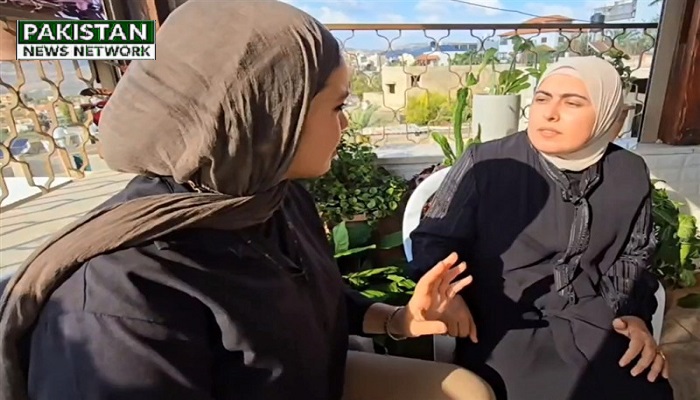
PNN – This report examines the situation of Farah Abu Ayyash—currently held in the Zionist regime’s Damon Prison—on the 400th day of her captivity.
On the 400th day of the detention of Farah Abu Ayyash—a journalist from Hebron in the southern West Bank—we spoke with Aya al-Fuqaha, a Palestinian woman recently released from Zionist custody. We sought to learn from her the latest details regarding her former cellmate, who has spent 400 nights behind bars in Damon Prison for documenting the plight of Palestine.
“Ayat al-Fuqaha” likens imprisonment and detention in Israeli cells to a “graveyard of the living” right at the beginning of her remarks.
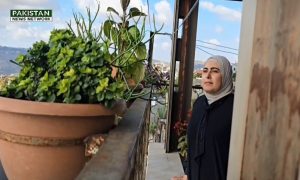
She emerged from that graveyard, her body once again feeling the warmth of the sun, yet her thoughts remained behind the gates of Damon Prison, with the many fellow inmates—young and old—she had left behind; women with whom she had endured agonizing days of deprivation and restriction, sharing meager meals and struggling through immense hardship just to receive medical care.
Describing her six-month captivity in the Zionist regime’s notorious Damon Prison, this courageous Palestinian woman says: The six months I spent in Damon were the hardest days of my life. Throughout that time, I endured all manner of restrictions—ranging from limitations on food to the way prisoners were treated. Among the detained women, I saw everyone from a 17-year-old girl to an 80-year-old woman… There were university graduates, working women, housewives, mothers, and elderly women among them. For everyone, it was nothing but pain and suffering; there was no regard for the specific circumstances of any prisoner.
Ayah was released from the confines of Damon Prison—not merely to tell her own story, but to serve as an ambassador and reveal to us, for the first time, details of what our fellow journalist Farah Abu-Ayyash had endured behind bars.
Describing her observations of Farah’s sorrowful and harrowing days in the Damon detention center, she says: When I was about to leave the prison, Farah was still being held at Damon. We were in solitary confinement—though it wasn’t really solitary confinement; it was more like a torture cell. Farah, myself, and everyone else who was put in that cell were completely innocent; we had done nothing wrong. We were just like the other girls in that ward, but for reasons completely unknown to us, we were moved to this cell—a place that was in terrible condition and riddled with dampness. Boils and skin problems broke out on both my body and Farah’s, yet we had no choice but to endure the situation as it was. The cell was extremely damp and received no sunlight; Farah missed her family and her life with them terribly. She is truly innocent and had done nothing wrong.
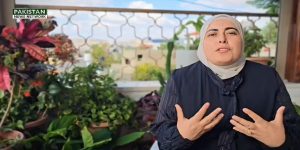
What Ayah shared about Farah was harrowing—details that had remained hidden from the outside world behind the walls of Damon Prison until finally revealed through the testimony of Ayah, that courageous Palestinian woman.
Describing the hardships Farah endured during her captivity, Ayah recounts: Farah suffered greatly from the fear of the sound bombs that Israeli guards would hurl into their cells during night raids. These incidents would trigger nervous breakdowns; whenever she realized a raid on the women’s ward was imminent or heard the sound of a bomb, she would suffer seizures.
Describing what she witnessed regarding the torture of the reporter in Zionist regime prisons, Ayeh states: Farah was repeatedly beaten during her detention and struck during night raids on the cells; thankfully, the physical injuries have healed, but the psychological scars remain.
Farah entered prison solely as a journalist, and since her arrest in August 2025, her trial hearings have been repeatedly postponed, with the fate of her case continually deferred from one session to the next.
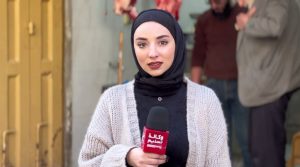
Khaled Sabarneh, a Palestinian journalist, explains the reasons behind the Zionist obstruction of this young Palestinian journalist’s release: They want to suppress the Palestinian narrative and voice forever, because the occupying regime seeks to present only its own version when constructing a Zionist narrative. Farah’s ‘offense’ was simply engaging in media work—she had done nothing else—yet the occupying regime exacts revenge even on journalists. The regime ensures that every journalist pays a price for their work, and Farah stands as an example of a committed Palestinian female journalist paying the price for her cause.
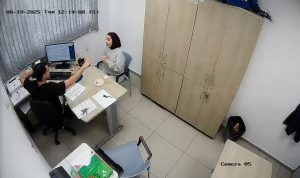
Ayah’s testimony regarding Farah Abu Ayyash’s harrowing days in Damon Prison opened a window onto a world that had previously remained closed, revealing to everyone a part of Farah’s story that had not reached us before.
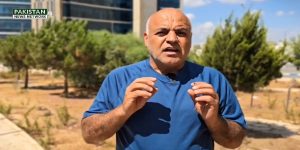
Ayah, that free-spirited Palestinian woman, was released from Damon Prison only a short while ago; yet Farah Abu Ayyash and other brave Palestinian women remain held captive behind the gates of that very prison—gates shut tight against them, even as their hope looks forward to the day they are liberated from the dreaded Zionist prisons and return to the embrace of their families.