
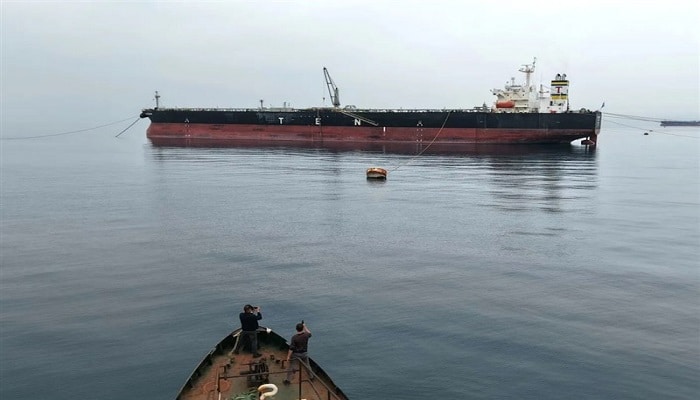
PNN – Foreign Policy wrote that Iranian managers have the experience and ability to manage the sale and storage of oil.
According to the report of Pakistan News Network, Foreign Policy magazine explained in a new analytical article titled “Why Iran Still Won’t Back Down?” that by implementing a naval blockade on Iranian oil exports, the Donald Trump administration hopes to force Tehran to shut down its oil wells and cause serious damage to the country’s economy. But Tehran has experienced such pressures and is not yet willing to back down.
Foreign Policy wrote: The US blockade, which began about two weeks ago, has reduced Iran’s oil exports by three-quarters. The Trump administration believes that Iran will soon run out of storage space for its crude oil and will be forced to halt production at its oil fields. This production shutdown could cause permanent damage to Iran’s oil infrastructure and impose severe economic pressure on the regime.
According to the report: Iran is aware of this risk and is seeking emergency solutions to store its surplus oil, including using old and worn-out tanks, reviving decommissioned tankers, and exploiting limited storage capacity on Kharg Island.
However, Foreign Policy, citing analysts, emphasized: Iran has faced similar conditions several times before under the most severe US sanctions (under the Obama and Trump administrations), and in none of them has there been lasting damage to its oil fields. Moreover, Iran has still managed to load limited oil and export it through its “shadow” fleet and alternative routes.
The publication emphasized: Iran has created capillary networks for energy sales and transfers that are virtually impossible for the Trump team to track and block.
Gregory Brough, senior Iran and energy analyst at Eurasia Group, also told the publication: Is Iran close to the point where it will have to stop production? No; tankers are still going to and from Kharkov Island and the country still has some onshore storage capacity. He added that Iran has used older tankers for storage before; indicating that it is preparing for the effects of the blockade to intensify, but that the pressure has not yet been fully applied and exports are still flowing.
According to Bro, the National Iranian Oil Company has had this experience twice before and has the expertise to manage well shutdowns. He added: The same fields that have already been closed will be targeted again, and the managers are the same experienced people who know what to do.
Another important factor, according to the report, is the reduction in oil production by America’s Gulf allies, which has been ongoing for months and has been much larger than what Iran is likely to experience. In this regard, Saudi Arabia, Iraq, Kuwait, the United Arab Emirates and Qatar have collectively stopped more than 11 million barrels per day of their production.
Also, the jump in global oil prices — which have reached more than $100 for US oil and $111 for the global index — (oil prices have exceeded $122 at the time of writing) has partially compensated for Iran’s economic losses.
Foreign Policy wrote in another part of its article: Trump hopes this economic strategy will force Iran to accept US conditions without the need for a large-scale military conflict. But Iran’s historical experience in enduring sanctions, continued limited oil exports, and rising global prices have been the main reasons why Iran has not surrendered so far.