
PNN – Historical experience regarding the war in Yemen has demonstrated that Saudi Arabia will only move toward altering its conduct if the costs of its actions increase.
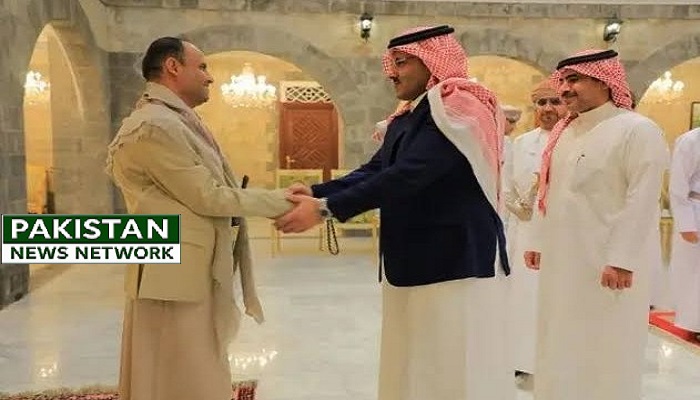
According to the report of Pakistan News Network; amidst recent diplomatic efforts to manage the Yemen file, Saudi Arabia is attempting to project a new image of its role in the crisis—one in which Riyadh is no longer a principal party to the war but merely an external actor seeking to resolve disputes among Yemeni factions. This new narrative is, in effect, an attempt to reframe the issue and downplay Saudi Arabia’s responsibility for a decade of war, blockade, and humanitarian crisis in Yemen.
Based on this approach, Saudi Arabia attempts to portray the Yemen crisis as an internal matter—as if the events currently unfolding in the country were merely the result of disputes between Yemeni factions, thereby sidelining the role of foreign actors in its genesis; yet, the realities on the ground and the historical context of the war demonstrate that this crisis cannot be analyzed in isolation from foreign intervention, particularly the role of Saudi Arabia.
In fact, internal political disputes existed in Yemen prior to 2015, but these differences escalated into a widespread war of attrition when the Saudi-led coalition intervened directly through military operations. Foreign military intervention not only failed to resolve Yemen’s political crisis but also expanded the scope of the conflict, destroyed infrastructure, exacerbated the humanitarian crisis, and prolonged the country’s instability. Had this foreign intervention not occurred, Yemen’s internal disputes could have been better managed through political channels, avoiding the transformation into a years-long war.
Despite this reality, Saudi Arabia is currently attempting to step back from its position as a principal party to the crisis and limit its role to that of a supporter of the political process; meanwhile, from Ansarullah’s perspective, Riyadh remains the most significant external factor perpetuating the status quo. Sana’a believes that a substantial portion of Yemen’s current problems—ranging from the ongoing blockade and economic restrictions to the disruption of political negotiations—stems from Saudi Arabia’s policies toward the country.
One of the primary points of contention between Sana’a and Riyadh is the issue of the blockade and restrictions imposed on Yemen; from Ansar Allah’s perspective, the closure or restricted operation of Sana’a Airport, limitations concerning the port of Hodeidah, and obstacles hindering trade and economic routes are part of Saudi Arabia’s policy of applying pressure to maintain its leverage regarding the Yemen file. Furthermore, the question of reparations and accountability for the war’s extensive damage is another issue that, in Sana’a’s view, reflects Riyadh’s refusal to accept responsibility.
In the political arena, too, Saudi Arabia continues its efforts to maintain structures aligned with its interests within the Yemeni equation. From Ansarullah’s perspective, the process of Yemeni-Yemeni negotiations can only yield tangible results if foreign influence over the various parties is reduced and decision-making regarding Yemen’s future is left to the Yemenis themselves; however, Riyadh’s continued political, financial, and security support for factions opposed to Sana’a has hindered this process.
In the military arena, too—contrary to the image Saudi Arabia projects of distancing itself from the conflict—Sanaa views the Kingdom as continuing to play an active role; the presence of Saudi advisors and officers within the military structures of forces opposing Ansarullah, alongside the continued supply of equipment and military support, indicates that a shift in Riyadh’s political rhetoric does not necessarily signify a change in its actual policy.
Under these circumstances, Ansarullah’s actions against Saudi Arabia’s strategic interests must be analyzed within the framework of a deterrence strategy. From Sana’a’s perspective, as long as Saudi Arabia employs political, economic, and military tools to exert pressure on Yemen, raising the cost of these policies for Riyadh remains part of the equation for countering the ongoing crisis. Attacks on Saudi Arabia’s oil infrastructure and strategic targets are also defined within this same context—actions aimed at conveying a political and military message regarding the cost of persisting with Riyadh’s past policies.
The experience of recent years has shown that Saudi Arabia has only shifted its behavior when the costs of maintaining its current policies have risen; consequently, Ansarullah seeks—through the establishment of deterrence—to convey the message that one cannot simply exit the scene and leave the burden of the crisis on the people of Yemen without accepting responsibility for one’s role in the war.
The issue of Yemen cannot be viewed as a domestic crisis that subsequently became complicated by the entry of foreign actors; the reality is that the military intervention by Saudi Arabia and its allies was the primary factor transforming internal political disputes into a widespread, protracted war. Riyadh’s current attempt to portray itself as an external actor and mediator is merely an effort to distance itself from the responsibilities stemming from its direct role in this crisis.