
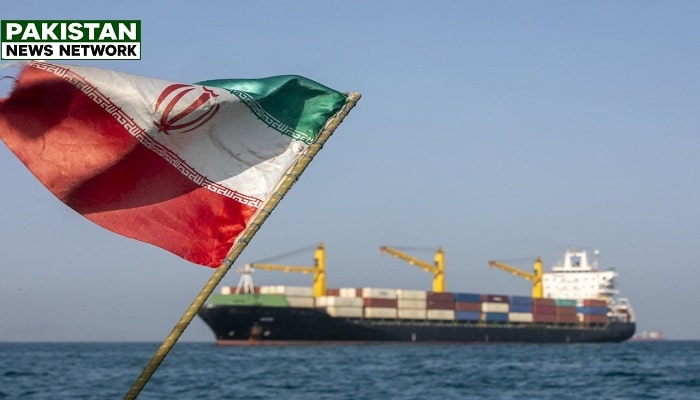
PNN – Chatham House, noting Yemen’s Ansarullah movement’s hold over the Bab al-Mandab Strait and the simultaneous role played by Iran in the Strait of Hormuz, stated that these developments have bolstered the Islamic Republic of Iran’s regional standing and transformed Tehran into a more influential actor at two of the world’s strategic trade and energy chokepoints.
According to the report of Pakistan News Network; Brannan Maddox, Director at Chatham House and host of the “Independent Thinking” podcast, stated at the beginning of the think tank’s latest program that by seizing the Red Sea coast, Yemen’s Ansarullah has gained effective control over the Bab al-Mandab Strait, while Iran simultaneously exerts influence over traffic in the Strait of Hormuz.
Citing Chatham House researcher Farea Al-Muslimi, he added that Iran now exerts influence over two of the Middle East’s most strategic chokepoints, describing this level of leverage as “tantamount to possessing a nuclear bomb.”
Al-Muslimi further noted that developments in Yemen cannot be viewed in isolation from broader regional events, adding that the situation in the Persian Gulf has spilled over into Yemen. He emphasized that current developments are linked to relations between Iran and the Arab states of the Persian Gulf, to inter-Arab disputes, and to tensions between Iran and the United States.
Sanam Vakil, Director of the Middle East and North Africa Programme at Chatham House, also stated at the meeting that Iran plays a significant role in developments concerning Ansar Allah; however, she emphasized that the movement is not “remotely controlled” by Tehran and possesses operational independence.
She added that over the past seven months, Iran had repeatedly warned that the Bab al-Mandab Strait and the Red Sea could—at a critical juncture—become factors in the region’s strategic equation.
In another part of the interview, Ahmed Soliman, a senior researcher at Chatham House, highlighted the economic significance of these two waterways, noting that the Strait of Hormuz accounts for approximately 20 percent of the global oil supply and 25 percent of oil trade, while the Bab al-Mandab Strait and the Red Sea handle about 15 percent of global oil transit and shipping. He estimated the value of trade passing through these routes at over one trillion dollars.
Al-Muslimi then remarked that Ansarullah’s advances in the Red Sea have transformed the movement from a regional actor into one with an international dimension.
He added that by leveraging the geographic location of the Bab al-Mandab, Ansarallah could expand its economic and security ties with various actors in the Horn of Africa and emerge as a significant economic power in the long run.
Responding to this point, Sanam Vakil stated that she disagreed with the assessment that Ansarallah would become more powerful than Iran in the future, though she emphasized that current developments could impact the way Iran projects its regional power.
He stated that Tehran’s security and political decisions are not based solely on indicators such as GDP, economic growth, or inflation, and that the war’s ultimate outcome will impact Iran’s regional standing.
In the final part of the interview, Vakil noted that Qatar, Oman, and several other regional states are working to facilitate indirect dialogue; one of the proposed pathways involves the full reopening of the Strait of Hormuz as a confidence-building measure, followed by moves toward sanctions relief and discussions regarding Iran’s nuclear program.
At the same time, he warned that a protracted diplomatic process could increase the risk of a return to military tensions.
Criticizing the West’s approach to Yemen, Al-Muslimi also stated that the United States, the UK, and European nations have effectively ceded management of the issue to Saudi Arabia over the past years, and that this policy has failed to lead to a sustainable resolution of the Yemen crisis.