
PNN – Protests in France have intensified at a time when Macron is grappling with the Ukraine crisis, the Hormuz energy shock, budgetary constraints, and pressure for domestic reforms—a combination of factors that will impact the 2027 elections.
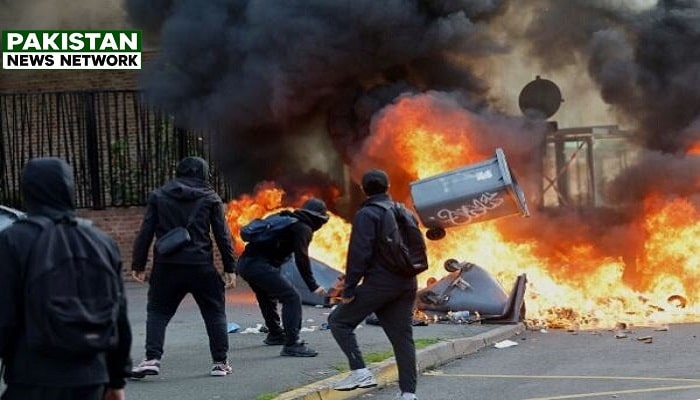
Protests by French students began about ten days ago in schools on the outskirts of Paris—driven by issues such as the need to improve educational conditions, teacher shortages, and overcrowded classrooms—and rapidly evolved into a nationwide wave of unrest; a movement that has now taken on new dimensions involving the closure of hundreds of schools, the participation of university students and teachers, and violent clashes with the police.
This raises the question: what factors caused an education-related protest to spread so rapidly? Do the roots of these protests lie solely in the state of schools and budgetary constraints, or do broader economic and social pressures also play a role in their formation? And, most importantly, what pressure will the continuation of these protests exert on the French government in the run-up to the 2027 elections?
The Roots of Protest: From Schools to France’s Accumulating Crises
The student protests in France cannot be viewed merely as a reaction to issues within the school system. These demands have emerged against a backdrop of economic pressure, declining purchasing power, budgetary constraints, and anxiety about the future; consequently, schools have become a focal point for the expression of the younger generation’s accumulated discontent. The wave of unrest, which began in the Paris region less than two weeks ago, has now spread to over a thousand high schools, resulting in closures or disruptions at hundreds of institutions.
At a direct level, students are criticizing class sizes of 32 to 35 pupils, shortages of teachers and educational staff, the lack of substitutes for absent teachers, long school hours, and the poor condition of school buildings.
According to statistics from the French Ministry of Education, nearly 10 percent of teaching hours in public secondary schools went untaught during the 2024–2025 academic year, with a portion of this time lost due to the inability to secure substitute teachers. Consequently, these protests are not merely the result of political agitation or a sudden wave of street unrest; rather, they stem from a host of accumulated problems within the education system.
The education crisis, however, is part of a broader strain facing the French economy and budget. While the government has raised the national education budget to €65.5 billion for 2027, it is simultaneously seeking savings of approximately €43 billion to curb the budget deficit—all at a time when debt servicing costs have risen and the government faces mounting demands for defense and security spending. Consequently, even the increase in the education budget is unfolding within the context of a wider fiscal squeeze.
Alongside domestic pressures, external crises have directly impacted the French economy and the daily lives of the French people. The war in Ukraine—now entering its fifth year—continues to impose security and economic costs on Europe, while the Middle East crisis and disruptions to energy transit through the Strait of Hormuz have placed renewed upward pressure on fuel and energy prices; indeed, President Macron has attributed rising energy costs to the consequences of these crises.
Against this backdrop, student protests have emerged at the intersection of educational challenges, cost-of-living pressures, budgetary constraints, and the fallout from external crises, further limiting the government’s capacity to simultaneously advance domestic reforms and manage foreign crises.
Feasibility of the Spread and Rising Costs of Governance
The most critical question following the expansion of the protests is whether the current wave will remain confined to high schools or spread to other social groups.
In response, it must be said that the entry of universities, teachers, and certain labor organizations into the protest landscape—alongside fresh calls for continued gatherings—indicates a potential to link educational demands with livelihood and social concerns. However, a significant gap remains between sporadic protests and the emergence of a broad-based social movement; factors such as sustained participation, the existence of an organizational network, and the convergence of demands from various groups will be crucial in shaping its trajectory.
In this context, the government’s reaction could influence whether the protests persist or are contained. A security-oriented or police response to student gatherings—particularly when teenagers become embroiled in clashes with law enforcement—risks expanding the scope of demands from educational issues to broader concerns, such as the right to protest and the government’s handling of social discontent.
Conversely, a response based solely on budgetary allocations will not necessarily suffice for protesters who view their grievances as part of a wider crisis; the government thus faces difficult choices involving social concessions, financial constraints, and security-based control.
On the other hand, if the protests link up with teachers, public sector workers, parents, and labor groups, the pressure on the government will intensify manifold; in such a scenario, the issue extends beyond mere school closures or disruptions to impact the day-to-day administration of the country.
France has previously experienced widespread social protests and nationwide strikes; consequently, the convergence of new demands with existing grievances could raise the cost of governance. Under these circumstances, the government is compelled to dedicate a portion of its political capital to managing the protests, even while simultaneously having to handle the budget, the economy, and foreign crises.
However, the spread of the protests cannot be considered a certainty. Student protests can only evolve into a sustained social movement if links are forged between the demands of various groups and the protests transcend purely educational issues. Otherwise, the scope of the unrest may be curtailed by the reopening of schools, the granting of certain concessions, or a reduction in the severity of the crackdown.
Therefore, the decisive factor in the coming days will not merely be the number of schools involved in the protests, but rather the capacity of these protests to forge a social coalition around shared demands.
Student Protests against the Backdrop of the 2027 Election
The current protests are taking place at a time when France has effectively entered a pre-election phase; the 2027 presidential election is scheduled for April 18 and May 2, and Macron is ineligible to run again. Consequently, the issue extends beyond the current government’s response to the protests; any social crisis could become a factor in defining the political legacy of the Macron administration and shaping the agenda of the next president.
A novel aspect of the situation is that student protests have the potential to link the equations of France’s domestic and foreign policies. Rising energy costs, the crisis in the Strait of Hormuz, and the ongoing war in Ukraine are no longer merely diplomatic issues; they have become directly tied to the cost of living, the public budget, and government priorities.
In a recent meeting with political parties, Macron also focused the discussion on the direct impact of international developments on the lives of the French people, tasking the government with securing energy supplies and alleviating the pressure caused by rising prices. Consequently, in the upcoming elections, the debate over how much of its resources France should allocate to defense, foreign commitments, and the management of international crises could take its place alongside issues such as education and the cost of living.
Meanwhile, the protests have already entered the political arena, a development that could intensify the polarization of the electoral landscape. The government has accused the radical left of stoking the protests—a charge the latter has denied—while leftist figures are striving to position themselves as champions of the younger generation’s demands.
At the same time, a poll released on September 28 indicated that the upcoming presidential race is already shaping up as a contest between the right and the radical left. While this does not predetermine the election outcome, it demonstrates how quickly social protests can be reframed within the context of political competition.
Ultimately, the significance of student protests for the 2027 elections lies less in directly shifting the votes of teenagers and more in altering the agenda of voters and political parties; while some of the protesters are not yet of voting age, their demands regarding education and public services can influence families, teachers, and other social groups.