
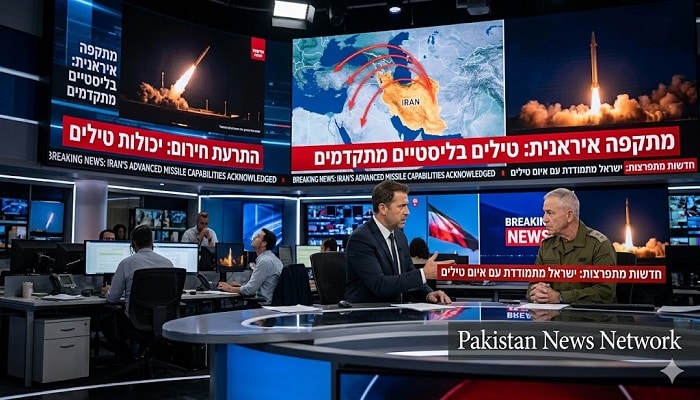
PNN – A Zionist research institute admitted that Iran has restored all of its missile capabilities to the period before the start of the war.
According to the report of Pakistan News Network, citing a report published by the Institute for Security Studies at Tel Aviv University titled “The Lion’s Roar! – A Summary from the First Phase to the Temporary Ceasefire,” it concludes that the war against Iran has entered a ceasefire phase in parallel with political negotiations between Tehran and Washington.
According to this media outlet, despite all the efforts of Tel Aviv and Washington, Iran still has its nuclear program and its ruling structure is completely strong and stable, continuing to operate without any fundamental changes.
According to the report, prepared and written by Tamir Heyman, the former head of Israel’s military intelligence service, Iran has succeeded in rebuilding its nuclear facilities, which are now more resistant to air attacks.
This is while Iran’s support for resistance groups, including Hezbollah, has continued despite all the developments that have occurred in the region, which in itself indicates Iran’s “strategic capacity” to rebuild its capabilities, a development that is considered a significant and dangerous threat to Israel.
In another part of the report, he also pointed out the wide gap between political and military goals in Israel, stating:
The political structure pursued a broader goal of regime change in Iran, while the declared military goal was limited to weakening Iran’s capabilities.
This former prominent Israeli security commander also explicitly emphasized Iran’s actual power and capabilities, admitting in this regard:
Tehran has managed to avoid any internal power vacuum even after targeting prominent leaders.
Elsewhere in the report, it also points to the pressure that the closure of the Strait of Hormuz is putting on the throats of the Zionist regime and the United States, calling it a global pressure point that has shifted US priorities towards energy.
It also revealed the limited effectiveness of Israeli air power in countering Iranian strategies, given that most of Iran’s nuclear and missile capabilities are located in deep and fortified underground facilities.
The report presented three strategic options for dealing with Iran. The first is to achieve war goals through negotiations.
The second option is to continue “economic pressure” to weaken the ruling structure through a prolonged economic crisis, although the report acknowledges that this option does not limit the development of a nuclear program or the creation of military capabilities, which may later necessitate the use of military means.
The third option is “all-out war,” which the report says could lead to the destruction of Iran’s nuclear program, but would pose significant risks to Israel’s home front (read: the destruction of Israel) due to continued missile launches and escalation of the conflict.