
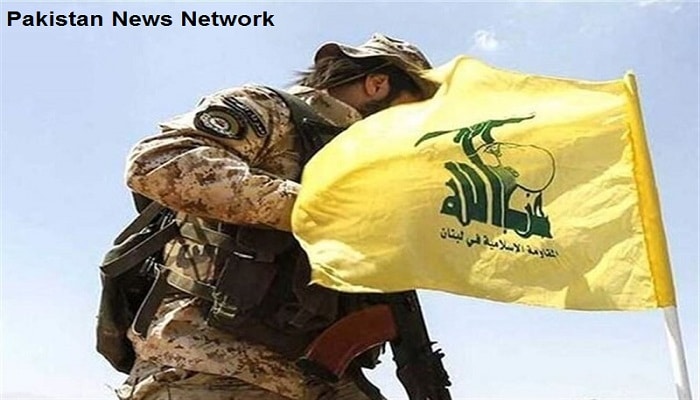
PNN – Recent field developments in southern Lebanon indicate a change in Hezbollah’s tactics towards eroding the Israeli command structure.
According to the report of Pakistan News Network, recent field developments in Hezbollah’s operations against the Zionist occupying army and the killing and wounding of senior officers of this regime show that the resistance has added the clause “hunting the enemy’s military commanders and those responsible for field operations” to its agenda.
Hezbollah’s New Strategy to Hunt Enemy Field Commanders
According to Al-Akhbar, recent Hezbollah operations and enemy reactions showed that a major information battle is underway, where Hezbollah’s special units conduct surveillance and tracking operations that provide access to the movements of senior enemy military commanders, before executive units are called upon to pursue them for elimination.
This comes amid talk of recent developments in the battle, which reflect Hezbollah’s new capabilities in air defense and electronic jamming systems.
In this regard, yesterday, the Lebanese Islamic Resistance targeted Colonel Meir Biderman, commander of the 401st Armored Brigade of the occupying army, who was seriously injured by a suicide drone. According to Hebrew media, the drone penetrated a building where Israeli forces were present and exploded there, seriously wounding a senior officer and an Israeli army reservist.
The Zionist media also reported that 8 other soldiers of the occupying army were wounded. It should be noted that the Zionists, under the shadow of severe military censorship, never publish accurate statistics on their casualties, especially those killed. Also, the Lebanese resistance fighters targeted the commander of a company in the 601st Engineering Battalion operating in the occupied southern areas and dealt a heavy blow to the unit operating in the office of the occupying army spokesman.
Hezbollah had previously targeted the commander of the Israeli Brigade 300 with a suicide drone in the town of Shumira, an attack that was seen as the first sign of a change in the nature of the resistance’s targets. Shumira is one of the most prominent command and control points of the Israeli army near the Lebanese border, as it contains operations rooms, reconnaissance systems, and logistical support centers related to the Israeli army’s operations in the western sector.
Also, prior to these two operations, a third incident occurred in which a military vehicle associated with the Israeli Field Command in the western sector was targeted; without the enemy army officially revealing the identity of the targeted officer, although information was published in the Hebrew media about casualties among the field command staff.
The erosion of the Israeli army’s tactical command structure on the Lebanese front
The repetition of this pattern in a short period of time indicates a new operational approach within Hezbollah that focuses on the erosion of the enemy army’s tactical command structure, rather than simply targeting its troops and equipment. This shift is particularly important given the pivotal role that Israeli army field commanders play in managing border battles and coordinating rapid responses to resistance drones, ambushes, and missile attacks.
Also, the nature of the weapons used by Hezbollah, particularly precision-guided suicide drones, indicates advancement in the resistance’s intelligence and operational capabilities, allowing it to track the movements of military commanders and target them in locations that are assumed to be relatively protected and fortified. This has raised growing concerns within the Israeli military establishment about the security of command rooms and officers operating near the Lebanese border.
Meanwhile, the Israeli occupation army’s efforts to open a military axis towards the Shaqif fortress in southern Lebanon continue, without being able to achieve any solid field progress so far, especially in light of Hezbollah’s response to Israeli attacks through shelling, ambushes, and targeting of enemy military movements on the axes leading to the border area.
In recent days, the Israeli regime’s artillery and air strikes on the Arnon area, Yahmar al-Shaqif, and the hills overlooking the fortress have intensified, simultaneously with attempts to move the field from the Deir Siryan – Zutar al-Sharqiya axes, in an attempt to bypass the more complicated routes towards al-Shaqif.
According to field data, the Israeli forces faced many difficulties in advancing due to the rugged nature of the geographical area, in addition to the concentrated fire that the resistance directed against military movements and equipment. Also, in recent days, the gathering places of the Zionist soldiers and their movement axes were targeted by Hezbollah rockets and suicide drones, which disrupted any attempt to consolidate the advanced positions of the Israeli army near the fortress.
The Shaqif fortress is one of the most sensitive points in southern Lebanon, as it directly overlooks large areas of southern and northern occupied Palestine, which makes its control or approach to it a very important military objective for the enemy.
Hezbollah’s Great Barrier against the Occupiers on the Border Axes
Meanwhile, the Lebanese Islamic Resistance announced that the occupying army had failed to reach the town of Hadada after days of airstrikes and artillery barrages.
According to the Hezbollah statement, the Zionists encountered resistance ambushes as bulldozers and engineering equipment arrived to dismantle fortifications and open routes for a ground advance from the Rashaf axis towards the town of Hadada.
The clashes also show that the Zionist occupying forces repeatedly tried to reorganize their attack after each defeat by sending in additional tanks and reinforcements under air cover and heavy artillery. However, the resistance continued to target the enemy’s advance lines and support forces, which resulted in the destruction of four Merkava tanks and direct casualties to the attacking forces.
After that, the enemy forces were forced to retreat towards the town of Rashaf under the cover of thick smoke at the end of the conflict, and were unable to establish any presence inside Hadata or break through the defense lines that the resistance had established at the entrances to the town.
Meanwhile, fiber-optic drones are not just a new weapon, but symbolize a whole phase in which the idea of a quick solution that formed the basis and pillar of Israeli security doctrine for decades is eroding. It is clear that the confrontation has entered the era of low-cost smart warfare, where a small aircraft can confuse an entire army and a simple technology can crack the most advanced systems.
In this scenario, Israel faces a challenge that is not only related to how to shoot down drones, but also to how to restore the image of deterrence that has gradually been eroded and destroyed under the pressure of the war of technological attrition.
With this new type of confrontation, Hezbollah was able to engage Israel in a different type of war, called technological attrition by drones, not because these drones have absolute technological superiority, but because they managed to strike at the most dangerous weak point in Israel’s military doctrine.
Here we are talking about high cost versus low cost threat, and the occupying army finds itself forced to activate complex and expensive defense systems around the clock and use advanced interception and surveillance tools to counter this type of drone.
This equation in itself represents a clear form of attrition, and what is more dangerous is that Hezbollah’s drones act not only as an offensive weapon, but also as a long-term weapon of attrition. The drones force Israel to expend its defense resources and force it to develop new technical solutions continuously, while the pressures on the home front, the economy, and the army increase simultaneously.
This trend explains why Netanyahu says that confronting Hezbollah drones requires patience, because the problem is not just a passing security incident, but a structural challenge that recurs daily and gradually erodes the Israeli system.
What is happening today cannot be described as a limited field battle, but a broader strategic development, where the Islamic resistance in Lebanon is trying to impose an equation based on the erosion of Israeli superiority. Hence, Hezbollah drones impose a continuous and at the same time costly erosion within the Israeli system.