
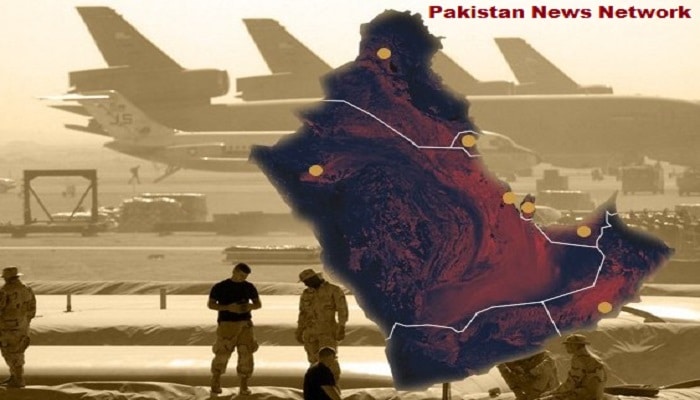
PNN – The US strategy in the Persian Gulf has been based on Iranophobic and creating a rift between Tehran and its Arab neighbors.
According to the report of Pakistan News Network, for decades, the United States has, by promoting Iranophobia and fueling regional rifts, filled the pockets of American arms companies on the one hand and consolidated its hegemony in West Asia on the other. The main goal of this strategy was not to ensure the security of Arab countries, but to ensure the security of Israel and maintain Washington’s dominance over the world’s vital energy arteries.
Now, after the third imposed war, the old order has collapsed, and this fundamental question is facing Arab capitals: Hasn’t the time come to close American bases in the region?
The Iranophobia Machine and Arms Dependency
The US strategy towards the Persian Gulf region has always been based on a simple principle: to create and deepen the rift between Iran and its Arab neighbors. The goal of this strategy has been to sell more arms and ensure these countries’ security dependence on Washington. This strategy reached its peak in the form of the Abraham Accords, where the US, tempted by the normalization of relations with Israel, tried to make the Arab bloc the front line of the confrontation with Iran.
The tangible result of these policies can be seen in the astronomical figures of military spending. According to data from the Stockholm International Peace Research Institute (SIPRI), military spending in these countries consumes a significant percentage of their GDP: Saudi Arabia spends 7.3 percent of its GDP on military affairs, the United Arab Emirates 5.6 percent, and Kuwait 4.8 percent. In contrast, Iran’s share of GDP for military spending is only 2.1 percent. In other words, the Arab Gulf countries, relative to their populations and economies, shoulder many times the burden of militarism as Iran.
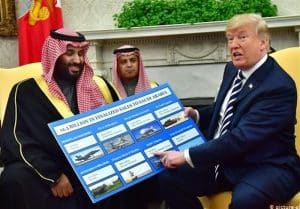
These huge figures have flowed directly into the pockets of American arms giants. Between 2020 and 2024 alone, the United States supplied 74 percent of Saudi Arabia’s conventional weapons. In 2025, a historic deal worth nearly $142 billion was signed between Washington and Riyadh. In total, US foreign arms sales in 2024 reached an unprecedented $318.7 billion, a 29 percent increase over the previous year. Meanwhile, Iranophobia has been the most profitable business for the US military-industrial complex.
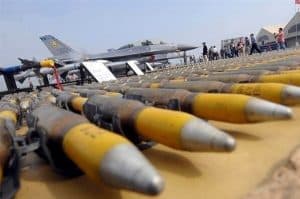
What security has this vast array of weapons and military bases brought to its hosts? The answer must be sought in the ruins of the American bases in the third imposed war against Iran.
When Iran was targeted by the Zionist regime and the United States, American bases in Arab countries became not a defensive shield, but a magnet for devastating attacks. Retired General Kenneth McKenzie, former commander of CENTCOM, had openly admitted shortly before the war began: “Our bases in the region are vulnerable and could become easy targets in the event of a major conflict.” This warning from the former architect of the American military presence in the region was an ominous prophecy that came true. Following the Iranian attacks, 15 American military bases in the region were severely damaged to the point that there is talk in American circles that some of them will never be rebuilt.
For the host countries, the war was an economic disaster. According to a Baker Institute report in April 2026, the Strait of Hormuz was effectively closed for the entire month of March, causing the largest disruption to the oil market in history, and the Gulf Arab states lost $15.1 billion in energy revenues in the first few weeks of the recent war, according to the Financial Times. More than $10.7 billion in crude oil, petroleum products and LNG were stranded behind the Strait of Hormuz. Traffic through the waterway was reduced to about 5 percent of normal flow.
After the Ramadan War, a new order has emerged in the region, which resulted from the historical mistake of the Gulf States and their Western allies in joining Israel in attacking Iran. A country that hosts bases hostile to Iran cannot expect to benefit from the benefits of being neighbors with the region’s superior military power. In times of emergency and war, countries hosting American bases will be effectively considered “threat partners” and naturally cannot enjoy the right to “safe passage” through the Strait of Hormuz. This is a very clear and transparent legal-security lever, the enforcement of which was proven during the recent war.
The experience of the recent war showed that traffic in the Strait of Hormuz was drastically reduced, war risk insurance policies were canceled, and ships were directly targeted. In such circumstances, what is decisive is not just the legal text, but the operational capacity to guarantee or threaten security. A country that places its territory at the disposal of an attacking force cannot expect impartial treatment from the same country that is being attacked. This is a simple logic that Arab leaders must understand.
From “Imported Security” to “Participatory Security”: A Plan for the Persian Gulf
For the Persian Gulf states, the time has come to make a choice. Continuing to host American bases means perpetuating the vicious cycle of “Iranophobia – arms purchases – insecurity.” The alternative is new; indigenous security architecture designed and implemented not by a foreign power, but by the countries of the region themselves. This alternative plan can be implemented in two short-term and medium-term layers:
In the short term: bilateral non-aggression pacts between Iran and individual GCC states. A bilateral (rather than multilateral) approach has the strategic advantage of being tailored to each country’s specific circumstances and reducing the complexities of multilateral consensus-building. These pacts would include ensuring the safe passage of energy through the Strait of Hormuz, economic cooperation, and, most importantly, a mutual commitment not to invade or host hostile forces against the other.
In the medium term: Move towards a “Gulf Security and Cooperation Organization” modeled after the Organization for Security and Cooperation in Europe (OSCE). This organization could include mechanisms for military transparency, diplomatic dispute resolution, multilateral economic cooperation, and the establishment of permanent channels of communication between the armed forces of member states. The ultimate goal is to replace “imported security” with “participatory security” – security that comes not from the guns of a foreign power, but from mutual trust and shared interests.