

PNN – In the run-up to the Knesset elections, a series of developments—ranging from events in Gaza and Iran to the visit to Abu Dhabi and the Fly Dubai flight incident—has once again placed “security” at the heart of Israeli politics. The fact that these events coincide with Benjamin Netanyahu’s election campaign has raised serious questions regarding the orchestration of security scenarios for political gain and the Prime Minister’s attempt to restore his “Mr. Security” image in the public eye.
According to the report of Pakistan News Network; as the Knesset elections draw nearer, the line between politics, war, and security in the occupied territories is becoming increasingly blurred; it is as if the entire domestic landscape of the occupied territories is once again revolving around a single word: “security.”
Benjamin Netanyahu—a prime minister who has built a significant part of his political career on cultivating the image of “Mr. Security”—is now heading into the October 27 elections amidst a series of regional and security crises that have successively impacted the political landscape of the Zionist regime: ranging from the war in Gaza and the Lebanon front to direct confrontation with Iran, developments in Yemen, international pressures, a visit to Abu Dhabi, and, ultimately, the Fly Dubai flight incident.
If we examine each of these events in isolation, independent explanations and reports can be produced for them: the wars in Gaza and Lebanon are the result of years of occupation and expansionism by the Zionist regime; developments in Yemen are shaped by regional dynamics that have been shifting since the war against Iran; and the Fly Dubai incident—according to claims by Zionist and Emirati officials—is the subject of a security investigation.
The Election Race and Netanyahu’s Bid for Victory
However, we must recognize that developments and events do not occur in a vacuum and should not be examined from a single perspective; rather, what often matters is the juxtaposition of events, the timing of their occurrence, and the narrative constructed around them—especially when they unfold on the eve of a pivotal election.
This is where a crucial question arises regarding Israel’s electoral landscape: Is Netanyahu merely capitalizing on the crises befalling the Zionist regime one after another or might some of these events be deliberately orchestrated or engineered to serve his political agenda?
Providing a definitive answer to the latter part of this question requires independent evidence; yet, given the pivotal role of “security” in Netanyahu’s political survival, the question cannot simply be dismissed. In this context, the critical issue is how a succession of crises ultimately reinforces the narrative Netanyahu needs more than any other politician: that Israel is besieged by threats and that only an experienced leader can manage the situation.
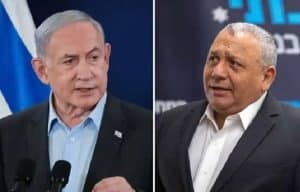
The upcoming election is taking place amidst a political landscape dominated by the rivalry between Netanyahu and Gadi Eisenkot, the former Israeli army chief. According to polls published in Maariv, Netanyahu’s right-wing bloc is projected to secure 51 seats, while the rival camp is set to win 57; however, neither camp reaches the 61-seat threshold required to form a government.
The poll places the “Yashar” party, led by Gadi Eisenkot, in the lead with 23 seats, followed by Netanyahu’s Likud party with 19 seats. Consequently, even a minor shift in votes in Netanyahu’s favor could alter the equation for forming a government.
Under these circumstances, Netanyahu sought from the outset to bolster Likud’s base by personally intervening in the party’s electoral list. For the Prime Minister, merely expanding Likud’s support base was insufficient; alongside efforts to obstruct Arab parties in the election, he needed to keep the right-wing camp cohesive and prevent the election from turning into a referendum on his cabinet’s handling of the genocidal war in Gaza.
This is where the return of “security” to the top of the political agenda becomes significant. For the more the election focuses on the fragile economy, internal cabinet corruption, the management of the Gaza war, or Israel’s security failure on October 7 (Operation Al-Aqsa Flood), the more questions are likely to target Netanyahu; conversely, the more the electoral atmosphere is shaped by the threat from Iran, an existential war, missiles, Hezbollah, Yemen’s Ansarullah, Hamas, and regional instability, the more the political landscape shifts in favor of the Prime Minister who has long branded himself as “Mr. Security.”
Netanyahu’s Political Exploitation of the Ongoing Multi-Front War
These developments are crucial to understanding Netanyahu’s political behavior. On one hand, he is responsible for ensuring the security of a regime that suffered one of the greatest intelligence and security failures in its history following October 7th; on the other, to ensure his political survival, he has no choice but to once again restore and rebuild—this time more effectively—his image as a “security leader.” Consequently, regardless of how costly, dangerous, or stressful a new crisis or event may be for the domestic public, from a political standpoint, it can serve as an opportunity to steer public opinion back toward the sphere where Netanyahu holds the most political capital.
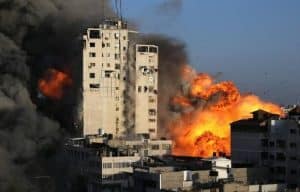
The ongoing war in Gaza has also become a central issue in Netanyahu’s domestic politics. Despite a ceasefire based on the U.S. peace plan, the Gaza file remains unresolved; reports indicate a continued Israeli military presence and operations in parts of the strip, alongside efforts to restrict the ability of Palestinians to return and reside there. Meanwhile, Itamar Ben-Gvir—Minister of National Security and leader of the far-right “Otzma Yehudit” party, which polls suggest currently holds about 7 to 8 seats—has once again advocated for the forced displacement of Palestinians; a stance that transforms the continuation of the war into a political issue for Netanyahu’s right-wing coalition.
This trend has not been limited to Gaza alone. In southern Lebanon, the Israeli army recently claimed—abruptly—to have secured the strategic “Ali al-Tahir” heights, a move that received widespread coverage in Israeli media. Meanwhile, in the West Bank, military operations, settler violence, and the expansion of settlements continue—a policy championed within Netanyahu’s cabinet by Bezalel Smotrich, the Finance Minister and leader of the “Religious Zionism” party. For Netanyahu, this situation offers an opportunity to reinforce the argument that Israel exists in a highly volatile security environment and cannot afford to change its security leadership in the midst of a crisis.
Iran: The Central Pillar of Netanyahu’s Security Narrative
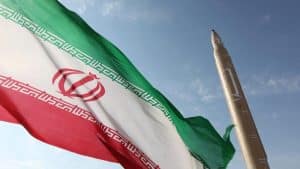
Then comes the turn of Iran—the most significant and potent security card in Netanyahu’s political narrative, capable of rallying Israeli public opinion around a single focal point. He orchestrated the 12-day conflict in June and the “Ramadan War” in February by provoking Donald Trump and dragging the United States into a war against Iran—a conflict that, as many Israeli critics have acknowledged, was above all “Netanyahu’s war.” Under these circumstances, Netanyahu can frame virtually all regional crises within a single strategic picture: Iran to the east, Hezbollah to the north, Gaza to the south, and Ansarullah to the south in the Red Sea. For Netanyahu, this scenario offers an opportunity to reinforce the argument that Israel exists in a highly volatile security environment and cannot afford to change its security leadership in the midst of a crisis.
This is the very narrative that has been repeated in Netanyahu’s statements for years: Israel is surrounded by enemies and requires military might and security-focused leadership to survive.
However, the approach of elections amplifies the significance of this narrative. When a politician faces a political crisis, shifting the public agenda can be just as crucial as swaying votes. If the public questions past failures, the focus must shift to future threats; if they ask about responsibility for October 7, the response must be linked to the dangers posed by Iran and Hezbollah; and if the war’s prolongation becomes a topic of debate, the conversation must be steered back to the imperative of “security.”
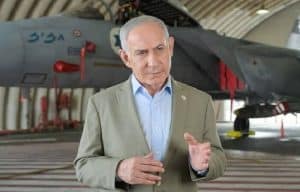
Netanyahu’s visit to the Tel Nof military base and the claim regarding a security threat are assessed within this same context.
Leveraging Developments in Yemen to Normalize Relations with Saudi Arabia
In this context, developments in Yemen and the Bab el-Mandeb Strait become another element of the broader picture. Following the events in Yemen, Netanyahu’s efforts to draw closer to Saudi Arabia have gained increased significance. Should the normalization of relations with Riyadh materialize, it would represent more than just a diplomatic achievement for the Israeli Prime Minister; it could be presented as a crucial electoral trump card. Netanyahu could portray himself as a statesman who—even amidst conflict—managed to preserve, or even strengthen, the Zionist regime’s position in the region.
Yet, as this narrative expands, the shadow of a single issue looms over it: October 7th.
Every attempt to rehabilitate Netanyahu’s image regarding security ultimately runs up against the same question: if he was so firmly in command of Israel’s security, how did such an attack (Operation Al-Aqsa Flood) occur? For this reason, any new report on pre-attack warnings, any account of intelligence shared with Israel, and any revelation regarding what political officials knew beforehand could pose an electoral threat to Netanyahu.
In recent weeks, Haaretz has published reports regarding warnings issued by the UAE leader to Netanyahu prior to October 7. There have even been reports that, during a recent visit to Abu Dhabi, Netanyahu asked Mohammed bin Zayed to deny these warnings—a matter whose significance in the electoral landscape cannot be overlooked, given that Netanyahu is striving, above all else, to keep the issue of responsibility for the October 7 security failure out of the center of the election campaign.

The Fly dubai Flight: A Pre-planned Scenario
And precisely amidst this sensitive and critical atmosphere, an incident occurs that once again brings the word “security” to the forefront of the news—an incident that, at first glance, appears unrelated to the Israeli elections: the Fly dubai flight.
Let us review the incident in detail: on Wednesday (September 30), Flydubai flight FZ1073 was en route from Dubai to Tel Aviv. While flying its standard route with over 170 Israeli passengers on board, the aircraft suddenly altered its course and experienced a sharp drop in altitude. Aviation systems first registered code 7700—indicating a general emergency—followed by code 7500, which signifies unlawful interference or hijacking. Israeli fighter jets were also scrambled to intercept the aircraft.
In the initial hours, various reports regarding the pilots’ identities and the details of the incident emerged; this very ambiguity heightened the attention of both the domestic and global public. An early narrative suggesting a confrontation between two pilots—fueled by conflicting claims about Russian and Ukrainian identities—kept the audience in suspense for some time, until it was finally asserted that the captain was Indian and the co-pilot was an Omani national.
From that point on, the narrative of the incident shifted: the story transformed from a standard aviation incident into a confrontation between an Indian pilot and a co-pilot from an Arab, Muslim nation, thereby paving the way for the prominence of rhetoric surrounding “extremism,” “terrorism,” and security threats. This shift in framing reintroduced the concept of “Islamophobia” into the Israeli and international media landscape—a phenomenon not seen to this extent since the 9/11 attacks.
According to Israeli media reports, an Omani co-pilot used the aircraft’s emergency axe to attack the Indian captain. The captain was injured, and the plane was briefly placed in a highly dangerous situation. Reports indicate that the co-pilot attempted to seize control of the aircraft, raising the possibility of a crash.
However, Israeli passengers and crew intervened; the co-pilot was subdued, and the Indian captain managed to maintain control of the aircraft. After rapidly losing thousands of feet in altitude, the plane altered its course and ultimately made an emergency landing at Tabuk Airport in Saudi Arabia.
The incident had not yet ended when its political narrative began.

When an Aviation Incident Becomes a Security Matter and a Terrorism Allegation
Netanyahu reacted immediately to the incident; rather than framing it as a routine in-cabin altercation, he emphasized the possibility of a terrorist attack and its security implications. He stated that while it was too early to determine the motive, it was essential to establish whether the assailant acted alone or had state backing. The Prime Minister even raised the possibility of an Iranian connection, noting that investigations must determine whether Tehran or its proxies were behind the incident.
Thus, with less than a month remaining until the Knesset elections, an aviation incident rapidly shifted into the very framework Netanyahu needs most: threats, terrorism, and Israel’s security.
The timing of the incident was particularly significant. With the October 27 elections approaching, Netanyahu is attempting to rehabilitate his tarnished image as “Mr. Security.” This prompted some critics to accuse him of politically exploiting the incident. Online, some users and political factions even speculated that the Fly Dubai incident might be part of a pre-planned scenario designed to place “security” back at the forefront of Netanyahu’s election agenda.
However, the matter did not end there. Subsequently, Israel requested the deployment of a military transport aircraft to ferry its passengers—a request that met with firm opposition from Saudi Arabia, as Riyadh refused to grant the Israeli plane permission to enter its airspace.
For Netanyahu, this incident held particular significance ahead of the elections; he was striving to frame closer ties with Saudi Arabia as a major foreign policy achievement and turn it into a trump card for his election campaign. In this context, the Fly Dubai incident presented an opportunity to once again link Saudi Arabia, security cooperation, and the normalization of relations.
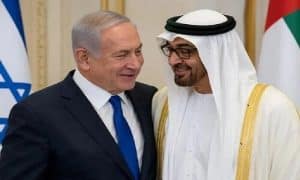
UAE Official Acknowledges Netanyahu’s Political Exploitation of the Fly Dubai Incident
Meanwhile, a source close to the UAE government criticized the way Zionist officials handled the incident, stating that Abu Dhabi feels Israeli officials are exploiting the event for political and electoral purposes. The Emirati official objected to Netanyahu’s repeated use of the term “rescue flights,” noting that the UAE is not in a state of war or crisis.
If we piece all these elements together, a multi-layered picture emerges: a plane flying from the UAE—a country implicated in reports regarding pre-October 7 warnings—to Tel Aviv suddenly encounters a security crisis in the regional airspace; Israeli fighter jets scramble, while inside the cockpit, an Omani co-pilot (hailing from a country with friendly ties to Iran) clashes with an Indian captain (whose nation, under Narendra Modi, is close to Israel).
Passengers intervened to subdue the co-pilot, and the plane made an emergency landing in Tabuk, Saudi Arabia—a country with which Netanyahu is seeking to normalize relations. The Israeli Prime Minister then became involved in the affair; now, Netanyahu speaks of terrorism and a possible Iranian connection.
The passage of time will clarify the details of this incident. Yet, one fact is undeniable: Flydubai has once again thrust the issue of “security” into the spotlight of Israeli public opinion—precisely at a time when Netanyahu needs such a narrative more than ever.