PNN – Fadi Boudaya has revealed that the Zionist regime’s army used toxic gases to capture Ali al-Tahir Hill in southern Lebanon.
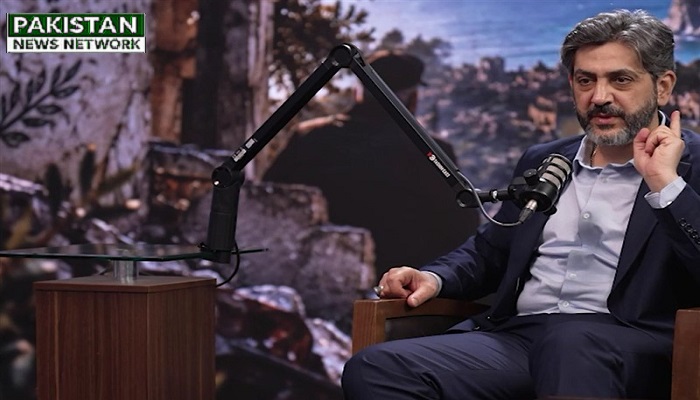
In an exclusive interview, Fadi Boudaya—director of the Maraya network and a prominent Lebanese analyst—examined the dimensions of the Zionist regime’s media campaign regarding its alleged capture of the strategic Ali al-Tahir Hill in the Nabatieh region of southern Lebanon. He characterized this campaign as part of the US-Israeli media war against the Lebanese Islamic Resistance forces and the Axis of Resistance, adding that Israel’s propaganda concerning the capture of Ali al-Tahir Hill mirrors US propaganda regarding the Strait of Hormuz.
In response to a question regarding the strategic importance of the Ali al-Tahir hill in the ongoing battle between Hezbollah and the Israeli military—as well as the sensitivity of Hebrew-language media concerning claims of its occupation—this Lebanese expert stated: First, I must say that Ali al-Tahir is undoubtedly a hill of immense strategic importance to the Resistance; likewise, its occupation is highly significant for the Zionist regime, as it serves as a crucial link in the chain of heights where Israel is attempting to consolidate its occupation. This axis begins at Ali al-Tahir Hill, reaches the Beaufort (Shaqif) Castle, and extends to Mount Hermon. This position grants Israel fire coverage and the capability for full surveillance and monitoring across the entire area. Consequently, by occupying this region, Israel can keep the southern areas under complete observation and bring numerous locations within range of its fire.

He further added that Israel had held the Ali al-Tahir hill for 30 years during its occupation of southern Lebanon—lasting until 2000—but the Resistance ultimately succeeded in liberating it, just as it had other areas in the south. Therefore, hyping this event and portraying it as the “Mother of Battles” in the south stems primarily from electoral rivalries within the occupied territories; the aim is to frame it as a major achievement, creating the impression that Hezbollah has suffered a defeat in this confrontation.
Elaborating on another reason for this Zionist media exaggeration regarding the Ali al-Tahir hill, Boudieh stated: Repeatedly floating the scenario of Hezbollah’s destruction and collapse aids Lebanese officials and factions that have chosen the path of negotiation with Israel; it provides them with a pretext and justification to advance the process of compromise and normalization—arguing that since the Resistance has lost Ali al-Tahir, the pro-compromise faction will tell Hezbollah: What else is left for you? Did you see that the decision to negotiate is better than the decision to go to war? You have nothing left at your disposal; this breeds frustration and despair among the people, and consequently, Israel can easily infiltrate the Lebanese population.
The Lebanese expert continued: I do not deny that Ali al-Tahir Hill is a highly strategic point; however, who says the Resistance is fighting for a single point or geographical location? Israel is currently capable of bombing any part of Lebanon. In fact, Israel possesses the operational capability to target Ali al-Tahir and could bomb the hill. They did discover some tunnels, and Resistance forces were forced to evacuate them due to the presence of toxic substances. However, the withdrawal or retreat of resistance forces does not signify defeat; in the theater of battle, it is well understood that military tactics may involve advancing, executing a tactical retreat, and subsequently advancing once more. Consequently, their retreat does not equate to defeat, nor does their advance equate to victory.

Regarding the lack of validity in the claim that the Zionist army has fully occupied Ali al-Tahir Hill, Boudieh stated: The Zionists are exaggerating this event primarily to portray it as an achievement and a pretext for ending the war—a notion that is, in fact, incorrect. In my view, were Israel to successfully occupy Ali al-Tahir Hill, it would ultimately alter the Resistance’s strategy across the entire southern region, reverting it to the 1982 model of resistance—albeit with modern methods—and vastly expanding Resistance activities in the south. However, as of this moment—at the time of recording this program—Israel’s propaganda regarding the occupation of Ali al-Tahir Hill resembles US propaganda concerning the occupation of the Strait of Hormuz.
Continuing this special interview, the Lebanese analyst sought to challenge the underlying motives of anti-Resistance media in Lebanon and the region regarding claims that Ali al-Tahir Hill had fallen. In this context, he added: Fundamentally, the key question is: how does Ali al-Tahir Hill differ from Khiam? How does it differ from Kfar Tebnit? How does it differ from Nabatieh, Beaufort Castle (Qala’at al-Shaqif), or anywhere else? The distance between Beaufort Castle and Ali al-Tahir Hill is merely four kilometers, yet Beaufort Castle sits at a higher elevation than Ali al-Tahir. Thus, the crucial question remains: with what objective are anti-Resistance media outlets shaping the narrative around this area and blowing the issue out of proportion?
Outlining examples of biased statements and positions taken by Arab media outlets hostile to the Resistance, he said: Someone appears on social media claiming that Hezbollah has hidden gold—donated to the Resistance’s ‘Qard al-Hassan’ financial institution—beneath the Ali al-Tahir hill… while another alleges the existence of massive military facilities inside Ali al-Tahir. If such facilities truly existed there—as the Zionists claim—and Israel intended to occupy the hill, the simplest course of action for Hezbollah would be to detonate and destroy all the equipment and tunnels within the hill the moment Israeli forces entered it; however, I believe that the events in question have been vastly exaggerated and blown out of proportion by Israel.
Citing the example of Zionist psychological warfare surrounding the Ali al-Tahir Hill incident—specifically the narrative that resistance fighters were dying inside the tunnels after weeks of siege—Boudieh stated: This portrayal is crafted to convince a global audience that Hezbollah has suffered a crushing defeat… They aim to project an image of having achieved a victory that has severely weakened Hezbollah. This is part of the Zionist propaganda strategy. Naturally, media outlets, television networks, social media platforms, and others also assist Israel in realizing this objective.
Citing further examples of the intense anti-Resistance atmosphere cultivated in regional Arabic-language media, he said: Let us speak frankly: when a female presenter—who appeared out of nowhere—takes the microphone and, with complete nonchalance, directs insults at Sheikh Naim Qassem, (the martyr) Sayyed Hassan Nasrallah, and the Welayat-e Faqih (Guardianship of the Islamic Jurist), what kind of precedent does this set in the media landscape? It fosters the impression that no figure retains any aura of sanctity or reverence. Consequently, other media personalities begin to engage in similar acts of insult. But what is the primary objective behind these insolent and norm-defying actions? It is to suggest that Hezbollah is no longer even capable of countering these voices and no longer enjoys acceptance within Lebanon. That is why the owners of these media outlets seek out individuals belonging to the Shia community, offer them a small sum of money, and simply instruct them to hurl insults at Hezbollah. Such programs on certain Arab networks are often pre-scripted and staged; they invite a person of dubious repute to the studio—someone who claims to have been a friend of Iran’s leader, Sayyid Mojtaba Khamenei—and let them speak. They present this individual as someone fully privy to the intricacies and secrets of Iran, broadcasting these claims with dramatic flair in a deliberate attempt to undermine public morale and weaken the support base of the Resistance.

Elaborating on how to counter the spread of this media narrative, he stated: In my view, such individuals do not require court proceedings or lawsuits; the point is that the public needs to deal with them directly. If each of us stops sharing news from these outlets and figures, and blocks their videos, no one will see them anymore; their influence will vanish, and they will gradually fade into irrelevance. My message today to the supporters and advocates of the Resistance is this: when someone criticizes us and you take their clip and share it on social media platforms like WhatsApp, you are actually helping to spread exactly what they want to be spread. And what is it that they want? They want us to take their clip and circulate it ourselves. If we make a conscious decision to stop reposting such individuals’ content in our own groups or on our pages—and instead visit their social media profiles to block and report them—we will have punished them in the most effective way possible. If everyone in the online space were to confront such biased individuals in this manner, that presenter or media personality would lose their job; no one would watch their programs anymore, the influence they and their media outlet wield would gradually wane, and they would eventually fade from the scene.