
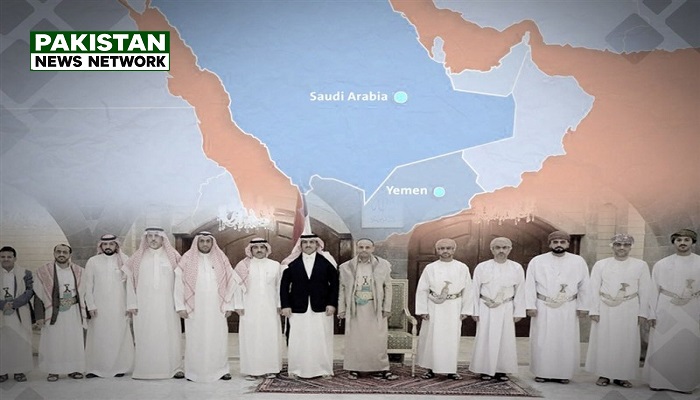
PNN – While reorganizing its proxies in Yemen, Riyadh is also attempting to block Ansarallah from participating in Yemen’s political future.
According to the report of Pakistan News Network; recent developments on the ground in Yemen have ushered in a new phase in the country’s military and political landscape. A series of setbacks for Saudi-allied forces against the Sana’a-based forces—coupled with the expansion of Ansarallah’s control over coastal areas along the Bab al-Mandab Strait and the Gulf of Aden, as well as the erosion of the military position of Riyadh-aligned forces in Taiz—has created a situation that has significantly constrained Saudi Arabia’s options for continuing the military confrontation with Ansarallah.
However, contrary to what might be expected under such circumstances, Riyadh’s political and military conduct shows no sign of a readiness to de-escalate tensions or move toward resolving the crisis in Yemen. On the contrary, the country’s recent actions suggest that Saudi Arabia is preparing for a new round of conflict—one in which it aims to shift the balance on the ground by restructuring its affiliated forces, opening new fronts, and intensifying political and legal pressure.
In fact, what is observable in Saudi Arabia’s current conduct is an attempt to compensate for setbacks on the battlefield by reorganizing its military and political capabilities. A recent Reuters report—indicating Riyadh’s readiness to sustain its military campaign against Ansarallah for the next six months, or potentially even extending it until mid-2027—clearly demonstrates that Saudi calculations remain predicated on securing military gains prior to entering into any political negotiations. According to this report, Saudi officials hope that their allied forces will be able to improve their positions on the ground before negotiations begin. From Riyadh’s perspective, therefore, negotiations are not the starting point for resolving the crisis, but rather a phase to be entered only after the military equation has been altered. This approach implies that Saudi Arabia continues to seek the imposition of its own terms through military pressure, and recent developments have not altered this calculation.
In this context, one of the most significant aspects of the new Saudi strategy is the reorganization of the forces aligned with the Kingdom, alongside efforts to develop new operational capabilities in eastern Yemen. The setbacks suffered by Riyadh’s allied forces in the western regions—and the loss of a substantial portion of their positions along the Red Sea coast and the Bab el-Mandeb—have underscored the need to revise Saudi Arabia’s military posture. Under these circumstances, the activation of the eastern fronts—and the shifting of some military pressure toward the provinces of Ma’rib and Al-Jawf—has become a central element of the Saudis’ new maneuvers. Reports regarding the deployment of military equipment and troops to these two provinces, alongside efforts to reinforce operational lines in the eastern regions, indicate that Riyadh is seeking to establish a new geographical theater for the continuation of the war—one capable of offsetting some of the pressure resulting from its setbacks in western Yemen.
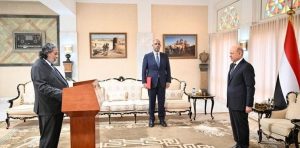
In this context, the reappointment of al-Akimi as the governor of Al-Jawf province cannot be viewed merely as a routine administrative or political reshuffle. Together with Saudi Arabia’s military maneuvers in Ma’rib and Al-Jawf, this appointment is part of an effort to reconstruct the political and military network aligned with Riyadh in eastern Yemen. Saudi Arabia is well aware that without establishing coordination among local structures, military commanders, and its affiliated armed forces, it will be unable to open an effective front against the forces of Sana’a. From this perspective, the restructuring of political governance in the eastern regions and the strengthening of the command of allied forces are two complementary components of a unified strategy designed to prepare for a new round of conflict.
However, what stands out most in this realignment is Saudi Arabia’s growing reliance on foreign forces and its attempt to replace some of its Yemeni proxies with non-Yemeni mercenaries. Reports regarding the transfer of Syrian fighters to eastern Yemen—alongside news of the arrival of their advance units in Jizan, the movement of foreign troops, and the redeployment of units stationed along the border—indicate that Riyadh is considering a new composition of forces to sustain its military operations. This trend suggests that, having failed to achieve its objectives through the forces aligned with it across various fronts in Yemen, Saudi Arabia is now seeking to address its military shortcomings by bringing in foreign troops.
The attempt to replace some Yemeni forces with Syrian, Pakistani, and Sudanese troops indicates, on the one hand, Riyadh’s need to rebuild its operational capabilities, and on the other, the structural limitations of the coalition that Saudi Arabia has assembled over the past few years to advance its objectives in Yemen. Under such circumstances, the use of foreign mercenaries may help offset some of the manpower shortages, but it cannot, on its own, resolve Saudi Arabia’s core problem. This issue stems less from a lack of personnel or equipment and more from the degradation of the allied military structure and an inability to hold ground against the forces from Sana’a. Consequently, the reinforcement of the eastern fronts and the deployment of foreign troops should be viewed as part of a broader Saudi effort to rebuild a depleted military coalition.
The significance of these maneuvers becomes clearer when viewed alongside developments on the western and southern fronts in Yemen. By expanding their presence along the coasts of the Bab el-Mandeb Strait and the Gulf of Aden, the Sana’a forces have effectively altered the geographical dynamics of the war. For the Saudi-allied forces, the loss of these positions signifies more than just a withdrawal from a few coastal areas; it directly impacts Riyadh’s ability to manage various fronts and maintain cohesion among the territories controlled by its affiliated forces. For this reason, Saudi Arabia is attempting to alleviate the pressure on the western front by activating eastern fronts, while also seeking to prevent the forces of Sanaa from consolidating their military gains in other areas. Nevertheless, opening new fronts—at a time when the structure of the allied forces is facing serious challenges—will not necessarily shift the balance of power; instead, it could expand the scope of the conflict and increase its costs.
Alongside these military maneuvers, the political conduct of Saudi Arabia and the Aden-based government is also driving an intensification of the existing stalemate. A key indicator of this approach is the effort to designate the Ansarallah movement as a terrorist organization—a process being pursued within the political and legal frameworks of the Riyadh-aligned government. In this context, the move by the House of Representatives—based in territories under the influence of the Aden government—to pass legislation classifying Ansarallah as a terrorist organization, and subsequently referring it to Rashad al-Alimi for formal enactment, demonstrates that the Saudi-aligned political faction is expanding the military conflict into a legal and institutional confrontation. Riyadh’s support for this process cannot be viewed in isolation from the country’s broader strategic calculations regarding the future of the crisis in Yemen.

The consequences of such a move would extend well beyond a mere political stance or the issuance of a propaganda statement. Designating one of Yemen’s primary political and military actors as a “terrorist” entity could effectively introduce new legal obstacles to any potential political dialogue. Given that Ansarallah controls a significant portion of Yemeni territory and is recognized as a key player in shaping the country’s political future, any attempt to exclude this movement from formal equations—by framing it as a terrorist organization—amounts to disregarding the realities on the ground in Yemen. No sustainable political process can take shape without accounting for the influence—both on the ground and in the political arena—of the country’s key actors. Consequently, such an approach will not only fail to help resolve the crisis, but could also lay the groundwork for continued confrontation and make reaching any political agreement even more difficult.
From this perspective, the coincidence of Saudi Arabia’s military maneuvers with intensified legal pressures against Ansarallah is particularly significant. On one hand, Riyadh is rebuilding its forces, reinforcing its eastern fronts, and utilizing foreign mercenaries; on the other, it is leveraging the political structures of the Aden-based government to limit the potential for Ansarallah’s participation in any future political process. These two paths, while seemingly distinct, are in fact components of a unified strategy: exerting military pressure to shift the balance on the ground, and imposing political and legal constraints to prevent Ansarallah from consolidating its gains within the future landscape of Yemen. For this reason, recent developments cannot be viewed as a series of disconnected, unrelated actions.
The reality is that recent developments on the ground have placed Saudi Arabia in a position where continuing the war entails even higher costs. The expansion of Sanaa-aligned forces’ presence in coastal areas, the retreat of Riyadh’s allied forces, and the need to rebuild the military structures affiliated with Saudi Arabia indicate that the country’s previous strategy has encountered serious limitations. However, instead of accepting this reality and moving toward a political process based on the actual conditions in Yemen, Riyadh continues to seek to rebuild its instruments of leverage. This indicates that the primary objective in Saudi Arabia’s calculations is not merely to end the crisis in Yemen, but rather to secure political and security arrangements in the country that align with its own preferences—arrangements it believes can only be realized by weakening the position of Ansarallah.
Ultimately, the recent developments indicate that Saudi Arabia’s policy in Yemen has entered a new phase of confrontation—a phase characterized by the simultaneous pursuit of military realignment, the activation of eastern fronts, the deployment of foreign forces, and the intensification of legal pressures against Ansarallah. Nevertheless, shifts in the composition of forces and the geographical expansion of the conflict cannot, on their own, negate the new realities that have taken shape on the ground. Ansarallah now holds a decisive position—not only within Yemen’s military equation but also in any assessment regarding the country’s political and security future. Consequently, attempting to exclude this movement from political channels while simultaneously intensifying military pressure against it is less a solution to the crisis and more a continuation of the very approach that has, over the past years, prevented the achievement of a sustainable resolution in Yemen. As long as Riyadh—rather than acknowledging the realities on the ground and the political landscape in Yemen—persists in forcibly altering the balance of power and imposing its own preferred arrangements, the prospect of de-escalation and ending the war will continue to face serious obstacles.